


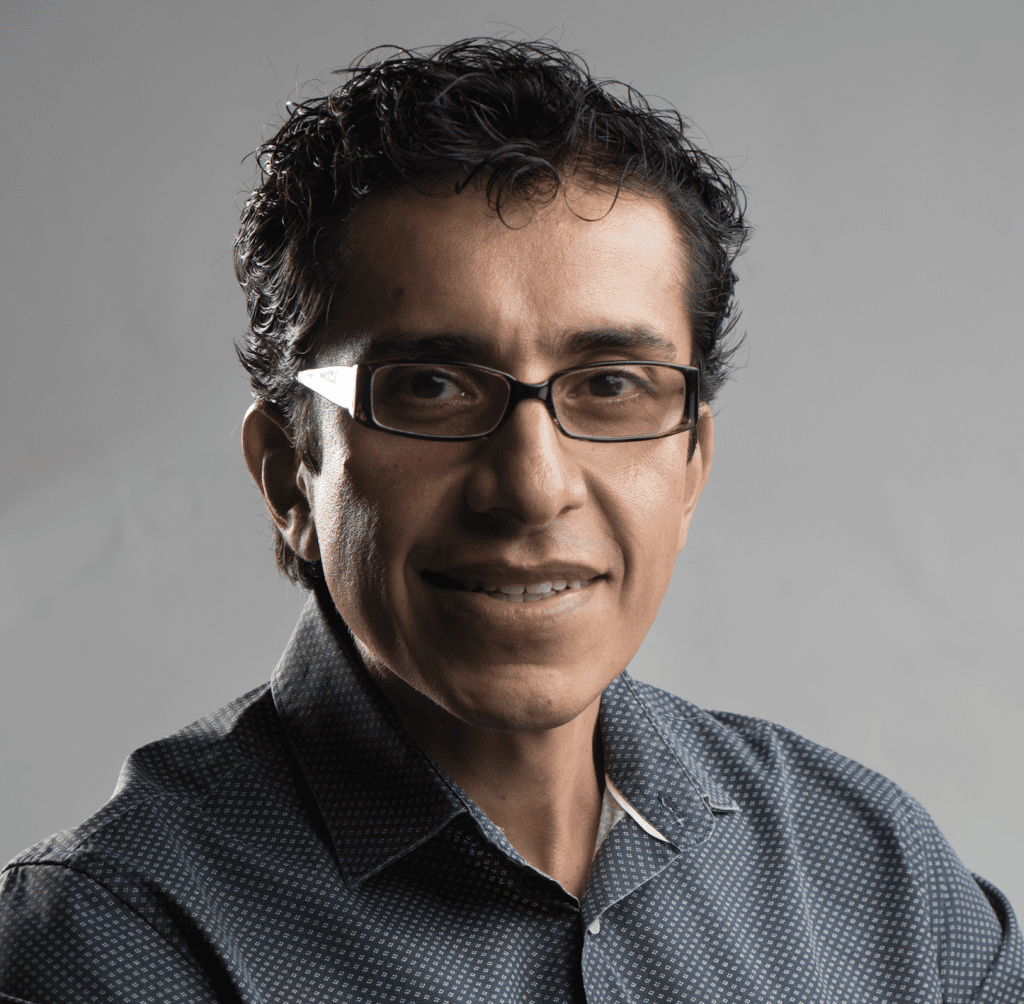
Oscar Barrera — How Corporate Anthropology Helps Businesses Grow (Even When the Market Isn’t Ready Yet) should be the right title to this podcast blog.
What if the fastest route to meaningful growth isn’t about launching another ad campaign, hiring more salespeople, or optimizing your funnel? What if the real accelerator is simply listening—really listening—to what’s already happening around you?
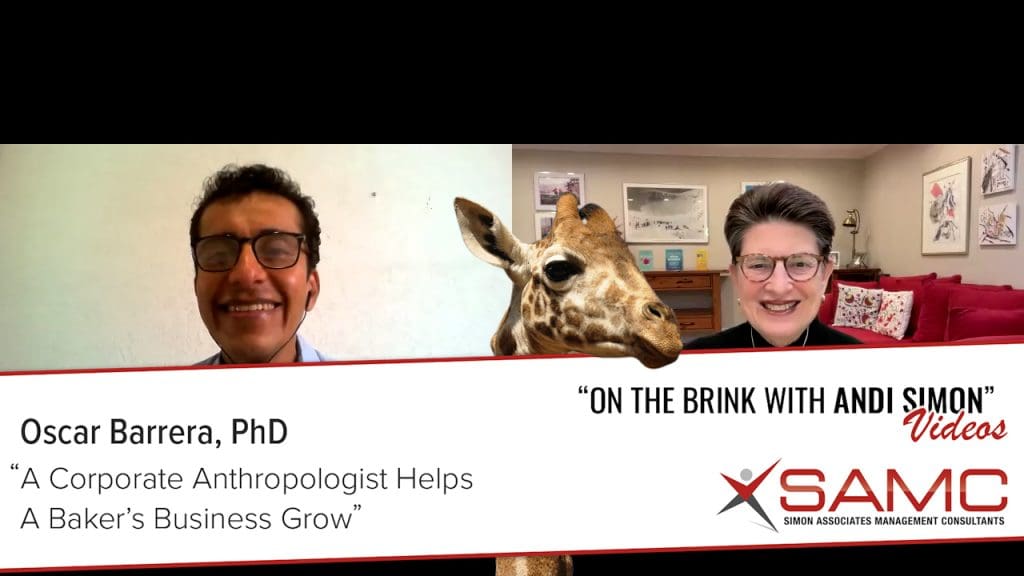
In this episode of On the Brink with Andi Simon, I had the pleasure of sitting down with Oscar Barrera, PhD—a brilliant corporate anthropologist and innovation strategist based in Mexico. Oscar and I share a core conviction: anthropology isn’t just something you do; it’s a way of seeing the world. It allows leaders to notice subtle patterns—those taking shape in their markets, inside their own companies, and in the everyday lives of their customers—even when the clues are hiding in plain sight.
Oscar’s work drives home a powerful point: the real obstacles to growth are often hidden. Not because they’re imaginary, but because we haven’t been trained to spot them.
Meet Dr. Oscar Barrera: An Anthropologist Forging His Own Path
Oscar’s journey is as unconventional as it is inspiring. He earned his doctorate in social and cultural anthropology at the University of Washington, with years of fieldwork in Guatemala’s highlands. But like so many academics, he realized that the expected career path—university teaching—wasn’t really available. So Oscar got creative. He returned home to Mexico and started his own consulting practice from the ground up. He learned the language of business by reading voraciously, listening intently, and immersing himself in the entrepreneurial world—joining business groups, building relationships, and cultivating a brand that helped business leaders understand how anthropology could transform what they do.
Through his firm, Antropologia Corporativa, Oscar helps organizations unlock deep understanding about their customers, employees, and markets—then turn those insights into human-centered strategies for growth and innovation. He also hosts a fantastic podcast called Nuevas Posibilidades (“New Possibilities”), which explores innovation, anthropology, and the future of work.
A Real-World Case: Sourdough in a Sweet Bread Nation
Oscar shared a wonderful story that brings anthropology to life. A bakery owner in Mexico was crafting sourdough bread: wholesome, preservative-free, and free of additives. But he was up against a market where bread is usually sweet, steeped in tradition, and sold cheaply.
Here’s the twist: the bakery wasn’t struggling with demand. Instead, something unexpected was happening—distributors (mostly women) were approaching the bakery on their own, asking if they could resell the bread in their hometowns.
The owner’s question wasn’t theoretical—it was urgent: Who are these women, and how can I grow this kind of distribution model intentionally? As he put it, he wanted “the formula.”
Why Anthropology Was Essential
Oscar’s first instinct was to do what anthropologists do best: ethnography. Go to the site, observe, listen, and understand the full context. But travel simply wasn’t possible. So he adapted, because good anthropology is all about flexibility. He used remote interviews—speaking with distributors and customers over the phone and online. And what he learned should be a wake-up call for every leader: People will tell you what matters to them—if you listen with the right kind of attention.
Oscar was surprised that sometimes meeting online made people more comfortable. It was safe, structured, and time-limited—there was no lingering vulnerability once the conversation ended.
The Discovery: A Purpose-Driven Sales Network
The bakery owner assumed his distributors were motivated by money. Oscar found something far richer. These women were selling bread not just for income, but because they:
- Had personal or family health concerns
- Wanted to support and uplift their communities
- Believed deeply in natural, preservative-free foods
- Had stories that connected them emotionally to the product
They weren’t just pushing a product—they were sharing a solution and part of their own identities. They were savvy, too, introducing the bread at workplaces, gyms, and local events. Tasting led to trust—and more sales.
This was no “features and benefits” transaction. This bread was an experience—one that resonated with values and stories.
Five Key Ingredients for Scalable Growth
Oscar translated these insights into actionable steps. He identified five elements that would determine whether the bakery’s model could truly scale:
- Shared values and philosophy: The top distributors believed in a mission: boosting health and helping people, not just selling bread.
- Time and logistics: Without preservatives and in a hot climate, bread spoiled quickly. Delivery schedules and pickups became hidden bottlenecks.
- Packaging matters: Flimsy boxes led to crushed loaves—hurting both trust and credibility.
- Social selling support: Distributors used WhatsApp and Facebook, but needed better tools and content. The company needed to provide easily shareable visuals and educational materials.
- Customer experience and sampling: People didn’t buy from a description—they bought after tasting. Real-life sampling was the engine of growth.
What I love here is that Oscar didn’t need a formal operations report to uncover these constraints. He surfaced them by deeply listening to lived experience—by drawing out stories.
Bigger Than Bread: How Meaning Moves Markets
One of the most profound insights was symbolic. Sourdough isn’t “traditional Mexican bread.” Yet, through the personal stories of these women, it became a bridge: a way to enjoy bread as part of daily life, to choose health without abandoning cultural identity, and to stay connected to tradition while eating differently. That’s not just good marketing—it’s anthropology in action.
Lessons for Leaders Everywhere
Oscar summed it up beautifully: Success often hides in plain sight, in details we overlook. Anthropology equips leaders and companies to see what’s invisible and hear what’s unsaid. True innovation doesn’t always mean inventing something totally new—it often means listening to what your customers are already telling you.
So here’s my bottom line: If you’re chasing growth, don’t just ask, “How do we sell more?” Instead, ask, “What’s actually happening in the lives of the people we want to serve that we haven’t noticed yet?” When you listen for those answers, real transformation can begin.
Connect with Oscar Barrera, PhD
If you’d like to connect with Oscar, you can find him on LinkedIn,
Connect with me:
Watch for our new book, Rethink Retirement: It’s Not The End–It’s the Beginning of What’s Next. Due out Spring 2026.
Listen + Subscribe:
Available wherever you get your podcasts—Apple, Spotify, Stitcher, YouTube, and more. If you enjoyed this episode, leave a review and share with someone navigating their own leadership journey.
From Observation to Innovation,
CEO | Corporate Anthropologist | Author
Simonassociates.net
Info@simonassociates.net
@simonandi
LinkedIn
The full text is below:
Andy Simon 00:00:02 Welcome to On the Brink with Andy Simon. I’m Andy, and as you know, my job is to get you off the brink. I love to do our podcast to share with you people who have interesting stories that can help you see, feel and think in new ways. You need to be a little bit of an anthropologist yourself. If you’re going to step out and see what’s happening all around, you and understand that there are new opportunities for you to capitalize on and really take the reins and grow yourself and your business in new ways. The best way to do that is to listen to stories of people who have done the same thing I have with me today, a gentleman I met when I was working in Mexico. Oh, a number of years ago before the pandemic. His name is Oscar Barrera, and he is a wonderful corporate anthropologist. Another one like us. And I love the fact that he’s applying it in similar ways to help businesses see, feel and think about themselves and their customers through a fresh lens in new ways so he can help them grow.
Andy Simon 00:01:08 And I’ve asked them to come today because he has a podcast and he’s been sharing experiences he had, and I bet he has some really cool experiences to share with you, so you can understand why a little anthropology can help your business grow. Oscar, thank you for joining me today.
Oscar Barrera 00:01:24 Thank you for the invitation. Andy, I am delighted to be once again in your podcast. Thank you very much.
Andy Simon 00:01:32 Let me tell the audience a little bit about you and then you can talk about your own journey. I’m Oscar is a corporate anthropologist, business consultant, and innovation strategist. He holds a PhD in social and cultural anthropology from the University of Washington in Seattle. He’s the founder, and he’s going to help me say this. Anthropology Corp Cooperativa, a consulting firm that helps organizations deeply understand their clients, employees and markets, and he has a good purpose to design human centered strategies for growth and innovation. He’s also the host of the podcast Nuevas Possibilities New Possibilities. You know, Espanol and Poquito, but I don’t remember it very well.
Multiple Speakers 00:02:18 And his.
Andy Simon 00:02:19 Podcast, he interviews the leaders and experts in innovation, anthropology, and particularly the future of work. He has a simple and powerful mission. His purpose is to help organizations reconnect with the human side of business, to design the future of work with purpose. And I love his purpose. Oscar, thanks again for joining me now. Tell the audience about your journey. How did you end up as an anthropologist? How did you end up in Washington? Give us a little bit about who is Oscar.
Oscar Barrera 00:02:49 Well, I, I became an anthropologist because I met anthropologists when after I finished my college and I was in love with the way they think, the way they perceived the world. And I said, I want to think the same way. I mean, I was just amazed. The way they deconstruct reality. This they see the elements, and they made the connections and the interconnections that they see between one thing and the other. I was just fascinated. They said like, oh, I want to learn this.
Oscar Barrera 00:03:20 I want to learn.
Multiple Speakers 00:03:21 This wise.
Andy Simon 00:03:23 Man. Please continue.
Oscar Barrera 00:03:26 so, I was invited by professors from the University of Washington, to, to get my PhD, and I said, oh, how can I say no when you have an invitation, right? So I got a scholarship, and I went to, to Seattle for eight years, including my two years of fieldwork in the highlands of Guatemala, where I conducted my research. And after finishing my PhD, I was unemployed. I couldn’t get a teaching position in the US, in Canada or anywhere else in the world. I went to Europe. I couldn’t find a job as an applied anthropologist. So I decided that I will return to Mexico and will start my own consulting business. And that was a that has been quite a journey of self-discovery, almost like on a spiritual journey.
Multiple Speakers 00:04:23 I was.
Andy Simon 00:04:24 Completely.
Multiple Speakers 00:04:24 Pleased.
Oscar Barrera 00:04:24 Because I had to face my all my demons, my fears, my insecurities, and I had to learn about business because I got my own, MBA by listening, by reading books and listening to podcasts.
Oscar Barrera 00:04:39 And that’s how I met you. And that’s actually how I met you.
Andy Simon 00:04:43 Well, when you. I mean, this is not an uncommon journey for academics who find themselves without an academy that wants them. And yet I was a tenured professor, and I left because the world outside was much more interesting. So in some ways I. You could say, I wish I had my job, but you don’t. It was boring. And this is much more exciting. So how have you been building your business? How do you find clients who want an anthropological perspective? Any wisdom to share?
Oscar Barrera 00:05:15 Well, I, I listen to several podcasts. One of the rules that I followed is that you need a tribe. So I joined, the Chamber of Commerce. I know the business organizations to get to know other entrepreneurs, so thanks. Bye. Thanks to the interaction and also an anthropologist, by learning what the what people do and also to avoid what people do. I, I learn ways to do business.
Oscar Barrera 00:05:48 I before I had long hair, I had to change my look to look more professional, more businesslike. I began to develop my own personal branding, and I pretty much applied all everything that I learned by on my on my own business and starting just to create my own brand, my personal brand and my consulting brand.
Andy Simon 00:06:15 Well, you know, a brand answers the question, why are you so as you’re speaking to our audience or our viewers? Why you? What do you bring to a problem or a business that is fresh and refreshing and that can help them see things through a fresh lens? You know, sell yourself. What’s your brand.
Oscar Barrera 00:06:34 Well basically what I, what I say is that I help companies to reconnect with in in depth with their clients and with their own collaborators, with their own employees. And I help. And to do that I do research, I use anthropological theories and methods in order to understand and better connect with those clients with internal client and external client.
Andy Simon 00:07:02 And when you’re doing that, are you doing participant observation or are you doing, survey research? I mean, what are the tools of anthropology that you find most effective?
Oscar Barrera 00:07:12 Well, I have a long range of methods, but the most the most powerful is ethnography, which is to be there to do observation, to be there and unobserved people in their own context, in their own elements, to see how they behave, the way they speak, the way they move their bodies, the way they interact with each other and with their surroundings.
Oscar Barrera 00:07:38 But in nowadays, with the digital media, now that we have changed our methods, actually the case that I’m going to talk to you about. I originally, I had planned that my proposal originally was to do an ethnography Inside to do observations to visit the clients. But there was a problem with the company, and it was impossible. They couldn’t afford to fly me to, to the city and do the, the research in situ. So I had to do it online. So I conducted interviews online using Google Sheets, and I recorded all the interviews, and I was really amazed myself of the death. And also it has some advantages because, you know, you have only 1 hour or 90 minutes to conduct the interview. So people open up and they, they, they become very, they relaxed because you see that you are genuinely interested in their lives and what’s going on. They share a lot, I think, probably more than in real person interaction.
Andy Simon 00:08:54 It’s interesting. It’s become a safe haven for people to answer your question and talk about themselves and not feel uncomfortable or vulnerable.
Andy Simon 00:09:02 How interesting.
Oscar Barrera 00:09:03 Yeah. And also because they knew that it was the, the only.
Multiple Speakers 00:09:08 The only time that they will see me.
Multiple Speakers 00:09:10 In their life.
Oscar Barrera 00:09:12 And then it will be gone. I want to because all the arrangements to for the meeting was done through the company. So I didn’t have their personal contact information. I was I only provided a link. They connected at the same time. We connected at the same time. We conducted the interview and then we disappeared from each other’s lives.
Andy Simon 00:09:36 But this is really interesting because, you know, I often share about the work I did for a senior living community in Portland, Oregon, three years ago, and they wanted to better understand what quality meant for the people who live there, because their scores were terrible. and I spent two weeks living in the community. You know, I took on an independent living in my place and popped myself down and did ethnography. And they interviews were really helpful. But in, in some ways, it was labor intensive.
Andy Simon 00:10:10 It was very observational. Many things I saw that I never would have picked up without.
Multiple Speakers 00:10:14 Being.
Andy Simon 00:10:14 There. and but it was it was an interesting. It’s why you and I enjoy being who we are. Because being and listening, open us up to things people can tell you and they can tell you in their story without knowing what they’re telling you in their story. Am I right?
Oscar Barrera 00:10:32 Yeah. And also, as an anthropologist, you need to be very experimental. You don’t need to be very narrow. Like, I’m just going to do this very rigid methodology that I learned in my PhD. Well, you need to be flexible and to be and to recreate and reinvent your own methodologies because otherwise.
Multiple Speakers 00:10:52 Yep.
Oscar Barrera 00:10:52 And you can do anything.
Andy Simon 00:10:54 Well, it’s true. And I was finding myself asking them to tell me good stories about what is quality. And in the stories, what’s lots of information? Now, you and I were sharing a story about one of your customers, your clients, and I thought it was a very interesting one to illustrate the way in which you went about helping them grow their business, and they wanted to have a full proof toolkit for growth.
Andy Simon 00:11:16 They didn’t want an academic project, you know. Tell us about what you can share. And along the way, let the listener understand how we approach the problems like these, because they aren’t simply, they want to grow. Let’s find out where the market is and how they grow the market. Your thoughts?
Oscar Barrera 00:11:34 Well, like, you know, like any entrepreneur, my client, he wanted to grow his business. He wanted to make more money, and he wanted to have a better impact. So the business is about, A breed of baking company. They produce no typical Mexican bread. They didn’t produce that because everybody does it. But he produced Sagrado bread, which is not part of our Mexican culture. I did I wasn’t raised in Salvador. I began.
Multiple Speakers 00:12:10 In Salvador.
Oscar Barrera 00:12:12 After I in my 20s.
Andy Simon 00:12:14 Pause for a moment. That is really important. So this entrepreneur had a bakery where he was making sourdough bread and wanted to grow in a culture where bread wasn’t sourdough. What is bread in Mexico? Remind me.
Oscar Barrera 00:12:28 Is we sweet bread? And also, we have it’s more the Spanish kind of bread. We have this Spanish influence. So, this we have a whole tradition of, Mexican bread that varies from region from the north, the center or the south. And it’s very sweet. I mean, to the extent that I cannot have breakfast without my breath.
Multiple Speakers 00:12:55 I mean, because it’s so.
Oscar Barrera 00:12:59 It’s so part of our culture.
Andy Simon 00:13:01 We’re going to give up your breakfast or your bread for sourdough. But Stillman wanted to open up a new market.
Multiple Speakers 00:13:08 I love it, but the.
Oscar Barrera 00:13:10 The, the, the brand that this company was building was about, a bread that is free of chemicals free, gluten free and no preservatives. So it’s a very healthy bread. Not any kind of like if you want to eat sweet bread and gain weight. I mean, go and eat Mexican bread. But if you want to take care of your health, you consume sourdough bread. Consume our brand.
Andy Simon 00:13:41 So how what did you do? It’s so interesting because he’s in a market that doesn’t know much about him.
Andy Simon 00:13:47 Help me.
Multiple Speakers 00:13:48 Help him.
Oscar Barrera 00:13:48 And you know, the things that the company was puzzled because they, they had around 15 distributors, that emerged organically. What I, what I meant by this is that there were women who, who knew about the brand, who knew about the company, and they knocked their doors, and they said, you know, I know your bread, I love it. I want to resell it in my hometown.
Multiple Speakers 00:14:18 Oh, cool.
Oscar Barrera 00:14:20 So but for the owner, this was I mean, it was great, but there were 15 people who were doing the same who called them. Like, I, I love your bread. I want to sell it in my hometown. So he wanted to know, like, who are these people? Why do they come to us and ask us to, to sell them to resell our own bread? And because they were very, they were in their niche. These companies sold their bread in supermarkets, in their in their town, in the city.
Oscar Barrera 00:14:54 But these women, mostly women, like 95% of the of the distributors were women. It’s like I want to know who are these women? The owner told me, and I want to know how to grow this business. I mean, if they come to me without me moving anything to have a distributor, how can I intentionally grow and expand the distributor brand so that I can grow my business? So, with that in mind, and also, he was very emphatic. He said, I want to grow my business. I don’t want to just data. I want to grow my I want the formula. Literally, he says, I want to know the formula on how to grow my business.
Multiple Speakers 00:15:42 Interesting.
Oscar Barrera 00:15:43 Please give it to me.
Andy Simon 00:15:45 I meant to hear what you found.
Multiple Speakers 00:15:47 Yeah.
Oscar Barrera 00:15:48 And this reminds me, I went. It was for.
Multiple Speakers 00:15:51 Me.
Oscar Barrera 00:15:52 It was not that crazy to. To say that I could do that. Because I remember to have, to have watch. An interview by Jeff Bezos.
Oscar Barrera 00:16:01 And he was interviewed, and he was asked how he figured out a way to grow Amazon. And he said that. It took him ten years, by studying his customers, that he figured out the key elements to. Grow the business.
Multiple Speakers 00:16:17 Interesting.
Oscar Barrera 00:16:17 One was the diversity of products. One was the very quick deliveries. And another one was excellent customer service. I mean, these are three out of five. So I said, well, I could probably figure it out that I can figure it out myself. I mean, without spending ten years, I could. As an anthropologist, I could probably figure it out what’s going on with these distributors. So for. The idea was to conduct an ethnography for me to travel to the site and interview the, the distributors and the clients, the customers to see why they love bread and.
Multiple Speakers 00:16:59 Who.
Oscar Barrera 00:17:00 Who are these women? What do they whether they engage in this business of selling bread? But for some reasons that I’m not going to go in detail, it was impossible.
Oscar Barrera 00:17:12 So I had to be creative. I said, well, let’s do some online interviews because this is what is going on right now. I mean, let’s do some, interviews. So I, the company, the baking, the baking company, they do all the, all the arrangements of the logistics, and they arrange ten interviews with the distributors and, and five more interviews with clients. Clients who consume bread.
Multiple Speakers 00:17:39 Yeah. So.
Oscar Barrera 00:17:41 I conducted these ten interviews, and it was very interesting to find who. Who are these women? Mostly women. And these are women who have their own salary job. They are schoolteachers or they have their own store. They have their own organic store. They sell shampoo, they’ll sell bread, they sell seeds and all kinds of organic, healthy items. And one of them was bread. And these are women who have their own families, their own children. But they wanted to have an extra income. And I thought of you because you work with women.
Oscar Barrera 00:18:26 So but one thing was very interesting when I conducted interviews, I found some key elements that, that a thread that connected all these women and it was their values, and it was some health issue. These women consume bread not only because the taste was good, but it was good for their health. Some of them had some issues with their cholesterol, some with their sugar, blood sugar, blood levels, some others the children and the digestive problems. So Sabado was the solution. Oh, interesting. Yeah. And another one was, the. She was overweight, and she goes to the gym every day, and she posed within her WhatsApp groups and in her social media that she is bread every day and she’s thin and she says, well, think if you want to be like me, consume also Salvador and I can sell it to you.
Andy Simon 00:19:36 smart women.
Oscar Barrera 00:19:37 Yeah, yeah. So these are women who have these values about, Procuring their health, and they had a connection with the somebody close to their family or themselves with a health issue.
Oscar Barrera 00:19:52 And Salgado was an alternative to continue eating bread because I told you, bread is part of our Mexican culture. Yeah. So sourdough was signified with some attributes that you can still eat bread, even though it’s our dough.
Multiple Speakers 00:20:10 It’s not necessarily Mexican, but it’s.
Oscar Barrera 00:20:11 Our dough and you can still be part of the tribe. You can still be Mexican, and you cannot skip your breakfast without bread.
Andy Simon 00:20:19 Isn’t that interesting? So this became, for a segment, a solution to a health problem that kept them in the culture, in the value system, but gave them an option that was tasty and good. is it the same price as your sweet bread or.
Oscar Barrera 00:20:38 No, no, no, it’s way more expensive, even. Probably ten times more Wow. Than they really are. Because sweet bread is not. Is not. Is not. That is very affordable. It’s very, very inexpensive. But the sourdough bread and what is very interesting is that the sour though, that they, they consume was the European style.
Oscar Barrera 00:21:00 you know, the one that has lots of seeds and natural sourdough bread. So it has to be tropical for Mexico. So they added some, jelly and butter. So or it was a, it was the, the slice of sourdough to make sandwiches.
Andy Simon 00:21:20 Interesting.
Oscar Barrera 00:21:23 so, and another aspect talking about, symbolic, symbolism and symbolic meaning or talking about hermeneutics is that these women not only wanted to better themselves and better their health, but they also wanted to contribute to the health of their communities, whether it’s their families, their coworkers or other people. That’s why they wanted to sell bread. That’s what they want. They contacted this company, and I said, I want to be your distributor, and I want to sell your bread because it’s very healthy and very good. And it’s, is the price is fair. I wanted to sell it in my hometown and really and also benefit my community.
Andy Simon 00:22:08 Interesting.
Oscar Barrera 00:22:09 And these are the. So I realized that these women engage in selling bread not because they wanted to become rich or because they had this, this personal commitment to better the lives of their community, their families, their coworkers, their children.
Oscar Barrera 00:22:28 So these are entrepreneurs who have this sensibility that I’m not doing this for my own. Yeah, I’m doing this for my community. I really want to make a to do something for my community.
Andy Simon 00:22:43 So this is so interesting because they could have eaten the bread, but they didn’t care enough about eating the bread. They really wanted everyone to eat the bread. And that is a very big purpose driven distribution channel. That’s different than I want to make money on this. I want to do it for health and well-being, among others who I live with. What a big idea, isn’t it? How did the owner understand this? How did you help him understand this?
Oscar Barrera 00:23:07 Well, I want to add a little piece because it reinforces what I just described because when I interview the sales manager of the company, she said, well, I have gone to this the same towns where these women come from, their distributors, and I have gone to the market and I have gone to different stores to sell our products, our dough, with no success.
Oscar Barrera 00:23:33 Oh, and she said, I don’t understand why.
Andy Simon 00:23:35 Oh, I don’t know.
Oscar Barrera 00:23:37 And my, my research provided The answer.
Multiple Speakers 00:23:41 Because if people.
Oscar Barrera 00:23:43 Who are going to engage in the selling of software though, they need to share the values like I’m going to contribute to the community, I’m not doing this just to make money. I’m going to contribute to the health of the children, of the elderly, elderly people. I want to contribute to the health of people. So that was the requirement. That’s why the sales manager wasn’t successful, because she wasn’t going to the right target.
Andy Simon 00:24:13 And she wasn’t telling the right story.
Oscar Barrera 00:24:15 She wasn’t telling the right story. Exactly.
Andy Simon 00:24:17 She wasn’t there for a bigger good. She was there for a profit to grow the business. And they basically said, no, thank you.
Oscar Barrera 00:24:25 Exactly. She was so disappointed. She said, look, I don’t understand why nobody wants to.
Multiple Speakers 00:24:30 To sell our breath.
Andy Simon 00:24:33 Now. So I’ll come back to the owner.
Andy Simon 00:24:35 Did he buy it? Did he embrace it? Did he find more distributors, how would you help them? Well.
Oscar Barrera 00:24:42 Yeah. So let’s go in detail about what are the key factors in how these distributors, how these, business model or the distributors will grow. So through my research, conversing with these, distributors, I identified key five elements that were key for the business to grow. One is the one that we just discussed the philosophy and values, people who are, who have the commitment to better the lives of the people and who are concerned about selling products that are natural, with no, preservatives, with no chemicals. So these are the profiles of the people. Like the philosophy and values are key. Yeah. Another aspect is the managing of time going against the clock. Because in this part of Mexico, this part of in this region, there are temperatures around 86°F, which is high. And at that temperature the bread decomposed very quickly.
Andy Simon 00:25:56 Yes. No preservatives. It just turns blue.
Oscar Barrera 00:25:59 Yeah, exactly. So, it’ll the company, it took him 24 hours to put the all the all the shipping together. Put it in the shipping company. And in 24 hours it will arrive to the destination with the, with the distributor. So,
Multiple Speakers 00:26:26 But then comes.
Oscar Barrera 00:26:27 The logistic problems because, the, the branches of the, of the shipping companies was not very close to the hometown of the distributors. They have to drive 20 minutes to pick up the boxes. Some other times they have to hire taxis or motorcycle taxis and became a little bit complicated because for you, in order to pick up the packet, you need your ID. Yeah. So if you are a taxi, a taxi driver or a motorcycle driver, you they are not going to give it to you because it needs your name. So it became a little complicated. So then the company had to put the name of the shipping to the name of the of the taxi driver, or the or the motorcycle driver.
Oscar Barrera 00:27:21 But then their lives complicated and they couldn’t pick it up the same day. So they had to wait another the next day. So it was 48 hours. The bridge began to decompose, so it was very complicated. For these women they have to challenge. They have several challenges. About the logistics because they went against the clock. And once they receive the breath, they have to rush and reach the bread to their customers. Before. Before. Sometimes they have to freeze it.
Andy Simon 00:27:54 Yep.
Oscar Barrera 00:27:55 Or put it in their fridge before it is delivered to the customer. Because they it was very complicated. And also, they had this as I told you; their values was very strong. They, they wanted to deliver products of quality. So, another aspect and the, the, the third aspect is the, the, the packet, the, the boxes that the, the, the company used, the baking company use were not strong enough. The cardboard was very thin and some of the boxes were just smashed.
Oscar Barrera 00:28:33 And the, the, the bread arrived. Really damaged.
Andy Simon 00:28:39 Smashed bread. Breadcrumbs.
Oscar Barrera 00:28:41 Yeah. Breadcrumbs. So, the company had to change the packet. Yeah. And because there was not the, the baking company, they used whatever boxes they found to, to, to ship the bread, but they needed to standardize the kind of boxes. Right.
Andy Simon 00:29:04 It’s so interesting because the logistics and the scalability are as essential as baking good bread.
Oscar Barrera 00:29:10 Yeah, exactly. And you know, what was so funny is that I didn’t talk to the operation operations manager of the company. I deducted all of these, or I extracted all of this through the narrative. So the stories of this lady or these women. Yeah. So I, I love this anthropology because it helped me to listen to the stories and to see what is behind the story.
Andy Simon 00:29:35 And to get those values. They couldn’t have told you, could they?
Oscar Barrera 00:29:38 Yeah, exactly.
Andy Simon 00:29:39 But they did tell you, but not in a straight line.
Andy Simon 00:29:42 It wasn’t simply, well, this is what I believe, and this is what I’m doing, and this is why I’m doing it right.
Oscar Barrera 00:29:47 Another key element was the effective communication in the social. In the social process. In the selling process. The thing is that these women sold the bread through their WhatsApp groups, through their Facebook pages. And they didn’t have. I mean these are women who have children, who have their husbands who have their, their jobs in the morning went afternoon. And plus they have their baking business. So, they didn’t have time to create content for their social media, and, and they didn’t have the right equipment. There’s their cell phones was not the camera was not a good quality. So they did the best they could to take a snapshot photograph of their bread whenever they had breakfast. And they use, a slice of Salvador with some, avocado and some letters. They took pictures and say, oh, I’m going to I’m having this breakfast. So that generated some kind of motion and said, people say, oh, I, I want, I want to, a lot of bread.
Oscar Barrera 00:31:00 so it was very complicated for them to create content in social media. So that was another key element. Another, key factor for the company to grow if he needed the company needed to provide a content for these women, for the distributors to just represent, infographics. just, not only nice pictures of the bread, but also, information that will educate Future customers. Yep.
Andy Simon 00:31:36 Now, when you are doing this, the women, give you other ideas about how to grow the business. Others who could use them, were they bringing in other distributors? These women sound like they were very savvy women and very powerful women, but not necessarily money motivated women.
Oscar Barrera 00:31:55 Yeah. The they their intentions were very good. Some of them, they give me some ideas on how to, how to tackle the issue of the timing to go against the clock. Yes. One of them, for instance, told me. Well, you know, they could say, I, I can make a big, order.
Oscar Barrera 00:32:25 I can put a big order. So I have a huge cooler here. I get all the bread and put it everything in the cooler so that it will be in great condition. So whenever a customer wants it, I can just unfreeze it and my customer will get fresh bread and they will give me, of course, maybe I put this in my report, but I don’t think that the owner of the company will be willing to do that. I don’t think so. Well, but the women have some ideas about how to how to proceed. And they give me many, many ideas which I put it in the, in the report.
Andy Simon 00:33:04 When you’re done. The gentleman wanted a foolproof tool kit for how to grow his business. But none of this is foolproof and easy to think about. Was he open to your ideas? How did you have a conversation or conversations with him and his team to see that the opportunities weren’t a straight line from we make it and put it into distribution? I mean, this is this is really homegrown at its best.
Oscar Barrera 00:33:31 Yeah. The there are these five elements and there is one five elements. Before I answer your questions, I want to address the fifth element that is missing, which is the, the customer experience and the, the narratives of the stories of these women or these, distributors told me that when they go to work, for instance, they have their own sandwich and they share it with their coworkers and they say, wow, this is really good. I said, well, I sell that bread. So they, they, they, or whenever they go to the gym or whenever they go, they, they have a sandwich or something for their own and they, they give taste to other people. So, that was the personal experience was key. So, one way to grow the business is to give, sensorial experiences to people to try the breath. Because once they try it. They say, yes, I want it. Because if they see, they if you describe to them all the benefits of the breath for their health, it’s going to okay.
Oscar Barrera 00:34:44 That’s good. But they don’t want to buy it. But once they’ve.
Andy Simon 00:34:47 Tried. Now they have to try it. It’s experiential. Wow.
Oscar Barrera 00:34:51 If they have the experience they say, oh yeah, this is very good. Plus it’s healthy. Okay I want to buy it.
Andy Simon 00:34:57 Interesting. So now but I am coming back to your baker because you had wonderful research, and you didn’t want an academic paper. Could he visualize and see and implement a plan of action to build his business. Is it growing.
Oscar Barrera 00:35:13 Well is it is too soon to say to tell because I just recently delivered the report.
Andy Simon 00:35:21 Gotcha.
Oscar Barrera 00:35:22 So, he, he has now the tools. He knows exactly what to do to focus. If you want to recruit new distributors. He knows the profile. What kind of people he needs to grow if he wants to, to improve the whole logistics. He knows that he needs a better packet. Yep. I mean, he has for every aspect I give him a solution. Yes. That if they if he if he has the talent, he has the energy.
Oscar Barrera 00:35:55 And if he’s convinced, he works on those elements, he will certainly grow the business. Yes.
Andy Simon 00:36:02 But, you know, it’s not a simple business model that an MBA might have. You know, it must be about being more productive and more efficient or having a better sales team. It’s having a whole different mindset about who’s going to buy it, eat it, love it. And it’s not simply a replacement for the Mexican bread. It’s a whole different, experience.
Oscar Barrera 00:36:24 Yeah, definitely. And, I forgot to mention something that for the audience is going to be very interesting that, for some women. They, they signify the sourdough bread. And this is something that for the, for the owner of the company was key because he was selling a bread that is completely new for our culture. Yeah. So what I discovered is that these distributors and their families, they signified the bread with, with some attributes according to Mexican values so that, because some of the, some of their family members, for their health issues, it was forbidden to, to consume Mexican bread.
Oscar Barrera 00:37:11 Yes. But we suffered though they were able to eat Mexican and be back to the crowd to be to be part of the tribe or the Mexican tribe that they are. We’re not losing anything. I’m not missing anything.
Andy Simon 00:37:25 Wow.
Oscar Barrera 00:37:25 Yeah. This. For me, it was very key because here, if the company could be very successful, if he sells no sourdough bread, but if he sells the same Mexican bread that is healthier.
Andy Simon 00:37:40 Well, this is wonderful. I’m looking at our time, and as much as I love to keep talking, I would love you to just, you know, reflect on the wisdom of doing ethnographic research, anthropology to help a business like this in bread grow. The gap between what he knows and what he doesn’t know is really the filler that you provided through a really innovative way of capturing the stories of these women remotely. you know, any of your wisdom you want to share with others about? Don’t assume that what you’re doing is what’s going to work.
Andy Simon 00:38:17 Any ideas to share and then we’ll.
Multiple Speakers 00:38:20 Yeah.
Oscar Barrera 00:38:21 I think the, the success of any business is in the details that are there. but people don’t see it. And that’s the magic. I would say that’s the magic of anthropology, that we help companies to see what they cannot see and to hear what they cannot hear.
Andy Simon 00:38:40 And that is the truth. Go ahead.
Oscar Barrera 00:38:42 That’s the work that we do of anthropology. That’s our contribution to the. To the entrepreneurial ecosystem. We help them to see things that are out there. But because of them. Their own narrow focus, they cannot see it anymore.
Andy Simon 00:38:59 Well, and I think at one anthropology convention a number of years ago, I heard the panelists talk about how difficult it was to do the research and bring it back to the CEO of the company, whatever it was, a bank or otherwise. And, and my mind went to the fact that the anthropologists weren’t ever in business. And so the words they used to explain it didn’t necessarily resonate well with the CEO or the business leader.
Andy Simon 00:39:28 So part of this brokering the ideas is you have an excellent way of converting what you’ve learned into wisdom for the business owner so that it doesn’t feel threatening or obscure. It’s not academic at all. It’s really based upon, let me tell you what they’re telling us. Can you hear it? And then it’s up to him to listen.
Oscar Barrera 00:39:49 Yeah. The way I like to present it is that it’s common sense. I mean, this is what people are telling me. So this is the, as a consequence, it suggested that you do this. I mean, by just common sense. You are just looking. Cause and effect. Cause and effect.
Multiple Speakers 00:40:08 Yeah. Yeah.
Oscar Barrera 00:40:09 So that’s what, businesspeople want. They don’t want complex formulas. They want, like, oh, tell me what I need to do. So that’s what I do with as an anthropologist. I simplify things very, very easy that are common sense.
Multiple Speakers 00:40:23 Well, and.
Oscar Barrera 00:40:24 Rational.
Andy Simon 00:40:25 And it wasn’t very complicated either. We had.
Andy Simon 00:40:30 A distribution channel that was unfamiliar, that was motivated, yes, to sell, but more as well as to do well in the communities they served to ensure that the bread he was making would become part of a culture that had a different kind of experience, and to reinvent bread in a way that could help him sustain his growth. I hope he heard you, because it is quite extraordinary what you are able to call out of the stories that you captured from these women who just simply want to bring a fine bread into their communities and help people get healthy and stay healthy and enjoy their breakfast.
Oscar Barrera 00:41:09 Yeah, exactly. I know and share, share their success in their body and their health with their close with them with their close people, with their close families, with their close relatives.
Multiple Speakers 00:41:21 Well.
Andy Simon 00:41:22 And to help others through a multiplier. and that’s how things were. The math is still the best marketing you can do. This is so exciting. do you have 1 or 2 things you’d like to leave our audience with? Oscar and wisdom about listening to your customers with an open mind.
Andy Simon 00:41:38 Or I can give you, my wisdoms. But what are yours? Couple?
Oscar Barrera 00:41:42 Well, the first one would be that we need to. We need to be unhappy with the company that we have or the business that we have. We need we need to deepen our understanding of our customers in order to have a better impact and consequently, to grow our business. Yes, by having a strong impact with our customers, with our we strengthen our mission. Then we will have we will grow, the business will grow. But in order to do that, we need to deepen the understanding that we have our customers and our own Employees.
Andy Simon 00:42:25 Well, I think that’s real important. The head of sales did not understand how to sell in a market that was her own culture. but this was something intruding into it in a way that was unfamiliar and difficult to comprehend. Really, really cool. If they would like to reach you, Oscar, I would put putting it on to the podcast. but in any you have a website? I’m sure you do.
Andy Simon 00:42:49 LinkedIn. What’s the best way to reach you?
Multiple Speakers 00:42:52 Yeah.
Oscar Barrera 00:42:52 And LinkedIn, you can find me. Oscar Barrera, PhD, and also in my website, anthropological Cooperativa that.
Multiple Speakers 00:43:03 Yeah.
Oscar Barrera 00:43:04 You will find it in the show notes.
Andy Simon 00:43:07 I will make sure that’s on the blog, in the podcast as well. So, but this has been absolutely delicious time. I’m so excited to see you and to share your story and to remember the good conversations we had if you were starting out. And life has taken us in many different directions. But I do think once you become an anthropologist, somebody said, are you still doing anthropology? I said, you don’t understand. Anthropology isn’t doing. It’s seeing. Anthropology is a mindset. It’s the way we approach the world. And so being an observer isn’t to just stay on the outside, it’s to watch what’s going on the inside. It’s a way of being. And so my job is to always remember what I learned in my undergraduate days, about how exciting it was to know what I didn’t know.
Andy Simon 00:43:52 And the best way to learn was just to listen to people’s stories. I didn’t have to have science. I did have to have wisdom. And it came from listening and hearing what people were saying, am I right?
Oscar Barrera 00:44:04 Yes. And also you know, my field of expertise is innovation. So sometimes people in companies, they, they, they rub their heads and say like, how can we do something different? Well, you just listen. Listen to the customers, just watch and observe and listen and they give you the clues. They give you clues. You don’t need to reinvent the will. Just listen and see the clues.
Andy Simon 00:44:32 And you don’t. If you’re a smart person, you can do it all by yourself. But if you’re not, you need a hand sometimes. And that that hand could be an anthropologist. Let me wrap me. I’m delighted to have become the 18th ranked 18 among the top 100 podcasts on the area of change. You can understand my joy in sharing people like Oscar with our audiences and how it can help you change.
Andy Simon 00:44:59 My first book, On the Brink of Fresh Lands to Take Your Business to New Heights, is about how anthropology can help your business grow, and in it are stories about what I’ve done to be an ethnographer, to watch when companies every one of those companies were stuck or stalled, there was no reason to be. The changes were right here. They were coming through the telephone, coming through the emails. People were asking them things. They couldn’t hear what was being asked because we don’t do that. Well. If you keep saying we don’t do that and you will not grow because the times they are changing and my two books, I’m about Women, Women Mean Business that came out in 2023 and Rethink Smashing the Myths of Women in Business, won an award and does really well and bring me wonderful clients. And I have a new book coming out in 2026 called Rethink Retirement, and it’s going to be all about a whole lot of folks I’ve interviewed about what’s good and bad about this word called retirement. It’s an empty space that is filled in all kinds of different ways, and you can do it well or you can be miserable.
Andy Simon 00:45:59 So my tagline is from observation to innovation, and you can understand why Oscar and I get along so well. And it’s always a pleasure to bring you to my audience, Oscar. Thank you, thank you, thank you.
Oscar Barrera 00:46:10 Thank you very much, Andy, for an invitation. I had a great time talking to you.
Andy Simon 00:46:14 It’s always my pleasure. I’ll say goodbye. Please stay well and take care. Bye. Bye, everybody.