


Retirement is undergoing a profound transformation. For generations, retirement was viewed as the reward at the end of a long career—a time to relax, travel, and enjoy life after work. But as Americans live longer, healthier lives, retirement is no longer an ending. It has become an entirely new life stage that can last 20, 30, or even 40 years. That reality demands a new conversation.
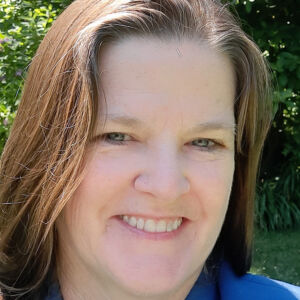
In a recent episode of On the Brink with Andi Simon, I spoke with Cathy Rowe, Executive Director of New Jersey Advocates for Aging Well. Cathy has dedicated her career to helping communities prepare for a demographic shift that is already reshaping America.
As Cathy explained, we are approaching a historic milestone: there will soon be more Americans over age 65 than children in school. This is not simply a retirement issue. It is a societal issue affecting housing, transportation, healthcare, employment, education, and community life.
One of the most important insights from our conversation was that many people spend years planning financially for retirement but give little thought to what comes next. They know how much money they need, but they rarely ask:
- Who will I be without my business card?
- What will give my life meaning?
- How will I structure my days?
- Who will be my community?
These questions matter because work provides far more than a paycheck. It offers identity, purpose, routine, and social connection. When those disappear overnight, many retirees experience an unexpected sense of loss.
Cathy described what many retirees discover after the honeymoon phase of retirement ends. The daily interactions with colleagues vanish. The train ride companions are gone. The lunches and conversations that once filled the day disappear. What remains can sometimes be loneliness and isolation.
This challenge is not limited to older adults. America is experiencing what many experts call a loneliness epidemic across generations. Yet retirement can magnify the issue because so much of our social life has been tied to work.
The solution, Cathy argues, is intentional engagement. Communities across the country are creating age-friendly initiatives designed to help people remain active, connected, and purposeful. Volunteer opportunities, lifelong learning programs, community centers, libraries, colleges, and organizations are all creating new pathways for engagement.
One inspiring example is the Repair Café program Cathy helped launch. Residents bring cherished items that need fixing, while volunteers share their skills repairing lamps, jewelry, bicycles, electronics, and more. The result is far more than repaired possessions—it creates relationships, intergenerational connections, and a sense of belonging.
Building Communities for a New Era of Longevity
What struck me most about my conversation with Cathy was that she is not focused solely on helping individuals age well. She is helping entire communities prepare for the reality that America is becoming older.
Through her work with New Jersey Advocates for Aging Well, Cathy has become a leader in the Age-Friendly Communities movement. These communities recognize that aging is not simply a personal issue—it affects transportation, housing, healthcare, recreation, employment, education, and civic life. Communities designed primarily for young families must now adapt to support residents who may live there for decades after retirement.
The challenge is particularly significant in suburban America. Many suburbs were built around the assumption that residents would drive everywhere. Yet as people age, transportation often becomes one of the biggest barriers to remaining engaged. Access to social activities, healthcare appointments, educational programs, and volunteer opportunities depends on creating communities that are accessible and connected. Cathy and her colleagues are helping local leaders rethink these assumptions and build environments where people can remain active and independent longer.
The Age-Friendly movement focuses on what experts call the “Eight Domains of Livability”—including transportation, housing, social participation, civic engagement, communication, outdoor spaces, and community support services. While those categories may sound technical, the goal is remarkably simple: create places where people can continue to thrive throughout their lives.
One example Cathy shared was the growing effort to connect organizations that traditionally worked separately. Libraries, senior centers, colleges, community centers, volunteer organizations, and local governments are beginning to collaborate in new ways. Rather than creating programs exclusively for older adults, many communities are creating opportunities that bring generations together around learning, volunteering, culture, and service.
Cathy also believes we need to rethink some of the labels we use. The very term “senior center” may discourage participation from people who do not identify with that image of aging. Her work helping establish the New Jersey Association of Senior Centers is focused on helping these organizations evolve, share best practices, and better serve today’s older adults—many of whom are healthier, more active, and more engaged than previous generations.
What emerges from Cathy’s work is an important realization: the future of aging is not about creating separate places for older adults. It is about creating stronger communities for everyone. As she often reminds audiences, “What’s good for aging is good for everybody.” Walkable neighborhoods, opportunities for lifelong learning, accessible transportation, social connection, and meaningful engagement improve life at every age.
Think of Aging as the Opportunity for a Meaningful Next Chapter
Perhaps the most powerful message from our conversation was this: aging is not a problem to solve. It is an opportunity to design.
Many of us will spend more years in retirement than we spent raising our children. This chapter deserves as much thought and planning as any other stage of life.
As Cathy advised, think ahead. Educate yourself. Challenge your assumptions about aging. And most importantly, reframe retirement not as an ending, but as a beginning.
The future belongs to those who design it.
As I often tell participants in my Rethink Retirement workshops, retirement is not about stopping. It is about becoming. The question is not whether you have enough money to retire. The question is: What are you retiring to?
A Last Note
The communities that thrive over the next several decades will be those that embrace longevity as an asset rather than a burden. The experience, wisdom, talent, and energy of older adults represent one of America’s greatest untapped resources. Cathy’s work reminds us that aging well is not merely a personal responsibility. It is a shared opportunity to build communities where people of all ages can belong, contribute, and flourish.
Key Takeaways
- Retirement today can last 20–30 years or longer.
- Identity, purpose, and community are as important as financial security.
- Loneliness and social isolation are growing challenges across all generations.
- Age-friendly communities are creating new opportunities for engagement.
- Lifelong learning, volunteering, mentoring, and second careers can provide renewed purpose.
- Retirement should be designed intentionally, not left to chance.
Reach out to Cathy Rowe:
Cathy’s profile: linkedin.com/in/cathy-rowe-05570925
Email: rowec425@gmail.com
Connect with me:
- Join my Substack Newsletter Rethink Retirement
- Website: www.simonassociates.net
- Book Website: www.andisimon.com
- Email: info@simonassociates.net
- Learn more about our books here:
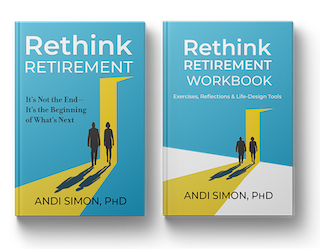
Now–it is time to share our new book with you!
Rethink Retirement: It’s Not The End–It’s the Beginning of What’s Next
Out on Amazon and WalMart, and in your local bookseller and Rethink Retirement: The Workbook
Listen + Subscribe:
Available wherever you get your podcasts—Apple, Spotify, Stitcher, YouTube, and more. If you enjoyed this episode, leave a review and share with someone navigating their own leadership journey.
From Observation to Innovation,
CEO | Corporate Anthropologist | Author
Simonassociates.net
Info@simonassociates.net
@simonandi
LinkedIn
Check out the entire text here:
Andi Simon 00:00:02 Welcome to On the Brink with Andy Simon. I’m Andy, and as you know, my job is to get you off the brink. And I want to do that by bringing you great people to listen to, engage with, and begin to understand the kinds of ideas that are today helping us adapt to these fast changing times. And if you haven’t noticed, the times they are fast changing. But here today I have Kathy Rowe with us, and Kathy is going to provide for you and me a perspective on this transformation of our society because of demography. Now, if you aren’t paying attention, demography is destiny. The people who are growing into being those elders are changing the way our society is going to have to address them. We’re going to talk more about it. But I met Kathy and I attended a wonderful conference that she ran on Friday for The National, the new Jersey advocates for aging, Wells annual conference. She’s going to tell you more about it, but this was a day to focus on the fact that the population in our communities across America are becoming older.
Andi Simon 00:01:14 They’re going to be more people over 65 than they’re going to be people in school than children in school. Think about it. You know, there won’t be enough people working to support all those people who aren’t working. This is a time when thinking differently about growing older is going to be transformative for those who are younger. And I read a great Substack post this morning as I was preparing for today, and they were talking about people in their 50s who wanted to be with younger people who were in their 30s. And I went, oh my goodness, they’re worried about that. I’m worried. And being in my 80s, having people in their 60s, everybody is looking for friends who are going to be full of new ideas. So Kathy is here with us today. Cathy, thank you for joining me.
Cathy Rowe 00:01:59 Thank you for having me. It’s a pleasure to be here.
Andi Simon 00:02:02 Let’s let me tell the listener or the viewer who you are from your bio, and then you can solicit on the journey. Okay.
Andi Simon 00:02:09 she joined the National, the new Jersey advocates for aging Well, NJ, AAUW, as executive director in May 2021. In her role. She’s partnered with many of the organizations to bring an aging in all places lens to new Jersey. And I heard this on Friday with great clarity. she’s the chair of the lifelong strong new Jersey campaign and has a leadership role in the age friendly new Jersey statewide collaborative efforts and works in partnerships with several organizations serving New Jersey’s older residents. She organizes the annual conference, but previously she served as coordinator for South Orange Maplewood, two towns for all ages, bringing South Orange and Maplewood into the AA part AARP Network of Livable Communities. I heard a great deal on Friday about making age friendly communities happen, whether it’s in Englewood or wherever it was. And what we don’t pay attention to is the impact of aging on suburbs, where we don’t have the ease of a bus or a subway that you might have in Manhattan.
Cathy Rowe 00:03:17 Exactly.
Andi Simon 00:03:18 I think all kinds of things. She’s spoken extensively on aging issues in Trenton at conferences, symposium and in 2020.
Andi Simon 00:03:26 I love the award. The National Association of Area Agencies on Aging presented her with a best Practice for Socially Engaging Older Adults award. This is for The Repair Cafe, and she’s going to tell us a little more about it. She’s laughing. She earned her a Doctor of Public Health and Health Policy and Management from Columbia University, and her B.A. in economics from Bates College. I don’t think her background is as important as her foreground, where she’s going, because we are all getting older. We hope, and I think Cathy’s going to tell you about her own journey, because it’s rich with the kind of great journey transformation and that we’re all facing here. Now I’m going to put a two minute plug in, maybe a two second plug in for my new book, Rethink Retirement, because part of my interest came about when my husband and I decided not to retire. We love what we do. Our business is vibrant, and what we wanted to do is what was retirement. And so the more I looked into it, the more I said, This is a time that we don’t fully understand.
Andi Simon 00:04:26 I don’t at least. And so Cathy and I are going to help you understand it as well. So, Cathy, your journey. Tell us all about who is Cathy and how did you get here?
Cathy Rowe 00:04:35 Well, thank you for having me. and it’s funny, most people are surprised when they find out. I started off with a degree in economics, but for me, it makes total sense. my first thesis was actually on health economics, looking at longevity and outcomes and what other countries were doing in health care and, led me right into public health. After a few years working for all things, a large insurance company went into public health, which really is true economics, the allocation of scarce resources. Right. and I had worked in New York City with Medicaid and underserved communities and came to realize that aging is also an underserved community because we have this tendency, our built in ages view, that everybody has the same needs as they age, which is which is not true at all. So, I found myself back in, after quite a journey back, getting my doctorate in public health, which was actually on policy management, looking a lot at Medicaid and Medicare at the time.
Cathy Rowe 00:05:41 and like many women in my situation, I had young kids. I was working part time, I was figuring things out and began working in aging when I was doing the South Orange Maplewood initiative to become an age friendly community, and which I think you heard on one of our breakout sessions on Friday, more than half the country now lives in and, quote, age friendly community. Whether people know that or not or feel that or not is something else. But what it means is there is an intentional effort in that community to prepare for our shift in demographics, like you pointed out. And we tell people all the time, we are on the cusp of having more people retired than we have sitting in our classrooms, our property taxes, our communities, so much of our schedule, our lives are built around educating young people, very important. And how are we going to change that when the demographics shift? And we have not only more people who are retired like the baby boomers retiring, they are living longer.
Cathy Rowe 00:06:49 So this is where the public health comes in. Longevity. It’s not just that more people are hitting that magic retirement age of 65 is that now they are living not 5 or 10, but 20, 25, 30 years past retirement. That is a huge section of your life. And aging is as varied and different as any other age in your life. Some people will need help. Some people never will. Some people will be giving help well into their 90s. Rosalynn Carter used to say, there are four kinds of people in this world. Caregivers, those who have been caregivers, those who will be caregivers and those who will need caregivers. So whatever age and stage we’re at some point in our life we will be connected to being caregiving. And while it’s very important as people live longer at age in place, in age, in the community, we need more caregiving. But also, we need to recognize that there are people into their 80s and 90s who are caregivers for spouses, for loved ones, for children, for grandchildren.
Cathy Rowe 00:07:55 Caregiving is in every aspect of our of our society now. so if after a few years with the family communities, the opportunity for new Jersey advocates for Aging Well opened up, which is a statewide organization looking at every aspect of aging in in our state. And we don’t deliver services ourselves. We know who does. We can help steer people in that direction. Our job is to take the holistic look at what do we need as a society for all of us to age? Well. there are a lot of stereotypes out there. There’s a lot of ageism, but most people will never be in a nursing home. Most people will never have the decline that we see in movies or TV and we’re all so afraid of. And I think that’s one of the reasons we don’t think. And we don’t plan for our aging. We’re afraid. We need to stop being afraid. We need to be realistic. And we need to talk about it and plan and prepare.
Andi Simon 00:08:54 You know, the research that I did in writing the book Rethink Retirement came about because my husband and I are pretty healthy, but our colleagues, our friends, aren’t.
Andi Simon 00:09:06 And as we watch around us, we begin to realize a future that is unplanned is going to haunt us because there are many things that we don’t pay any attention to because it’s not us right now. And I do think that whether you live in the suburbs or the cities, you’re going to begin to see changes are going to have to be made to enable people to enjoy this next third of their life. I mean, if you retire 65 and you go to 95, that’s a third of your life.
Cathy Rowe 00:09:38 Exactly.
Andi Simon 00:09:39 And designing it yourself is the first time that nobody’s telling you what to do. You’re not in an office. You know, nobody has a calendar for you. One woman who I interviewed said, for the rest of my life, I have nothing on my calendar. What do I do? And some people say I go to the gym in the morning, have my coffee, have nothing to do all day. So this is complicated from a personal side, from a community side, from a societal side.
Andi Simon 00:10:06 So what kinds of things are you guys doing in new Jersey or that are being done across the country? Because I think that the session on Friday that we listen to on age friendly communities are all trying to figure it out.
Cathy Rowe 00:10:21 Right. Right.
Andi Simon 00:10:22 And this in one size fits anybody. Everyone is trying to do their size. Am I right?
Cathy Rowe 00:10:27 Yes. Well, one thing we have, and you’ve probably heard this in many other areas. We have a loneliness epidemic. Yes. And it’s not just older people. So with aging, we talk about social isolation. and it’s very hard to address because there’s not one thing that happens that makes you socially isolated. It’s a journey. It might be that maybe you’re a caregiver for someone and you can’t leave. You can’t leave your spouse alone. Your friends have moved or passed away, or they’ve moved to, you know, over 55 communities. They’re not there. You can’t drive like you used to, like you no longer drive on the highways. So seeing your friend or your sister an hour away, not as easy as it was before.
Cathy Rowe 00:11:07 So multiple things can happen. Yes. That change our ability to engage socially. So there’s not one fix at all. It’s not like someone’s waiting for it. Like finally you have that watercolor yoga stretch toning class. The one thing I have been waiting for me out of the house and back into the community. So it is a process that happens and it needs to be a process to get out. But again, what is we say over and over what’s good for aging is good for everybody, but also what people struggle with. With age, everyone is struggling with. We also have a loneliness epidemic among young people. About social media restraints on social media. It is the same thing we have bookend generations who are all struggling with social connections in this modern world, sometimes for different reasons. But this is, again, every age and stage of life that we’re going through this. So we need to rethink this. We need to find solutions. And one of the things that an age friendly community does is they take a pledge to, to find a way to address the eight domains of healthy aging.
Cathy Rowe 00:12:17 And I’m probably not going to remember them all right now, but one of them is community engagement is social inclusion. So finding a role for people where they can, express, use their skills, where they’re welcomed to do it. so and it’s not just a personal benefit, it’s a communal benefit. Think of the number of retired teachers in any community. Yes, I got if they were, if they were working with the school board to be there to tutor, to run the library, after school programs, substitute teachers. Just think we have a teacher shortage. Think of the number of retired communities in any town in new Jersey. And how do we tap into those resources? Right. We have people of all careers backgrounds who find a lot of fulfillments in in volunteering. And I know nonprofits like my most. Most non-profits are small, were on a shoestring budget. But when you have people with corporate skills, business skills, health care skills, helping and donating their time, you know it doesn’t.
Cathy Rowe 00:13:20 It doesn’t all have to be for pay. It can be volunteering and sharing your wisdom, your skills, your experience, which has a huge benefit to the communities. But then we also had we I think you went to the session on the Certified Family Employment program. So people are working longer by choice or necessity, right? We talk a lot about the finances of aging and a lot of people, especially since less than half the people in new Jersey have a pension. We talk about the cost of the fixed income, and now we have to live longer on what we put in our 401 or our pension. There’s also purpose to that. I have a lot of friends now who are talking about retiring, and I laugh at them like, what are you going to do? Yes, because you’ll be bored. So finding that next career and the next phase of our life where we have a lot to give. And let’s counter that with the shifting demographics, fewer people coming into the workforce.
Andi Simon 00:14:16 Yes.
Cathy Rowe 00:14:17 People living longer.
Cathy Rowe 00:14:19 We need to take the ageism out of the workforce. No more forced retirement or they can’t contribute after 60, 65, 70. When you are fewer people graduating from high school and from college, you need to rethink your workforce strategy on how to keep people longer, how to keep them happier or longer? Not just for their own finances, but for that sense of purpose and engagement.
Andi Simon 00:14:41 Yep. You know, you’re, you move. So, swiftly and appropriately from the individual who is lonely to the schools that need and support, to a society that is going through a tremendous transformation. I don’t want to lose it on our listener or our viewer. because the only folks who are going to fix this are us. And so while I’ve been holding my masterclasses and my, retreats for individuals on how to design your life plan, not just a financial plan, in a sense, our communities are all trying to create life plans for the people living there. How so? That they are healthy and they’re active and they can live longer, and they can enjoy the benefits of having worked a long time and now not.
Andi Simon 00:15:33 You said something really cool. Why don’t you think of this as your next career as opposed to, I made it. I’m not going to work anymore. because it is a time where you can. You can work part time. you can take on a career that you always was interested in but didn’t have the ability to do something. You know, you have to rewrite the story. And you know that we live the story in our mind. And if the mind is celebrating the fact that you’re no longer working, be careful that you don’t find that haunting you. And several of the people in the book and people who I’ve been podcasting with, tell me after a year, I call it the honeymoon of Retirement. they’re lost in their lonely. Yeah, one woman said I went on meds for depression. She said, here I am. I took retirement and I was so excited, and now I’m not happy. How can that be? And so this is these are many levels and deeper ones. Tell us about the kinds of programs that your organization is finding or working really well, and maybe some that are struggling a little bit so that we can help the listener understand how to get off the brink and start to do something.
Cathy Rowe 00:16:42 So I think that the, the most important thing is find a way to be involved and stay involved in your community. And that’s going to be different everywhere. I live in Maplewood, which is a train line community, and I met a woman when I was working for the towns and she said, this is really hard. My community was on the 8 a.m. train for the last 25 years.
Andi Simon 00:17:02 Yes.
Cathy Rowe 00:17:03 And so those daily checkups with how are you doing? What did you do this week and how are the kids, your husband, that was suddenly gone and she had to find a new community. Someone else in the same town said I had sold their house to downsize. I was renting one of the new apartments that’s down near the train line and said, wow, I have never been in my town before for lunch. So amazing for lunch out of the train. I’m, you at work all day. I’ve never been here Tuesday for lunch. So I think part of it is finding your community.
Cathy Rowe 00:17:37 You know, we choose these communities. We choose where we live often for location. Are the schools good? Right? Yeah. Our kids are grown. They’re gone. Doesn’t mean there’s nothing for us in that community anymore. We need to find the other things that are there. And you know what? If it’s not? If it’s not working for you, find a place that does work. Find a place that’s better, right? Find a place that has what you need and what you want. I think also people need to not fall into the, the, the stereotypes. You know, there’s for some reason ageism is allowed to exist. And, you know, I’ll be honest, I feel like we have made so much progress in addressing the other isms. Right. And at least in in my part of the country, we there are things we would never say. Think. Sure we were. Beyond that. We are fighting that. We recognize it and we call out the other isms. Right.
Cathy Rowe 00:18:31 And yet ageism is allowed. We need to rethink that, not just for how other people on the outside look at us as we age, but how we view ourselves. Right. It’s very much an internal, an internal stigma that we carry about ourselves. So it’s not just on the outside. We have it ourselves. That’s not me. That’s not going to apply to me. And one of the things that we’re working on now is, we are helping to start the new Jersey Association of Senior Centers because we realize if you’ve seen one senior center, you’ve seen one senior center. And again, you know, our internal ageism, that’s not me. I’m not a senior citizen, but a lot of them are. There are the great ones, county run ones that have money coming down through the federal government, through the Older Americans Act. And they have resources and they have congregate meals. They have so many wonderful things, and most are small municipal Non-profit. If you’ve seen one senior center, you’ve seen one senior center.
Cathy Rowe 00:19:30 So we want to join them together and start sharing resources, learning from each other, finding out what they can do together to address our aging population because we actually see, you know, people like Senior Center know with that label, I’m not going in there. maybe we call it something else. Maybe we find new names, but people are more likely to go to a YMCA or a community event or their library than the building that says Senior Center across the top. So we’re working to help them expand and share resources and learn more about the people that they serve so they can serve them better.
Andi Simon 00:20:07 But you said something important as the attendance at school begins to drop. it’s also dropping in the colleges that are often in our communities. It is. we work with several colleges, and their board was sure they weren’t recruiting. Well, I said, well, there’s nobody to recruit. They have their share of the high school graduates, but they earned it.
Cathy Rowe 00:20:28 Exactly.
Andi Simon 00:20:29 And so now you have to rethink what you’re doing.
Andi Simon 00:20:32 I love what purchase College has done, and they’ve built a beautiful senior living community there, right on the campus. and so now the physical facilities can be rethought if we’re wise. So as you’re putting the senior centers together, think about the libraries and the wise and the colleges coming together with them. Exactly. So that the from a person’s perspective needing community. You know, where do I find it? Well, lots of different places that can be open to you where you feel like you belong. People want to belong. And the loneliness comes from not feeling they’re part of anything.
Cathy Rowe 00:21:14 And many colleges and universities offer things like you can audit; you can audit classes. So their art departments, the performances theater, poetry readings, Dance. Classical. They offer them. Two people in the community. Two older adults. They don’t always communicate it well. So communication is a big thing. You need to get the word out there. You also need to go looking for the information. Right? It’s we can’t put it all on them.
Cathy Rowe 00:21:39 We need to go find out what’s in our community, know what’s out there. What is happening now in the within those hours where we used to be at work. What is going on? I do see there’s something called the age friendly community, age friendly university certification, which I think is really interesting. There aren’t many in the US yet, but it’s like what you said purchase is doing. Why not build something? We have lifelong learning and you never stop. You should never stop learning, right? We have a tremendous program at Rutgers called Ali Roux, and I’m going to forget the acronym. It’s Osher Lifelong Learning Institute at Rutgers. Beautiful facility that has courses and classes throughout the year for people that are also taught by people who are retired. Yes, we want to share their experience and maybe it’s their experience. You know, maybe they were an accountant and now you have a basic accounting class. Maybe they were accounting that always loved reading murder mysteries and is holding a literature class, right?
Andi Simon 00:22:39 Yes.
Cathy Rowe 00:22:40 Our profession and our passions might be two different things. So lifelong learning is important, and there’s so much evidence that shows being engaged like that has huge health benefits.
Andi Simon 00:22:52 So, you know, I’m listening and I’m smiling because it’s nice to find a fellow thinker about this. And but you’re also a doer on it. I was really curious about this wonderful called The Repair Cafe. Is that something you can share with us?
Cathy Rowe 00:23:10 That is my pride and joy.
Andi Simon 00:23:13 Oh. I’m glad. I mean, if you had said to me, you know, I don’t want to discuss it, we could edit that out, but I. I thought that was a very clever way of creating something. What is it?
Cathy Rowe 00:23:22 So I love it and I love the way it came about. So when I was working for South Orange and Maplewood as the age friendly coordinator, there was a person in town, her husband’s on the senior advisory committee, and she came to me. She was maybe she was approaching 70. She was passed 65, still working for the Environmental Protection Agency.
Cathy Rowe 00:23:45 Loved her job. So she kept going. And she heard of this thing called Repair Cafe, which is a Dutch model on, you know, instead of throwing it out, let’s fix it. And she had been to one up, somewhere in the Hudson Valley, went up there to check it out, and we said, well, we’ll do it. So the benefit of the, of the community having this coordinator to pull in the different connections and not just run the senior center, not just talk about social services for older people, how do we work our community and tap into our resources? So we launched it. This must have been 2017. 2018. It is still going strong. and the premise is you bring in; you bring something that needs fixed is fixed by volunteers. A lot of times they can do it, sometimes they can’t. And you have to, you know, say goodbye. but it’s a great community builder. And I have to be honest; I started off with I recruited a lot of my friends to come and help.
Cathy Rowe 00:24:42 and they’re still doing it, so I haven’t been in a while, but they’re still going. So my, my friend Joyce, fixed jewelry at one table. Now, she’s been recruited by the South Orange Friends of the library, and when they have a jewelry sale, Joyce’s front and center, helping them raise thousands and thousands of dollars for the library. But anyway, it’s brought together a great community of some people who are, you know, professionals like electrician, who will help. It’s good for business for them to see, you know, meet the community, what they can do on larger projects. A lot of people who are just hobbyists and like to fix things. My favorite is one of my friend’s husbands does it. He literally is a rocket scientist and he will come. And he is basically the lamp fixer at Repair Cafe. So it is a great mix of people. Environmentally keeps things out of the landfill emotionally. It’s the beloved and the bespoke object that you’ve had for so long and means so much personally that you don’t want to let go of.
Cathy Rowe 00:25:46 Yeah. and for community, it’s all ages. It is like little kids bringing in their bike for repair. It’s someone I remember. Somebody once brought in a Tiffany lamp that she had from the 1940s. It was a wedding present, brought it in to be fixed. And all of us together having a good time. Cookies, coffee. Some people come just to watch, to see what’s being fixed. So that is I think that’s one of our pride and joys and the fact that it’s still going strong and fits so many things and so check so many boxes because also is that environmental aspect. Young people are much more concerned about the environment recycling. Older people grew up in an era where everything wasn’t disposable. It was a great way to bring them together. On that common message to.
Andi Simon 00:26:35 You know, the themes that you’re discussing, though, are important because as I work with people who are in business who are preparing for their exit, they’ve never practiced retirement. nobody has practiced being older. You may have cared for a parent, but by and large, you see yourself as younger and aren’t thinking through how to design a life for when you may not be in the workplace or the way you have now.
Andi Simon 00:27:06 And so as you’re thinking about whether it’s the repair cafe or integrating senior centers with libraries with wise, with work out places, with colleges. We can see lifelong not only learning but developing different kinds of communities. The woman who got on the train every day and had her commuter friends, we had one of the stories in the book was a woman who went from Tarrytown down to the city every day, went over to the office and had all of her friends in the office. She was a wealth manager, and then she retired and she had no friends. And the friends in the office had nothing to talk to her about, and they had no time for her. And that became one of those moments to say, I thought they were all my friends, but they really were just, you know, work colleagues. And so now she had to go build a whole new world for herself that wasn’t well prepared. She said. I helped everyone plan their financials, but nobody plans her life. And which brings us back to this for you, for me and for the times that we’re in, this is about rethinking the way we plan the last stage in our life.
Andi Simon 00:28:14 This is a chapter. It could be a career. It could be work related or not. But if you don’t design it, nobody else is. And now the communities are trying to address what they haven’t done. Sort of running back and forward at the same time fast. you know, your comment that if you’ve seen one senior center, you’ve seen one, and if you’ve seen one retiree, you’ve seen one because they’re 75 million boomers. And I must tell you that even when they go to a 55 plus community, they’re addressing this new stage in their life pretty much on their own. And our job is to help them understand how to see the world differently, feel it differently, and think about it before it hits them. to many folks, as I’ve been marketing the book and talking about the master class, tell me, I never thought it would be so lonely to your loneliness piece that I didn’t have the friends I thought I have no one to have lunch with. Yes, I guess I can have lunch in town, but who do I have lunch with? This woman I told you about met someone in CVS and said, would you like to go walking with me? And Adam became a walking friend.
Andi Simon 00:29:23 But people need a new way to relate that isn’t around the project in the office that has to get done. And so this is all new cool stuff.
Cathy Rowe 00:29:34 Yeah, I think we don’t realize how much of our energies we spend at work, you know? you know, we look forward to the weekend vacation. We get home. But still, the fact that, you know, we spend 78 hours a day, most of us at work, that’s more time than we spend a week with our spouse and our children. We have to, like, realize the role that work plays in our for good and bad. You know, a lot of stress and we all complain about work, but also that, the purpose and the social engagement. my own mother taught. She taught until she was 80. She was a high school teacher. had done, the math teacher had done the math, and at 60 she took her retirement. As long as I can remember, she was teaching a math class at a local college here or there as an adjunct.
Cathy Rowe 00:30:20 And after a couple of years, one of them offered her a full time position. They said, well, you know, it’s not tenure track, but we need a full time math professor. She’s like, I’m retired. I don’t care about tenure. She was there for 17 years until she was 80. That was her purpose, her friend, I mean, and good friends. when she moved to a retirement community, one of her friends moved in there also because had visited my mother there and saw it. But the interaction with students, her friends, the faculty, that was her next community. Yes. And, you know, for good or bad, so much of our lives are spent at work and, you know, and there are good things about that. But like you’re saying, when we stop, then what do we do? We just need to be prepared. We need to keep other relationships fresh and engaged and involved. and we need to just take the time to think how much of my life is revolving around.
Cathy Rowe 00:31:21 And I’m not critiquing it.
Andi Simon 00:31:23 No, you’re not judging it. You’re being on.
Cathy Rowe 00:31:25 Judging at all. Just being honest. Like.
Andi Simon 00:31:27 No.
Cathy Rowe 00:31:27 Take a look at how much and then what are we going to do when we have this this time? Yeah. What are we going to do with that new time we have?
Andi Simon 00:31:36 The four things that I’ve been focused on after. I mean, I interviewed 60 people. I spent two weeks in a senior living community. I was working with a client who was managing the exit strategy of the partners first. Who am I? I knew I was when I had a business card. Now I don’t have a business card. One woman at a business networking event said, when I retire, can I still come to these events? I liked it here. And I said, sure, what were you going to talk about? And she said, it’s a good question. Who are you now? So the identity question, the second one is how do you structure a day? Be intentional about it.
Andi Simon 00:32:12 You know, when I do my workshops, I say, okay, what would a perfect day look like? You know, let’s not wait and hope nobody’s going to make you do this except you. So let’s drink her. What? What do you think would be a perfect kind of day? The third thing is, what’s your purpose? You said that a moment ago. Your mother found a purpose and she mattered. And for 17 years after she retired, she kept doing what was her purpose. And I don’t think that should be underestimated. I think the Wall Street Journal had an article not too long ago. Why? Mattering is what’s so important when you’re in retirement. Why do you matter? Why am I here? I worked so hard to get here, and now who cares? And the last part is who’s my community? And you’re better off thinking about it intentionally rather than just following yourself without any and thinking. You know, one gentleman said to me, I called the office and I always had these great friends, and nobody wants to have lunch with me.
Andi Simon 00:33:06 This seemed to be the biggest recurring theme. Nobody to have lunch with me. I’m lonely. Won’t someone come and talk to me? And they said. One guy said, I really would love to. But after that first lunch, we will have nothing to talk about. You’re in a different place. And he said, I didn’t realize I had left lots besides just the job, and that’s really where we are. So it’s very interesting times. We’re about ready to wrap, though. I’d like you to do some summarizing, because you and I could talk for a long time, and I’m enjoying the conversation, and because it takes the work we’re doing, around rethinking retirement and sets it into the context of our society today and all of the community work that’s being done. Help us 2 or 3 things you want to listen to either do or not forget.
Cathy Rowe 00:33:51 Sure. So I think the first, most important thing is, think ahead. You know, we plan financially for retirement. As we’ve been saying, we don’t plan on what we’re going to do with our time.
Cathy Rowe 00:34:04 And, you know, maybe we have five years, maybe we have 30 years. But think of it, think ahead. And for people you know, my age or young people of any age, we need to stop thinking of aging as this is someone else. It’s my parents, it’s my neighbor. It’s someone else. Think of ourselves and just. Just be a little selfish. What do I want for myself? Because maybe when you’re 50, 40, 30, you love your community. Now is the time to start helping build it so that you can live there when you’re 60, 70, 80. So be a little selfish. What do I want? I mean, this is what my book club talks about all the time. We love our community. Do we want to stay here? Where would we go besides getting a little island and all going together? Like, what are we going to do? So thinking ahead and also educate yourself. People have, you know, their experience with aging might be seeing a grandparent or a parent several years ago Who maybe had a state of decline.
Cathy Rowe 00:35:05 Things are always changing. We are. This is the great success of public health is aging. It’s everything that we’ve done right is leading us to live longer, healthier lives. So assume you’re going to have that longer, healthier life. Educate yourself on what you might need, what’s out there, what your options are, and have a plan. Sometimes we do have time to make plans. Sometimes it happens suddenly. So educate yourself and be on top of it. And I think the most important thing is reframe your own aging, your own piece about it. It’s not doom and gloom. It is. It might be the longest period of your life, longer than you were in school. Longer than you were, you know, an active parent with kids at home, longer than any other career. So rethink and reframe your own internal to get rid of that internal ageism. And then we can start shaping ageism out in the rest of the world, but plan for it. Think ahead and shake it up and hopefully enjoy it.
Andi Simon 00:36:04 And I love Shake It Up because it is a time for us to, you know, the boomers, there are 75 million of us. And they and we have created the world that we’re in today. and the next generation is looking at us to see what kind of next generation, what world are we going to create next. And in many ways, we have a full complexity of socio economic differences and all kinds of ethnic and racial differences. It’s a microcosm of society, but it’s a time for us to do good as opposed to complain because you’re happy you made it. One woman said to me, I made it, I made it, and I said, and now what? Oh, I had no idea. And I said, that’s not exactly, you know, I, I and I and I’m laughing. I said, you made it to the finish line. I’m not quite sure that’s a finish line. My father went to 100, so I’m looking at a next long period of time where I better plan wisely, even if I don’t want to retire.
Andi Simon 00:37:03 Right. And this has been wonderful. Kathy Rose been with us today and her organization is in new Jersey. Let’s see. New Jersey advocates for aging well. And as you can see over here, she and I are looking at this next stage in the society that we’re in, in this next phase for us personally through a fresh lens. Like, I like you to do. So for my listeners or our viewers. You can read about all of this in my book, Rethink Retirement. it’s not the end. It’s the beginning of what’s next. And in there are 30 stories of people who told me about how they were redesigning the next stage in their life, some with great joy, some with illness, some with less than great joy, some with not knowing what to do. And it gives you a lot of every flavor. To Kathy’s point, when you meet one retired person, you’ve met one. It’s not as if they reflect anything, even in a 55 plus community. They’re all trying to figure out how do I design this next stage in our lives? And for you, our listener or our viewer? Your turn.
Andi Simon 00:38:07 So come and tell me what you’re thinking about and how this is affecting you. Read my Substack. It’s called Rethink Retirement, and I’m enjoying writing in Substack and on LinkedIn. But I do think this is time to share. because as Kathy was telling you, we are sharing each other. I like the repair cafe almost for us. How are you going to build your next stage together? You know, bring it in and let’s talk about it. And then let’s help others do the same. So our webinars will be monthly, our masterclasses every other month, and our two day retreat. It’s once a quarter. We want to help you rethink retirement. Kathy, thank you for being here today. It’s been such a pleasure.
Cathy Rowe 00:38:45 Thank you for having me. We will stay in touch.
Andi Simon 00:38:47 I’m looking forward to it. So I am going to, Let’s see. I’m going to stop for.