



What does it mean to retire when you still have gifts to give?
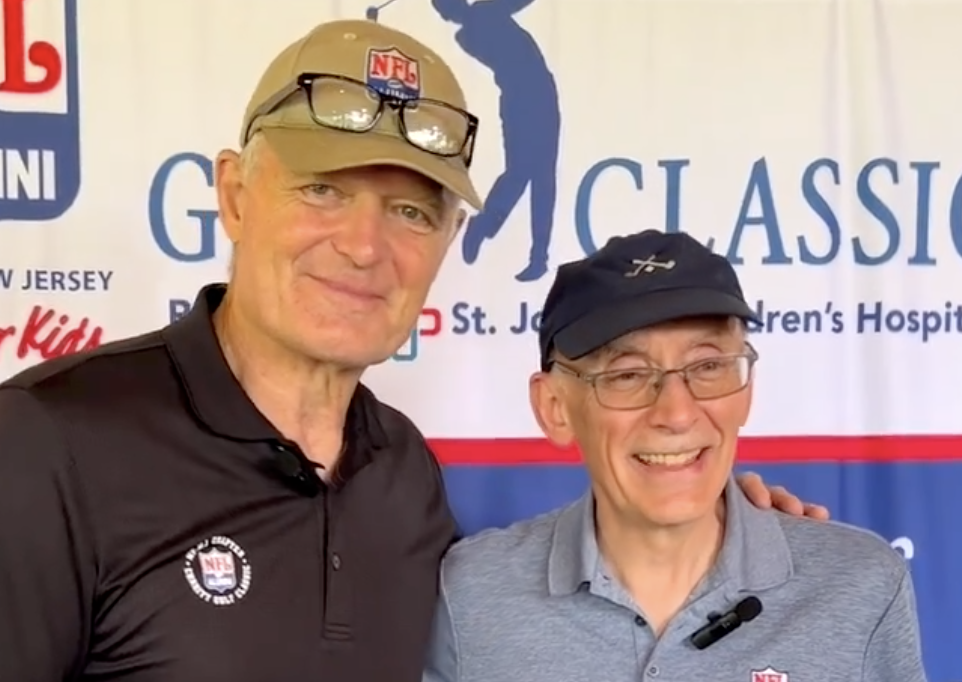
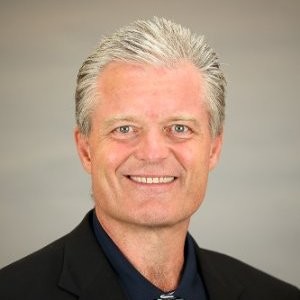
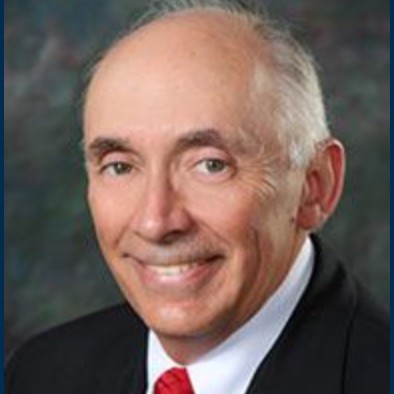
That question sat at the heart of my recent conversation on On the Brink with two remarkable men: former NFL great, Super Bowl champ with the Giants and 49er’s, Bart Oates and orthopedic surgeon Dr. Vincent McInerney. On the surface, they come from different worlds—one a three-time Super Bowl champion and attorney, the other a pioneering sports medicine physician who has spent decades helping athletes heal. Yet as we talked, it became clear they share something far more important.
Neither of them has really retired.
Not because they cannot stop working.
Because they have never stopped serving.
As I listened, I realized this conversation wasn’t really about football or medicine. It was about what happens after success—about identity, purpose, community, and the extraordinary opportunity that comes with the next chapter of life.
The Question We Never Ask
One of the challenges I see repeatedly in my research on retirement is that people spend decades preparing financially for retirement but almost no time preparing emotionally or socially. They know how much money they need, but they rarely ask:
Who will I be when I no longer have the business card?
Bart faced that question much earlier than most of us. Professional football careers are short—even a long NFL career often ends before age 35. Bart retired at 37 after fourteen remarkable seasons, three Super Bowl championships, and five Pro Bowls. But he had also prepared himself. While playing football, he earned a law degree, because he understood that football was only one chapter—not the whole story.
What struck me most, though, was not his preparation for another career. It was his understanding that purpose must replace applause.
He spoke honestly about missing the excitement of professional sports—the teamwork, the competition, the exhilaration that very few professions can match. Yet he also recognized that every life eventually requires reinvention.
That word—purpose—kept returning throughout our conversation.
Twenty Years Younger Than His Birth Certificate
Dr. McInerney offered another perspective. After more than forty years as one of New Jersey’s leading orthopedic surgeons, he still teaches residents, mentors younger physicians, explores regenerative medicine, and continues learning himself. Rather than seeing age as decline, he joked that he is simply “twenty years younger” than his birth certificate suggests.
I loved that.
His calendar is still full—not because he cannot imagine slowing down, but because curiosity continues to pull him forward.
Faith, Meaning, and What Flourishing Really Requires
There was another theme that surprised me.
Both men spoke openly about faith—not as religion alone, but as a larger framework that gives life meaning beyond careers and accomplishments. They reminded us that physical health matters, but emotional and spiritual health often determine whether someone truly flourishes after leaving full-time work.
Their comments echoed what I have heard repeatedly during my ethnographic research: many retirees lose something they never expected to lose.
Community.
For years, work creates an invisible social structure. We have colleagues to talk with, lunches to attend, meetings to prepare for, people who depend on us, and people we depend upon. Then retirement arrives, and many discover that those workplace relationships disappear almost overnight.
One executive told me no one from the office would have lunch with him after he retired. Another woman missed the train ride into New York more than the job itself, because the commuters had become her community.
Those stories came rushing back as Bart and Vince talked about family, friendship, service, and belonging. Their message was simple but profound: if we want fulfilling later years, we must intentionally build communities that extend far beyond the workplace.
The Moment That Stayed With Me
Perhaps the most moving moment came near the end of our conversation.
Bart reflected that every person’s journey is unique. There is no universal formula for retirement. Happiness cannot be pursued directly. Instead, fulfillment grows when our attention shifts away from ourselves and toward helping others.
I couldn’t agree more.
One of the myths I challenge in Rethink Retirement is that retirement is finally about “me.” In reality, the happiest people I meet are those who continue contributing. They mentor. They volunteer. They teach. They care for grandchildren. They launch nonprofits. They write books. They become active in their communities.
They remain useful.
Purpose is not something we discover sitting in a recliner. Purpose is something we create by engaging with the world around us.
Redefining Success
Listening to Bart and Vince reminded me that retirement is not an ending. It is a transition—a chance to redefine success on entirely different terms.
Not titles. Not salaries. Not trophies.
But relationships. Service. Curiosity. Learning. Community. And gratitude.
Perhaps that is why neither of my guests considers himself retired. They simply found another way to matter.
As you think about your own next chapter, perhaps the question is not, “When will I retire?”
Instead, ask yourself:
Who still needs the gifts that only I can give?
That question may become the beginning of your most meaningful chapter yet.
To learn more about these wonderful men:
Bart Oates
Three-time Super Bowl Champion, attorney, and former President of the NFL Alumni Association. Learn more about Bart’s work and advocacy through his LinkedIn profile or the NFL Alumni Association.
Dr. Vincent McInerney
Orthopedic surgeon, sports medicine pioneer, educator, and professor. Learn more about Dr. McInerney through his professional practice website or his faculty profile at Hackensack Meridian School of Medicine.
Connect with me:
- Join my Substack Newsletter Rethink Retirement
- Website: www.simonassociates.net
- Book Website: www.andisimon.com
- Email: info@simonassociates.net
- Learn more about our books here:
Now–it is time to share our new book with you!
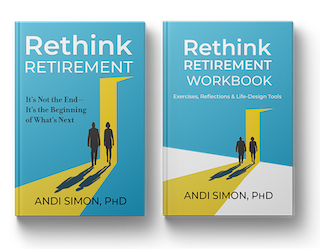
Rethink Retirement: It’s Not The End–It’s the Beginning of What’s Next
Out on Amazon and WalMart, and in your local bookseller and Rethink Retirement: The Workbook
Continue the Conversation
What does retirement mean to you?
I’d love to hear your thoughts. Share your experiences in the comments or join one of our Rethink Retirement webinars and workshops where we explore the questions that matter most—not just about your finances, but about the life you want to create.
Listen + Subscribe:
Available wherever you get your podcasts—Apple, Spotify, Stitcher, YouTube, and more. If you enjoyed this episode, leave a review and share with someone navigating their own leadership journey.
From Observation to Innovation,
CEO | Corporate Anthropologist | Author
Simonassociates.net
Info@simonassociates.net
@simonandi
LinkedIn
Read on for the entire conversation:
Andi 00:00:00 Welcome to On the Brink with Andy Simon. Thank you so much for joining us. I always love to welcome our audience, whether you’re watching the video or you’re listening to the podcast, because our job is to do something important. Humans hate to change. And as you know, as an anthropologist, my job is to help you see, feel and think in new ways so you can get off the break. And these are very challenging times because we are watching a whole population call them retirees. Boomers move into this new next stage of their lives. And I’ve been bringing people onto the podcast to help you do just this and see this through a fresh lens. Begin to understand how others have, in fact, tackled the challenge of transitions and begin to adjust and adapt and prepare. And how do we keep our bodies strong and our minds active? You have probably 30 years to anticipate if you’re going to retire at 60 or 65. We have made it wonderful for us to live longer. That’s a third of your life.
Andi 00:01:03 Now what shall we do with it? And how can we do it so that it’s rich, meaningful, purposeful, and you don’t lose your identity with your business card? So let me welcome today Bart Oates and Dr. Vincent McInerney, and I can’t tell you what a pleasure it is to have both of them here. Let me give you the context of why they are joining together, and you’ll hear as I give you their bios, exactly what they bring for our conversation today. Really, excellence. Bart Oates is a three time Super Bowl champion, five time Pro Bowls center, an attorney. And it’s interesting when he got his degree while he was playing with football and almost understanding what’s coming next, and a nationally recognized advocate for leadership, player wellness and life after professional sports. What makes Bart’s story especially compelling is that while he was playing professional football, as I mentioned, he attended long school during the off season. Graduated magna cum laude from Seton Hall University School of Law in 1990, and went on to practice law for many years, and following his football career, Bart became a passionate advocate for former professional athletes, served as president of the NFL Alumni Association, championing programs that help former players navigate health, wellness, career transitions, and life after football.
Andi 00:02:22 He also chaired the new Jersey Hall of Fame. This is a wonderful opportunity for us to hear from Bart about how you begin to prepare what you know is coming. If most of the NFL football players retire at 30, you’re going to do it at 65. Maybe. Then what happens next? And then Dr. Vince McInerney is truly special to happen here. I knew Dr. McInerney when I was an executive at Saint Joe’s Regional Medical Center. Seems like yesterday, but it was a few years ago and he’s one of New Jersey’s most respected orthopedic surgeons, but it’s also a pioneer in sports medicine, education and physician to athlete at every level, from high school competitors to Olympic and professional players. Dr. McInerney completed his orthopedic residency before earning a prestigious sports medicine fellowship at Massachusetts General Hospital and Harvard Medical School. He was among the first physicians trained in arthroscopy surgery. And it’s very interesting because for more than 40 years, Dr. Macchiarini has been at the forefront of orthopedic surgery and specializing in sports medicine, among other things.
Andi 00:03:33 He’s also devoted his career to education and service, and he’s a professor of orthopedic surgery at Hackensack Meridian School of Medicine and has held numerous leadership roles within national and state orthopedic organizations. He has been recognized as a medical educator of the Year in New Jersey. But what is so perfect for today is that he has cared for athletes from all levels, and he’s helping today, retired athletes, professional athletes manage chronic pain and continue to live active, healthy lives after playing wonderful careers. And as I will look at both of you, you’re both smiling. Everyone. I read bios, people say, is that really me? Yes. And it’s a wonderful time for us to really focus on both our life journey and also how we’ve learned to adapt to these transitions in ways that can help others or listeners who may not be football players or may not need sports medicine right now but really need to understand the transition from one part in their life to the next. Can I start with Bart Mae? Perhaps you can tell your story and then begin to help us understand how it’s helped you through these transitions, please.
Bart 00:04:44 Well, thank you, Andi, and it’s a pleasure to be here. And it’s a pleasure to be with Dr. McInerney in, in this capacity, Typically in years past, I’ve been with Dr. McInerney. It’s been on a table. It was him with the scalpel. In some capacity? Yes.
Andi 00:05:02 Thank you.
Bart 00:05:03 I have to give him credit. He has kept me moving and my joints repaired it. So, thank you, doc. We’ve become very good friends. Matter of fact, such good friends that he replaced my right knee about 6 or 7 years ago and actually took me to the hospital, drove me to the. He chauffeured me to the hospital for my surgery. So that’s called full service. And also and also back home in our house and in the kitchen, we had the anesthesiologist there to put a little border into the light pump today we used and our dog, Bodi, loved you. He thought he was going to get bacon, but he didn’t get it. So we have lots of good memories.
Bart 00:05:47 You know, I as a prayer. And so I, you know, I think I’ve been thinking about this and not preparing, just the contemplation. You know, I did a little bit of research, and 100 years ago, our life expectancy in this country was about 59. Today it’s 79. So 30 years we have almost or rather. Yeah, in 20 years we’ve increased our life expectancy. And so not only is our life expectancy increases, but because of the efforts of people like Dr. McInerney, not only the life longer, but the quality and being able to be more active. And so, you know, and that is maybe, you know, I think his what do we do now? And that which has been kind of a question for football players, if you will, or athletes, I mean that, you know, our careers as athletes in particular, you know, rather even if it’s college or if it’s, you know, a professional, you know, it is short.
Bart 00:06:47 You mentioned 30. And In my world, 30 is you’re an old man. Pretty much. And if you’re a 30 year old football player, there are some that do go beyond. And but for the most part, the vast majority of my colleagues who have played in do play are no longer playing professional football when they are 30 years old. And it’s so there’s a full life there. I mean, I retired relatively late at 37 and 30 years ago. I’m 67 now, and so it’s been that process. But in football you kind of, you know, what you that it’s going to be a short career best case scenario, it’s you’re going to be finished. And whether or not that, you know, the majority of the people we hear about the large salaries and professional football and professional sports and but that’s by far the exception. The vast majority of the guys is, I learned, particularly as the years and I spent as chapter president in the NFL Alumni Association and then the president of the national organization.
Bart 00:07:53 Most guys don’t you know, I’ll put a percentage. Well over 90% of the guys don’t have that kind of kind of bank, if you will, opportunity to have those kind of salaries. And so it’s, you know, what do they do. What is you know, so much of it is you they know that they’re going to be retired and gotten most but 25, 30 years old, still a fairly young person. But if you’re 30, you know, it’s really about the purpose. And I know that that’s such a big thing is what is the purpose? And that’s what I’ve run into and been able to help and, and work with other players who’ve come out and say, you know, yes, it was great. I mean, I had a wonderful, wonderful time. I was very blessed. I played 14 years professionally. I never heard where I missed the whole season or had those kinds of injuries. Lots of small things and a lot of things that Dr. Mac and his colleagues helped in the off season.
Bart 00:08:55 But, you know, and I was able to be on some I was on three Super Bowl championship teams. I was voted to five Pro Bowls. And so I had just a wonderfully magical career was what I call it. And it was it was awesome. And then at some point, you know, whether it’s a choice of the, you know, the organization or the player just physically or you can’t play anymore, you’re not and you’re going to be a young person. And it’s that process of saying; I had a wonderful career. And I can say there’s probably not a there hasn’t been a job that I’ve had since then that I could say that gave me that same kind of exhilaration. Right? That, you know, you have to be kind of like that adrenaline junkie, if you will, right? That you can’t. You can. No other way. There’s no other job that had that. That component of teamwork and relationships that you develop with your teammates. And because of the struggle and the effort that you have to put forth collectively.
Bart 00:10:00 And so just now you have to kind of reinvent what is my new purpose? I was I was blessed; I had some examples. I mean, my older brother played I have two older brothers. They both played football. The one who played professionally for about eight years. He was about six years older than me, so I was the kid brother watching my older brother, you know, as he grew up and played collegiately and then professionally and yeah, going, oh, wow. All right. But I also saw it professionally that he got bumped around from team to team. And so I go, not a real secure, not a real secure, you know, form of kind of to, to make a living for a family. So he really encouraged me, like I’m going to pursue football, but I also want to have a backup. And so I, I had an accounting, I got a degree in accounting. And then I went on and got a law degree and had something to do beyond that.
Bart 00:10:53 But it was, you know, it’s really about finding the purpose, I think, amongst us. And, you know, I have to blame people like Dr. McInerney because they’re making this list longer and having a much more active career, you know, and then after football, I say that obviously jokingly, but, you know, he’s.
Andi 00:11:11 There’s this wisdom there. But you also had a role model and way today’s conversation for the audience out there and all of my podcasts are to provide stories for people to see others and begin to learn from their stories, because what you’re talking about is important. On the one hand, you had a strong identity as a successful star football player, and then your other older brother began to make sure that you knew that this wasn’t forever. How do we begin to make sure I’ve got something coming next that may not give me the same glory, but certainly it’s going to give me a sound, wonderful career where I can do the things. You’re smiling at me, am I right?
Bart 00:11:57 100%.
Andi 00:11:57 Yeah, but, you know, role models and stories are so important. Dr. McNary, you’re now dealing with a lot of, you know, athletes across the spectrum from young too long. Now, you know, a perspective on what you’re seeing, both in terms of their health and well-being, but also how they’re trying to redefine life after a career in a wonderful something we all dream of and don’t realize what the implications are. Your thoughts?
Bart 00:12:26 Well, I tell everybody that you’re 20 years younger than your age, so I’m 74, going on 54 and Bart 67 going on 47. So that means a lot. It changes your culture immediately and staying around young people. I have three of my brand new residents sitting in the room with me here on to my right, and they’re learning about what to expect, not only now, but in the near future, and how we are so excited about what’s coming. This is a great age of artificial intelligence. We’re working on stem cells now. It’s not available.
Bart 00:13:01 It’s not legal yet, but we’re vying to be one of the leaders in stem cells for trials. And we have so many people lined up. I think Bart’s already for his line up on how to stay young. And you have to understand; Bart was the most durable man to ever play football. He never really missed a game. Yes. And that’s impossible in this field. And when he only took one time and all post op, that was interesting. And he was at my house in the kitchen with the anesthesiologist and the dog and my wife and, and his best buddy Jim Burt, who was Who’s going to then take his car? Because as he drove to my house, I said, I’ll pick you up. He said, no, I’ll drive over and then Jim will come later. And Jim was there when we got back, and he drove Bart around the bend a couple of houses away. And that’s how these fellas stay together. And they stay young by being around young people.
Bart 00:13:55 So I don’t have I just took on a residency program to 48 years of doing Seton Hall in Saint Joe’s. I’ve been blessed to now take on Hudson Regional, which is in Hudson County here, and they have four new hospitals that they have acquired, and they have made a commitment to excellence and to having someone like me and others that are seniors but 20 years younger. So I’m really 54 to them, and I am 54 to my residence because I think out of the box is blessed to have four sisters, three older sisters. We were all one of them is an orthopedic surgeon, just retired, my youngest sister, and she got me into the field. She said, you don’t want to be a pediatrician. You want to be a sports medicine Dr. . That’s the new field. And so did she. She managed to get through college in three years and pre-med, and she was only a year behind me. And she did exactly what I did since kindergarten in the sports medicine arthroscopy extraordinaire. So that’s the role models I had.
Bart 00:14:56 My dad was much older than my mother, who was a college professor, and my mother was like Mr. Chips. She was like Petula Clark looked like her, and my father was like Mr. Chipping, the six foot two, £230 boxer. And, you know, they had a great, great life and we had a great life as children. So we were brought up with sports. And that longevity is all in your mind and your heart as to what you want to do. So that’s where I came from. And I still am here.
Andi 00:15:27 When you look at the athletes that you’ve worked with, I said, you know, some patterns of those who thrive in those who struggle a bit, you know, and I and I say that because there’s we are hopeful. I mean, we have great talent and they come out and, you know, what kind of people really rise to the occasion, like Berkus and others who fly around trying to find the next purpose or the next structure. I find with retirees, just to put it in context, there are some who go right into it with great, great, you know, a wisdom.
Andi 00:15:59 They got it all planned and they and they start going. And then there are some who are sitting home watching TV all day, and they don’t know what to do with themselves. And any thoughts about what you have been seeing?
Bart 00:16:08 I see that, and I think it’s up to the individual or their family structure. The most important thing I found is religious and faithfulness, and the wives had told me of the men that have played football in particular, that that’s the best thing we ever did for them was to stress that at their meetings that their family and particularly their God, whoever that God is the most important part of their life, and that being together is crucial. But being together cognitively, and particularly for sports like football and now soccer. The concussions that we see in the head, injuries, some people can withstand it well and others don’t do very well. So we get them on omega three fish oils for about three months and their cognition improves. 50%. Five zero. Amazing. But the thing that was the key was their faith.
Andi 00:17:04 Wow. Wow.
Bart 00:17:07 But I really agree.
Dr. Vincent McInerney 00:17:09 I mean, that’s just such an important point. Is that beyond just a physical. Right? I mean, it’s you can take care of the person and fix their joints and, you know, make sure you eat properly and you get your sleep and you do all these healthy things, but there’s that emotional and mental aspect of it that I think is he really is forgotten and really not emphasized as much. And I agree 100% that just a person’s spirituality goes so much about them having a keeping that the mindset. Because, you know, I asked myself, would I rather on a, you know, with concussions you have you get kind of two different distinct things could happen. You could have movement issues like Parkinson’s, or you can have the memory issues like Alzheimer’s. And I keep playing well, would I rather have a memory, you know, which I would rather add to me, I, I’m okay if I lose the physical capacity. But as long as, you know, I have that emotional mental capacity, you know, that you can still.
Dr. Vincent McInerney 00:18:14 That’s right. To me, that’s just so much a bigger piece of it, because physically we’re all going to at some point, whether it’s when I’m in my 50s or if I’m in my hundreds, yeah, we’re going to lose that ability, right? I mean, that’s just part of being here. But if you have that spirituality of saying there’s more to this life than just me and my physical, you know, what I accomplish here in this life? It’s living. And I call it a life of gratitude, being grateful. And then that part of spirituality is understanding and being grateful. And in being that there’s something more, there’s something bigger. And that in that, whatever the circumstances, so much of is about a people choosing to be happy, choosing to be grateful, choosing to show, you know, love and to show and to feel it. And that is so much more than just having a, you know, a good knee.
Andi 00:19:09 Well, well, then please.
Bart 00:19:13 I just wanted to say that I’ve seen everyone that comes into new Jersey that has Bart’s faith, has his cell phone, and he immediately calls me to get their children cleared for sports. He feels that’s uniquely important when someone moves to a different state. And that was what Bart does silently and quietly and really quite magnificently, as he takes care of all his faithful. And they are blessed by that. So that’s not the most common, but it’s becoming more important now that people be able to take that act of their God to, to real life. And that’s Bach.
Andi 00:19:56 It’s interesting. I’ll give you a few illustrations of the people I researched, the number of them who had built their communities in their place of business was abundant, and they were then terribly disappointed when they retired, only to discover that all those friends that they had were their friends at all, and so many of them found that they had no one to have lunch with. And then there was a woman who got on the train every day and went into New York City and had a community on the train, and they shared all of their life stories.
Andi 00:20:29 And then she retired and she wasn’t on the train anymore and had no community. One gentleman said to me, I called the office and I had been so successful there. I had such a senior position, and nobody will have lunch with me. So I am listening to you, and I sort of want to push that story out beyond athletics or anything else, that this is not tactical and practical. This is spiritual and very much a heart kind of thing. How do you build a community that lasts long after the playing field or the other of the office? And some of them said, I don’t even know how to build a new community. And it’s been interesting coaching them on how do you begin to find new friends? And so you’re looking at me and I’m watching a smile come on Bart’s face. But the thoughts that you’re sharing aren’t inconsequential. They are enormous. And it isn’t just being appreciative or having gratitude. It’s realizing that you need to go beyond the place of work and think about this as family, community, and much larger for you to have a life all through your life.
Andi 00:21:34 And just for the record, I’m 79 thinking I’m 59, so I got you there. Barton’s thoughts on my thoughts.
Dr. Vincent McInerney 00:21:44 Again, I think you know that you kind of going in a circular here, but it’s living this full right that having, you know, listen, if you’re not healthy, it’s hard. You know, if you’re not, if you don’t feel well, if you’re sick, it’s tough to really go out and to, to think about other people and to try to find, you know, hey, I’ve got to create new hobbies and create new interests. So that is an important piece of it. Yeah. But and also and in addition it it’s, you know, having that as Dr. Michael stated, I’ve, I’ve had I grew up in a very faith filled home. I’ve strived to live a faith filled life. I happen to be a member of The Church of Jesus Christ of Latter day Saints, and we have a very strong community. And where I live in the Morristown area that I’ve been very actively part of for 30 years.
Dr. Vincent McInerney 00:22:40 Same, same, you know, church. And so, you know, there’s people and friends that even though all of my family happens to my close, you know, my blood family is out. Arizona. Utah. Yeah. And West, you know, that is my family. Those are people that I’ve my kids have grown up with and people that, you know, I’ve been able to, to do service for and people that have served me and, and you know, we just there’s we sit and we learn and teach and grow together and that is just so important about but having that personal I think is, is above all else is that having that think with Dr. Mack alluded to having that personal relationship with that. You know that God. He said, whatever, but it might be. But that’s just so important and having that perspective.
Andi 00:23:30 Curious as you’ve grown and learned and this has become so important. Do you see the professional football groups themselves beginning to pay attention to this and prepare their players, or is it simply the game that’s coming up next week that we need to focus on? I mean, is there because we’re also working with organizations to begin to address this inside.
Andi 00:23:52 You know, think about it. There’s going to be a huge tsunami of all these people leaving business, changing the culture of those businesses. And the legacies are often being lost. The wisdom is migrating out. Another question is, how can a great company sustain its values and its culture ahead of time? Do you find that they’re doing that in professional?
Dr. Vincent McInerney 00:24:12 I can’t speak for all. I can just speak my personal. So with like most of my career was with the Giants and the Marist Wellington. Mara was the patriarch of the of the team when I was there. The man of great faith and taught his. And he walked the walk. This was just a spectacular individual and his family. You know, you could you could tell. I mean, they did it. They walked the walk as well. And we always had a priest that was present. They were Catholic and we always had a non-denominational individual that was there that was part of the team. They traveled with the team we had, you know, there was a mass in a religious, other religious service every Sunday prior to the game.
Dr. Vincent McInerney 00:24:59 That was the team. And I don’t think I think it’s continued because and I and most teams have something of that nature. So yeah, because so many of the guys that I played with came from backgrounds that were not very prominent and were, you know, we were somewhat in the poor conditions and more tend to be more religiously affiliated. And so it’s having that combination I think really helps individuals perform better.
Andi 00:25:27 Yep. Well, and clearly it allows you to look back and look forward. There’s a message there. Dr. McInerney, you look and do you see things changing or getting better, stronger, preparing people more for the transitions?
Bart 00:25:41 I think that is here now. I always remember Secretary of State George Shultz when he was with President Reagan, and when he retired were moved on to, as he said to my next phase. He would have, first of all, the Soviet and then the Russian ambassadors to his house, and they would cook and he would bring their special things together, and they would argue in public places.
Bart 00:26:07 But they got along well, and they got that from Ronald Reagan, because when he and tip O’Neill were fighting, he’d say, belly jellybean. Time to say I want the orange. When he says you always pick the orange. And how about taking the red one? No, it has bad dye in it or something, you know. And that’s how they did it. And they went and played ball and they ate together. Then when he went on to Stanford faculty, he would listen to the students. He said, always be by young people. And I’m surrounded by young people in my room here now, and they keep you young because I learned something from them that they is so intangible just to listen to what they’re talking about. And I give them the perspective of a gray haired who’s been through wars and pestilence and had to negotiate things that were thought impossible. And he said that I enjoy coming to work every day and coming to teach. And that’s how I feel, and that’s how Bart feels himself and others.
Bart 00:27:04 So we enjoy the moment and the passion of moving on to our next duty in life. And that’s like grandchildren and other things that we live for. So I’ve embarked on now stem cells my residents saw for today for the first time, probably for them how we do platelet plasma, which is PRP, to help make our joints live longer. Now the next amazing thing is stem cells or progenitor cells. And we are very active. We’re in a top five group right now that’s looking at this, and I’m looking forward to operating more with the needle than with a knife. And I’m hoping that my hands are steady. As Carter Rose was at 94 when he did his last surgery and said, I’m now going to retire from operating, but I’ll still see patients. And he was in his late 90s when he passed away, master man. And his hands were as steady as anyone’s could be. I’m hoping mine remain that way myself. But that’s how I look at it, that I’m looking for the next new adventure With this both here and in Florida this year.
Bart 00:28:14 New Jersey people are down there and back here. So that’s how I look every day at my life that I’m here on earth, because I’ve been gifted to do certain things by my maker, and it’s my job to continue that and enjoy every day of it. Even though we just got here in two minutes before we had a tick in here, because we were injecting people and we sat down calmly, but we did have to run up the stairs.
Andi 00:28:38 Then you picked your tie, so you looked.
Bart 00:28:40 At my tie. So I look good. Thanks, Bart. And but I see it with Bart doing it with the NFL alumni and other groups that we’ve given them purpose. And some of them, we’ve saved their lives. So literally. But I got to give Bart credit for that. He’s done the best job I’ve ever seen someone do as well their phone numbers, and he always has someone to send them to. If he can’t do it himself. And it’s right on the spot and it’s done and done lovingly.
Andi 00:29:06 And Bart, you don’t want to do surgery or injecting. I think that’s why I refer them over.
Dr. Vincent McInerney 00:29:12 Why? All you have to do is know one of the best in the business. And that I do.
Andi 00:29:18 I gather neither of you think the word retirement is something that applies to you. And as my husband said to me, I’m not retiring. And I said, well, I’m not either. What is this thing that people are moving into called retirement? But for us, like you, life is very interesting. And, you know, whether it’s writing another book or developing programs to help people understand how to rethink retirement or just to do the podcast and begin to bring a story to life. This is really a gift that I if I retired, I would do this all over again. It’s sort of like, what is this thing called stop and the challenge I have is so many people work their entire lives, sometimes two jobs to hit 65, and then they don’t know what to do with themselves.
Andi 00:30:03 And I my, my hope is that the gift to them is to listen to you and begin to realize that the power of community of spirit is something that will lift them, but they also need to have some purpose and to give and give. That your giving is your curiosity, your sustained involvement in your communities, the power of the church, but also the power of your family. So I can’t thank you enough. Let’s close with some last thoughts. And you know, I’ll start with Dr. McInerney. Last thought. Other than I know you want to go back in your scrubs and go put another in somebody. I don’t have a body that needs you yet, but I’ll keep mine. My last thought, my friend.
Bart 00:30:42 Last thoughts? Are we blessed to be in an incredible country and we have our differences. However, we need to make it work. And we work by our spirit, our joy, our passion every day to live life. And as Bishop Sheen once said, who’s now going to be canonized? Life is worth living every day, every moment.
Bart 00:31:06 And to love your God and your family.
Andi 00:31:09 Yes, and every day is a gift, something we should cherish and use very carefully. And that’s why I listen to the people who came here for the World Cup. How many of them said, your food is like this, and everything is like this? So why don’t you need two Home Depots within ten miles? And the difference here, we don’t appreciate the joy that we have and the gift that we have to give part. Your last thought, and I can’t thank you both enough. Please.
Dr. Vincent McInerney 00:31:35 You know, we each and this life, we have our own journey. Individual. Distinct. Unique. No two people are the same. And so there’s no prescription that like exactly the same for everybody. Everybody has a different what makes them happy, what makes them fulfilled is different. But as we age, as we get older, it’s trying to maintain finding that that continued purpose, finding that, you know, What is it? It’s, you know, it’s not so much if it’s going to make me happy.
Dr. Vincent McInerney 00:32:11 Because if that is the focus and you will never be happy.
Andi 00:32:16 Right?
Dr. Vincent McInerney 00:32:17 Okay. And so if your focus is on you. Right. And that’s tends to be what happens with retirement, is that focused in turns like so much out working and in family and raising my kids, etc. Now all of a sudden, I’m going to retire, I’m going to go down to the villages and, you know, play golf and go.
Andi 00:32:35 Every day will be a Saturday.
Dr. Vincent McInerney 00:32:37 And I got to tell you; I like my Mondays.
Bart 00:32:42 I do.
Dr. Vincent McInerney 00:32:42 I like it when weekend is over and you’re like, okay now. Yeah. Let me get back to work. Yep. Work is and is a purpose is what it is. And so but that purpose is and ultimately to me my experience it’s being able to have a purpose. It’s focused on somebody else. And how do I can make somebody else life a little bit better help somebody else? Whether it’s my family, whether it’s a close friend, or whether it’s.
Bart 00:33:07 Somebody.
Dr. Vincent McInerney 00:33:07 I don’t even.
Bart 00:33:08 Know, I know.
Dr. Vincent McInerney 00:33:09 I see Dr. Mac do that every single day. Yeah, he’s very fortunate that he has people call and say, can you help me? And that’s what he gets to do. So he lives that to him. It’s not very special. But as I look at it, it’s tremendously special. And I admire him for that and just want to publicly acknowledge my admiration for him and I.
Andi 00:33:31 I’m honored to have met you, Barton, to share your story. Dr. McInerney, what a pleasure to see you again. And I’m sure those residents sitting around you are saying, we are so fortunate to be with Dr. McInerney, because who knows what comes next. To all I know is that it’s a journey of discovery, of belonging and of really a meaning something and having a purpose so that as you look back and you look forward, it’s been a trip worth having. Thank you both. Let me end up by thanking all of you who come to our podcast.
Andi 00:33:59 You have made us 18th among the top 100 podcasts on the topic of change. I can’t tell you how much I appreciate both. You’re coming, you’re watching. You’re sending me all kinds of ideas and using the podcast to share our thoughts with others because as you know, the stories change your own story and as you listen to them, yours changes and it grows. And today we’ve had marvelous guests and Dr. Vincent McInerney to share with you how not to retire I same song and how to really enjoy every day that you have as a guest. Enjoy it and be kind. My books are all available at Amazon under Andy simon.com, and our workshops for helping you design the next stage in your life are available as well at our website and simon.com. Goodbye. Have a wonderful day and please get off the break. It’s time for you to enjoy your life. Bye now.