



As artificial intelligence accelerates, many leaders, founders, and professionals are quietly asking the same question: Where do I still matter? If machines can write, analyze, summarize, and even “sound” human, what is left that cannot be automated?
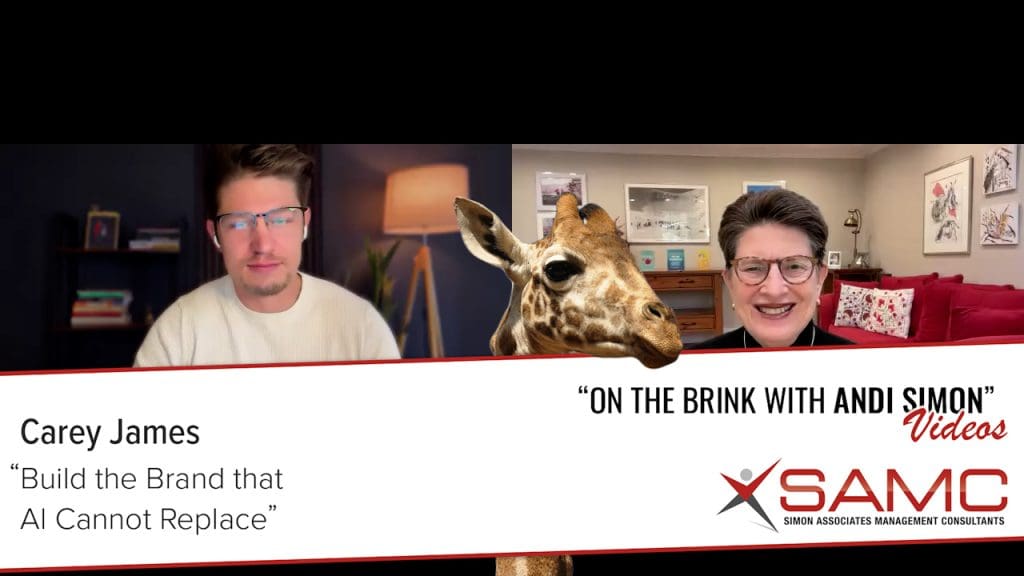
In this episode of On the Brink, I sat down with branding strategist and neuroscientist-turned-entrepreneur Carey James, co-founder of Brand Alchemy, to explore why a personal brand—not technology—is becoming the defining asset of the future.
What emerged was a powerful reframing of branding—not as self-promotion, but as survival.
Branding Isn’t About Visibility—It’s About Trust
Carey’s journey began in neuroscience labs and academic research, where brilliant minds often remain invisible. In these labs, the work mattered deeply, yet few people beyond their field ever heard about it. That disconnect led him to a simple realization: impact doesn’t scale unless people know who you are.
Branding, in Carey’s view, is not about being flashy or loud. It is about becoming trustable at scale.
Human beings evolved to live in tribes. We trusted the hunter, the healer, the builder—not because of logos or résumés, but because we knew who they were. That same ancient wiring still governs modern decision-making. Whether we are choosing a consultant, an executive hire, a keynote speaker, or a company to invest in, the first question is rarely “Is this organization impressive?” It is almost always: Do I trust this person?
Your Name Is the Asset—Not the Logo
One of Carey’s most important insights is deceptively simple: your personal name is likely the most valuable asset you will ever own.
Companies come and go. Products evolve. Roles change. But trust attached to your name transfers from project to project. This is why serial entrepreneurs can fail, pivot, and succeed again—while others disappear after one setback.
In the age of AI, this becomes even more critical. You will not always be the smartest voice in the room. Algorithms already out-compute us. What they cannot replicate, however, is your lived experience, judgment, pattern recognition, and imperfections. Those human elements—your way of thinking, questioning, connecting ideas—are what create differentiation.
The “Label on the Bottle” Problem
Most people struggle to articulate their own brand because they are trapped inside it. Carey calls this the label-on-the-bottle syndrome: when you are inside the bottle, you cannot see the label.
The solution is not more introspection—it is perspective. Carey encourages leaders to do what great organizations already do through 360-degree reviews: ask others how they experience you. Patterns emerge quickly. Strengths, quirks, values, and stories surface that feel obvious to everyone else—but invisible to you.
This external clarity becomes the foundation of an authentic brand, not a manufactured one.
Watch our podcast with Carey James here:
Less Is More: The Sushi Menu Rule
Another key idea is restraint. Many professionals try to showcase everything they’ve ever done. The result is confusion, not credibility.
Carey uses the sushi menu analogy: the most trusted restaurants offer fewer choices, not more. A focused menu signals mastery. The same is true for personal brands. The art is not what you include—but what you leave out.
Lead with what you want to be known for. Let the rest be discovered over time.
AI Is Not the Enemy—It’s the Amplifier
AI is not here to replace your brand. It is here to amplify whatever foundation already exists. Without clarity, AI simply scales noise. With clarity, it accelerates reach, consistency, and impact.
Carey advises leaders to stop trying to “be everywhere” and instead spend time in their zone of genius—teaching, speaking, advising, thinking. Capture those moments. Let others (and tools) handle the editing, distribution, and optimization.
One hour a month, done well, can fuel an entire content ecosystem.
The Takeaway
Your future relevance will not be determined by how well you compete with machines—but by how clearly you show up as human. Your story matters. Your name matters. And in a world of infinite information, trust is the rarest currency of all.
As Carey put it simply: If you don’t treat your name like a business, you will fall behind. If you do, the future stays open.
And that, truly, is what thriving on the brink looks like.
To Learn More About Carey James, check out his LinkedIn profile.
Or his website.
Connect with me:
Watch for our new book, Rethink Retirement: It’s Not The End–It’s the Beginning of What’s Next. Due out Spring 2026.
Listen + Subscribe:
Available wherever you get your podcasts—Apple, Spotify, Stitcher, YouTube, and more. If you enjoyed this episode, leave a review and share with someone navigating their own leadership journey.
From Observation to Innovation,

CEO | Corporate Anthropologist | Author
Simonassociates.net
Info@simonassociates.net
@simonandi
LinkedIn
The full text is below:
Andi Simon 00:00:02 Welcome to On the Brink with Andy Simon. I’m Andy, and as you know, my job is to get you off the brink. What I really want to do is help you be an anthropologist. Think about how you can step outside and see, feel and think in new ways so that you can understand really what’s going on and how it can impact you, who you are and what you’re doing and why it’s important to change, perhaps. I’m honored that we were ranked 18th among the top 100 podcasts on the topic of change. I have some great company in there, but it’s a reflection of the fact that I kind of find people who are going to help you do things in a new way, and you embrace it, and then you bring me some more people. Today is a very exciting day. I’ve carried James with us today and thank you, Carrie, for joining me. Carrie is an amazing individual who’s going to help you understand how AI can I take your brand? If you have a personal brand.
Andi Simon 00:00:59 And we’re going to talk about who are you and what’s your identity, and is it your company, or is it what you do in that company? Or do you have a life outside of it that brings a lot of complexity together in terms of who you are? What’s a brand anyhow? In my old marketing days, a brand. To answer the question, why are you today? We’re going to worry about how do you create a story? Because it’s a story. People buy a story about why you. Let me give you a little background. Most people stumble into branding. I’m going to read Kerry’s LinkedIn and bio because I think it really reflects who he is. He broke out of the neuroscience lab. Now I’m an academic, so I understand this. He broke out of it at midnight and never looked back. What he discovered he was deep into PhD research, and he was swimming in brain scans, footnotes. And the slowest publication pipeline known to man. You don’t publish; you do perish. But if you can’t publish, what are you going to do? so.
Andi Simon 00:01:57 One night, after two many hours and two little oxygen, he realized he wasn’t built for academic purgatory. He didn’t want to waste years making an impact. Instead, he wanted to move fast, connect, connect dots, and build something real. So he dropped out. That’s a PhD program. So he started working with founders and thought leaders and brilliant minds to help them do something important. They had no idea what their brains were or why it was so important. So that’s where he came in. He co-founded Brand Alchemy to help those geniuses turn their knowledge into influence and their names into assets. Now, if you’re out there, it doesn’t matter if you’re an author, a thought leader, a CEO, a key executive, a mid-market entrepreneur, this is a story important for you. He doesn’t do formulas. He builds brands rooted in evolutionary trust, the kind that tie warrior into our biology through story storytelling. Now, this is important and why I find him so attractive for today? I don’t know, he says.
Andi Simon 00:02:57 100,000 years ago, some hundreds of thousands of years ago, humans had a quantum leap in their brain. So instead of things being a person, they became a meaningful person, and stories became the way we lived. And he’s shaking his head. So if you’re listening and not watching, I think he has something to share with you today. And that’s about as much as I’m going to tell you about Kari, I’m going to let him tell you about his journey. He’ll make it come alive better than I can. And it’s his brand. So I’m Carrie. Who are you and what’s your journey been like? And help our audience understand why they should trust your approach to branding them at a time when AI is going to do all kinds of interesting things. And I’ll tell you some stories later. Please, sir. Who are you? How did we get here?
Carey 00:03:43 thank you so much for the introduction, Andy. And, yeah, it’s great to be here. excited to talk with a real, corporate anthropologist.
Carey 00:03:51 It’s also an anthropology is a topic that I was actually obsessed with at one point. Still, I’m in some ways, but at the end of the day, I’m a nerd. I’m a geek and a nerd about human behavior, human psychology, and influence. so one part of my story that I don’t often share is I actually started out in Hollywood. I worked in entertainment for a short time, and while it was really fun, got to meet a lot of great people. one thing that it really is really fast is that the real superheroes aren’t in Hollywood. That’s where the fake ones are, and the real ones are in the world of science. Which is why I ended up, you know, with an obsession of human behavior, understanding everything from Meisner to method acting. I started studying things like anthropology, started saying things like, you know, neuroscience, why we do the things we do based off our evolutionary pasts. That led me to the lab. So pursuing a PhD in neuroscience. And essentially what happened is, yeah, it was way too slow for me.
Carey 00:04:44 I wanted to see real change today. And I’m sitting there with some of the you know, what I, what I felt were some of the most well respected neuroscientists, you know, in the industry where we’re pioneering, you know, different techniques in the world of neurofeedback, which is like kind of like brain training. Anyways, the people I was working with were amazing. And the interesting thing is they were so amazing. I was seeing it every day, all day. But then they weren’t getting their work out there. They were kind of existing as these, you know, quiet geniuses in the shadows. So I decided to make a change, about that. And then I went out and started selling them. And I always think about this as, like, you know, making people sellable. Branding is making people sellable. PR is selling them. So I started hitting the PR waves, with, with the two doctors that I was working with. And within a couple of months, they were on everything from Good Morning America to the Today Show to Doctor Drew, Doctor Oz, and Ted talks.
Carey 00:05:39 I actually 13 years later now I just got one of them on the USA today bestseller list. with the kind of brand, you know, that we, we identified years ago.
Andi Simon 00:05:49 So pretty cool. And the as you developed your branding, you went from PR ING them to. Then just finding more clients. Is that how it grew?
Carey 00:06:01 Well, it was definitely non-linear, you know, to be where we are today. I ended up so I’ve worked on the ground in about 20 countries now around the world. I’ve, I’ve worked in everywhere from Singapore to Bangkok to Berlin to London and currently I’m in Mexico City. That’s where I do most of it, most of my work now, a lot of my clients in the US. But with that being said, it was definitely a non-linear path. I leaned way harder into the sales and marketing side of the thought leadership world. So what that looked like as I was working with, you know, executives at 4100, you know, understanding how enterprise works, how market launches worked, etc., and then just kept following the interests of like, what’s the human behavior behind this? What’s the psychology behind this? and now having, you know, I’ve, I’ve done probably about, you know, depends on how you do the math.
Carey 00:06:50 But about 40 to $50 million in sales directly in my career. that’s on, you know, 1 to 1 deal to corporate complex enterprise deals. And the one thing that kept sticking out over and over and over, which is an idea I think you prescribed to, is, the idea that that all sales are human to human. every and every sale is just a decision based on trust. So all trust is human to human. A lot of people and I have a list of I call them non commandments, things you shouldn’t do. a lot of people think about, you know, sales as, as, it’s their company. You know, their company has to be amazing. Their logo has to be amazing. All of this in order to get clients and market share. and I disagree with that. Most the most humans of my opinion, unless you’re unless you’re Coca-Cola or, you know, one of the legacy huge, untouchable kind of brands. They care about the people behind it. And even then, when you’re a large company, you know, you look at Tesla, for example, it’s like people buy Tesla’s because they like Elon Musk, or they don’t buy them because they don’t like Elon Musk.
Carey 00:07:48 At the end of the day, he could have called it something else, you know, but they’re buying it from him. Essentially. So. so yeah, that’s like the, it’s everything’s been informed by sales and marketing data, just a lot of conversations with a lot of people and interestingly enough, well, not, you know, traditionally trained in branding work. What I found is that sales and marketing gets a lot more efficient and easier when you have brand dialed in. So that’s why I focus on that as a, as a foundation for all the work that I do with the various thought leaders that I work with, when people know who you are, they’ll be more likely to buy from you. But if you’re hiding behind, you know, a corporate logo or something like that and you’re, you know, quote unquote, letting this the work speak for itself, as a lot of the people in academia and science say, it doesn’t mean much. They have to know who you are.
Carey 00:08:37 And it goes back to, like you were saying, our tribal environments and our tribal environments for hundreds of thousands of years, we had the medicine woman. You know, we had the hut builder. We had the hunter. And while, you know, we had we had our designated roles within the tribe, we often, you know, we built trust in other areas. We would become proficient in an expert in one area. And because of that, people would trust you with their life. Even if to do something else, they would say, okay, well, they’re pretty good at this thing. They’re probably pretty good at those other things. So then you start to, And we built these, these relationships up over, you know, whatever, 50 years, 60 years, whatever the time, the, the, the life cycle was back then. But nowadays it’s different. It’s not 100 to 200 people in a group. It’s hundreds of millions and billions. So then the challenge and the excitement exciting challenge becomes, you know, how do we how do we make it feel like, you know, billion people know us 1 to 1 like they did in our tribal days.
Carey 00:09:36 How do you develop that, that you know, the tribal value system, the trust, etc., that we had back then because our brains are still operating on that, that, that software. so.
Andi Simon 00:09:45 Well. And now this is not, all of a sudden, you wake up in the morning, I want to build my personal brand. you know, my husband is a serial entrepreneur. He’s built several companies, and, to some degree, that he built them and people bought from him. So I understand the power of that personality in it. And the trust came often from meeting with customers and asking, what? What’s missing? How can we help you? Not this is what we sell. And please buy it. And so we often laugh about the fact that he grew it to 100 plus million and was able to sell it because. And then he’s not there and it doesn’t work. What is it that you can do as you’re helping an entrepreneur, for example, try to build their personal brand identity or a company leadership team that knows that there’s going to be changes coming and how to begin to identify it.
Andi Simon 00:10:37 Where would they begin? How do you give them a starting point and then how you cultivated and begin to nourish it. So next thing you know, they’re knowable and lovable.
Carey 00:10:48 Yeah. So great question. And it’s really, it’s like there’s some slight paradigm shifts that we like to work on at the beginning, that lead to, you know, expanded, compounded growth over time. one of the first ones. And it seems so simple, yet some people struggle with it in a big way, is understanding that your name is probably the most valuable asset that you’ll ever on your specific name, not your company’s name, not even your PhD or your education, etc., but your name itself. if leverage is in the in the right way, it can be, you know, more scalable, more profitable, etc. over time. So one thing is just claiming yourself as an asset, treating yourself your name like a business rather than an afterthought or rather than something where, oh, I should kind of hang out in the shadows and not let people get too close.
Carey 00:11:39 and the reason being is not. Not because you want to be flashy or obnoxious. It’s because it’s survival at this stage. you mentioned before, you know, there’s two types of people that we typically work with. One is people actually trying to grow and expand, and they’re thinking pretty ambitiously. They’re trying to, you know, go from a six figure brand to a 7 or 8 figure brand, sell products, things like that. The other one is the legacy developers, and its people that have worked throughout their career. They’ve they have a body of work, they have logos, they have a resume. But for them, it’s about ensuring that the right story is told, either one for either one to be relevant in the new area of AI, it is absolutely necessary to treat your name like an asset, because eventually, and this is happening faster and faster than most experts even predicted. you will not be the smartest in the room regardless of who you are, because literally, it’s going to be impossible because the robots will be smarter than all the humans on the planet.
Carey 00:12:34 And I say that not to not to you, doomsday, but it’s just the truth. It’s just the trajectory we’re on. So then it comes down to what do we really have? What is what is the actual value of a human? And it’s then, you know, doubling down on the, the humanity behind yourself, your expertise, obviously. But it’s not just your expertise, it’s how you the specific flavor of expertise you have when people are coming to you. Not as an expert, but the expert, the, you know, the Andy Simon brand, for example. It’s the peculiarities behind you. It’s the way that you think about ideas, the way that you digest and you, you know, take signal here from this market and signal here and put them together and then give your own spin on it. And that’s when people you know, and I’ve seen clients do this time, time again when they really own that, that their name is a brand one and that their unique opinions, unique thoughts.
Carey 00:13:26 Corporates are scared of given opinions a lot of the time, corporate executives, they’re scared of being loud. But it’s getting to the point where it’s a survival. It’s necessary for survival. If you don’t share that, then people want to understand why, why, why they should pick you, why you should stick out. So it also goes into trust, like we’re talking about before. But your imperfections are one of the most valuable things you have because robots are perfect. So when you can actually own your imperfections, what that does is creates vulnerability, which leads to trust. So when you say, okay, I’m you know, I have like really key insights on this, but there’s some things we don’t know and there’s some things I’m hesitant to move forward on because of this reason. That’s why people like you, and I could go further on that. But another thing that’s really valuable, and you know, this from anthropology, is that, often people these days when they see socials, do they see, you know, people being very out there with their brand, they get scared of what? What’s called rage bait, you know, people saying, oh, this is terrible.
Carey 00:14:24 And I just want this for the clicks. And it’s controversial, conflicting kind of information. there’s a fine line between that, because in our tribal days, it was just as just as necessary to define the culture of the tribe as it was to define what the culture was not. And you would say that tribe across the valley there mean they’re violent or something. We are not. We believe in equal rights. We believe in this. Nowadays that’s absolutely necessary in the market as well, because if not, you get overlooked. People don’t trust you. If you’re not saying, I’m for this and I’m against that. So the point being there is once you define your brand, you claim yourself as an asset. You understand your values. You understand your peculiarities. I call them your sound bites. Like, what are the things only you say? And then you start to figure out who are you for and who you against. It’s necessary these days. If you don’t do that, people won’t listen to you.
Andi Simon 00:15:14 Well, let’s hear you’re talking like an anthropologist to an anthropologist. And it’s unusual to get somebody who understands the human evolution and condition as vividly as you do. So a couple of things to emphasize for our listeners and our viewers. What Carrie is talking about is that we know who we are by who we’re not. And we define ourselves in opposition to them. And his point is that. And as an individual or as a member of a tribe, both of them are relevant here. You only begin to find out how to create identity and brand equity by defining yourself in opposition to somebody else, which sounds, a little conspiratorial, but in fact, that’s the way humans are. You know, you know, you’re a guy because you’re not a gal. What else are you? And whatever kind of person have you created? When I ask Carrie to tell you about his story, he was telling you what he wasn’t and what he is, and it was a branding story as well as what yours should be.
Andi Simon 00:16:22 The second thing he’s talking about is that it’s honorable, but only if you own it. And I would like him to talk about some of the research he’s seen and none. The people who don’t have an honorable brand, for example, looking for a job on LinkedIn, don’t get one. But people who do get one. What is it about that honorable brand that cuts through the facts into a story that somebody can buy? Because people buy stories, they believe the stories even if they’re not true. Because there’s no truth. And so help us understand what you’ve seen happening as a result of the work you’re doing, and the work others are beginning to understand as well, because it’s in power here. Please.
Carey 00:17:01 Yes. So, there’s several fun stats that I can share, and I can give you a, you know, study after study, but a few that are relevant. One in particular is that, when you look in the world of VC investment. So I work in the world of yeses, I’m always looking for ten second guesses.
Carey 00:17:17 If I have a client and they’re looking to get, you know, they’re looking to, you know, go up the, the ladder in a corporate structure or they’re looking to get more consulting clients or they’re looking to get a $50,000 keynote. These kinds of decisions are typically made in a very short amount of time. And I’ve been on the booking in, and I’ve been on the, you know, the client event, and I’ve seen it happen over and over. They have a split second where they’re like, okay, is this person the best at what they do? Do they, you know. Can they back up the claims, etc., about what they’re talking about? And do I like them? Do I actually like them? Are they the right vibe? The culture fit for what I’m doing? so I like to take this example. There was a study done by Harvard Business Review over the last few years that showed that when VCs are looking to invest in a in a company or they or they have an idea, you know, they’re pitched by a startup, they place a significant amount more value on the founders themselves than they do the actual project.
Carey 00:18:11 a lot of you look at like the background of trajectory of some of the biggest startups in the world, they didn’t start with that idea that they are today. You know, the concept they are today is not how they began, but the founders stay the same. So when a VC is about to give a, you know, a startup $10 million in seed funding. They are looking at the people way, way more than the concept itself. Yeah. Like is the market viable? Is the product there? Sure. That might change in three months, but what they really look at is the person. And if the person is a ghost, then they can’t know who they are. If the person has no thought leadership developed, then they’re at a, at a, you know, distinct disadvantage compared to other people that they’re considering to give money to. that’s one, you know, in the VC world, one and one as well is, for people that own companies, founders, etc.
Carey 00:18:59 research shows that if you’re looking for great talent, which that’s, you know, the talent wars are among us right now. It’s getting more and more with less and less opportunities, people getting replaced by AI than the talent war increases. So people are more likely to work for somebody that we consider a hero or somebody that they look up to then somebody that would not. And you can’t just compare and contrast resumes to give them that information. Thought leaders, people that go out. They get on stages. They talk about their unique IP, their intellectual property, the beliefs that they have. Or maybe they’re more active on social. Maybe they’ve did a TEDx talk. Things like this. You are more likely to be able to acquire head hunt talent from other companies to take them from your competitors. If you have a brand that is developed, which is significant because when you’re competing in, you know, especially in, you know, tech markets, etc., it’s night and day difference. The people you get on your team, there’s actually data that supports that.
Carey 00:19:56 People will take a pay cut to work for their hero, you know, somebody that they look up to because it’s mission oriented. They’re tribally aligned. So they will actually take less money to work with you if they think you are a thought leader, if they if they, you know, vibe with what you’re putting out. So, the last one or last bit in terms of, where money, where we see money going these days. So it was just announced this was over a year ago now. But YouTube is now watched on living room TVs more than Netflix in the average American household. That’s also, I mean, more than all the other, you know, entertainment providers. So people are watching YouTube on their living room TV. Now is the point. when they’re watching it, they’re usually watching human beings, they’re watching creators. They’re watching people that are developing their brands by putting out content. They’re also watching Ted talks. They’re watching podcasts. They’re watching, you know, they want to be in that.
Carey 00:20:48 That’s where the human brain lights up, is when they when they engage with others and they see others putting out content. The point being there is that this marketplace is becoming more and more competitive. Number one, it’s becoming more mainstream. Some people actually say that, you know, the last election was won through podcasts, 23 hours of exposure for one candidate versus about three hours for the other. So people are getting better and better at branding themselves, putting them out there, getting visibility. So the competition has increased and it’s now, you know, it’s gotten to the point where it’s necessity, plenty of data to support this. And without doing that, people just get kind of lost, and they get lost and, you know, they disappear much, much faster. They become irrelevant in, you know, seconds in minutes rather than weeks and years.
Andi Simon 00:21:33 Well, you know, I’m listening to you and I’m smiling and thinking at the same time. I’m trying to make sure I hear you accurately, because my next question is, okay for our listeners or our viewers, how should they do this? it isn’t sort of like I wake up today and I want to build my brand.
Andi Simon 00:21:52 So where do I start? But you’re giving them a tool kit? Sort of. I’ll go back to brands, answer the question. Why you. secondly, we live the story in our mind. So what are you going to do to change or create a different story? And then people buy the story. And so your story has to resonate with their story. That’s sort of my foundation around here, am I right? Sort of. And if I am, tell us, how would you do it? And I know a lot of thought leaders who probably could use your thinking, if that’s okay for you to share.
Carey 00:22:22 Yeah, yeah, totally. One 2%. And, I’d actually like to add one more statistic that’s relevant for this question. and that is that, more and more every day, people that I work with are coming directly from corporates and the, you know, we’re talking to fortune 100, 500 companies. There’s a significant amount of those companies that are now designating a portion of their overall marketing budget into their executive brands the people, the VP’s, the directors, the sea levels, things like that.
Carey 00:22:52 It’s now becoming a significant strategy for them because they’re going out like they have. They have they’re putting people running their Twitter accounts. They’re running, you know, getting them on podcasts and shows because, you know, in a, in a more polarized, polarized world that we live in these days, people care about who they’re buying from. And that’s all like it’s either, you know, it’s enough for them to say, I like this person, I’m going to work with that billion dollar company or I’m not, and it’s at scale. So anyways, on that front.
Andi Simon 00:23:21 Plus, for one second, I just want to emphasize what you just said, that it used to be that you hid your personal brand inside the company and you represented the organization, not you. Now, the companies have recognized that people buy from people and that that personal brand has to be elevated, emphasized and crafted. How interesting. What a mind shift that is. And now please tell us how.
Carey 00:23:46 Yeah, they’re selling their people.
Carey 00:23:47 So the how, the how is fun. It’s, a lot of times when people start out, I, I like to share things not to do rather than things to do. And then you get into things to do. so one thing, when people start, they get really overwhelmed with information. They get overwhelmed and they’re like, there’s so much being blasted at me. And it’s, it could be, yeah, it could be a little too much for them. So usually I focus on mistakes not to make. And one thing that I was saying before is like treating your company more important than your own brand equity? A lot of times like, and I’m just speaking mostly to founders now we can get into, you know, people that are in corporate or employees, but founders etc. they often neglect their personal brand to raise up their company brand. The biggest mistake right there, when that if that project fails, for example, if one company fails and you leave, you have absolutely nothing under your own name.
Andi Simon 00:24:38 No equity.
Carey 00:24:39 Ghost again? Nope. Yeah, but what’s fun is, regardless of if fails or not, if you’ve built equity under your name, then the trust that has been developed under your own name gets transferred to the next project and the next project. This is where you have serial entrepreneurs that have hit hits and misses over and over, but the same, you know, the same amount of eyeballs about the trust of connections, etc. go from project to project. So, one thing to keep in mind there, but we’ll go back to okay, I’m sitting here, I’m thinking about developing my brand where I start. Number one is realizing that your offline brand and your online brand are not the same thing. Offline brand is your reputation, your career, your direct contacts, maybe referrals, things like that. Online brand is the world in which people that have never been exposed to you, they’ve never heard of you before. How are they perceiving you? And usually, often is the case. It’s not at all who you actually are.
Carey 00:25:33 Your eyes, they don’t match. There’s no, you know.
Multiple Speakers 00:25:35 They make you up. You. They make you up to them.
Andi Simon 00:25:37 Story, right?
Carey 00:25:38 Yeah, yeah. And the fact is that you have an online brand, whether you whether you know it or not, even if that’s a lack of an online brand, people are googling you. If you’re in the world of business, people are looking you up, they’re vetting you, making sure you’re legit. So if you have nothing, that’s actually a better place to start than having something that is inaccurate. Because usually people have something and it’s not telling the story in the right way. So how do you tell the story in the right way? How do you get this accuracy? one of the first, like the foundational, paradigms paradigm shifts that we work on with, with clients at the beginning and in my own company, is this idea? I call it the label on the bottle syndrome, and it’s something I kind of, I kind of heard about before.
Carey 00:26:17 I’ve kind of developed it into my own concept. I’m actually doing a TEDx talk on this in March. so label in the bottle syndrome is this, it’s this phenomenon that everybody struggles with. I’ve worked with people that run billion dollar branding and marketing campaigns. They struggle with this themselves. Some of the world’s leading experts in branding labeling the bottle syndrome is when you are inside the bottle and you cannot see the label from the outside. And that’s simply it’s just like, you know, trying to write a book. When you are the book, you are the person inside the book. You are living this and breathing this every day. So often people, they become overwhelmed really fast because they’re like, okay, what about this? What about this? But it’s they’re the wrong person to be telling the story because you can’t see it, you know, from the inside looking out.
Multiple Speakers 00:27:00 Yeah.
Carey 00:27:01 With that being said, talk to people that know you is one of my biggest, biggest, recommendations. So in the corporate, leadership development world, You have 360 reviews.
Carey 00:27:13 When you’re working with an executive that’s running a company with hundreds or thousands of people, they actually go out and they interview the people around them for data to understand what are their strengths, weaknesses, what are their peculiarities? What are the areas that you know that are unique only to them, their specific management style? And what’s really fascinating is that empowers them in a way that that, you know, like a lot of people, they’ll describe it. Sometimes people even get emotional when they hear the feedback from others. They’re like, oh, wow, that’s me. That person that I kind of knew my entire career. That’s me. And there’s this, this idea. A lot of times, you know, people in the WUI community, they say, go in to learn about yourself. I say the opposite. I say, talk to the people around you. Talk to your spouse, talk to your colleagues, talk to your direct reports, things like that. And then what you’ll see is patterns where it’s like, oh, that’s the true me, because it’s things that I already, you know, I already some things I believe and then they’re validating and validating them.
Carey 00:28:11 And then what you start to build up is a profile that is then able to be taken outside of yourself. On the paper, on the strategy and then scaled through the marketplace. That’s when you get that 1 to 1 with millions is when you understand those unique characteristics about you. And often, yeah, it’s a matter of like, what are your strengths? What are your weaknesses? What are your unique stories? Because we are story oriented creatures. what are the stories that you can pull up? What are the top five stories of your career that convey not only your expertise, not only your values, but also your weaknesses that say, hey, I did this, and here’s some vulnerability so you can trust me, that kind of thing. So, starting with other people getting, you know, I’ve, I’ve plenty of resources like this that, that I’ve given clients before where it’s like, here’s a survey, go have your, your, you know, friends and family fill this out and then give it back to you.
Carey 00:29:00 So starting from outside the bottle is kind of the idea there when you have that being really clear about, you know, like I said, who? Who that is and who that is not. And then going out and then we move into the sushi analogy. So I was I was talking about the sushi analogy. You’ll probably appreciate those. Andi usually people, they have 20, 30, 40 years of experience. They have logos here. They have incredible depth of expertise in different areas. But the thing is, is that people don’t they can’t consume that in 10s or less. They can’t trust that in 10s or less. So when you go to a Michelin star sushi restaurant in a new town and you look at the menu, what does the menu have on it? It’s usually one page. It’s one page with maybe a handful of dishes and they say, okay, wow, this place really knows what it’s doing because they only serve these things. They must be great. They have the accolades to show for it.
Carey 00:29:54 What they don’t do is a 20 page menu with every, every, you know, meal you’ve ever heard of. And what’s fascinating as we hit on before is when there is that one page, a handful of things you typically trust them in other areas. You’ll trust them in this area, in that area, in that area. So the second kind of stage of this is figuring out what you want to lead with, what’s going to be, you know, above the surface, the few pieces that only you want to own versus all the things that people need to figure out once they start working with you. So our art is not what you put on the campus, it’s what you leave off the canvas. So really identifying.
Multiple Speakers 00:30:30 Those assets.
Andi Simon 00:30:30 And not what you put in, it’s a this is really a fascinating conversation because you’re just brilliant in what you’re doing. And I have a hunch the timing couldn’t be better. We were going to talk specifically a little bit about how AI can’t replace you.
Andi Simon 00:30:47 I’m not talking about an interesting story, because I do want to at least shed some light on how to use the world of, and agents and AI and the fourth Industrial Revolution and all the stuff that’s coming Without thinking of them as the other, as the enemy. you know, we started out talking about we in a and you can think of them as the they. But I really think of them as part of us. so I, my one liner is when I launched my business 23 years ago as a corporate anthropologist that helps companies change. I haven’t changed my one liner in a long time, and I’ve been doing it for all kinds of big and small companies, billion dollar companies and little ones. I’ve been working on, building my presence on chat. My best friend has become my teammate. and I have a new publisher in a book coming out, and the publisher said, I don’t know what a corporate anthropologist is. So I asked chat, and it gave me a very good description about it, and it referred to a lot of the stuff on your website.
Andi Simon 00:31:54 And then at the end it said, n if you want to meet a good corporate anthropologist, meet Andy Simon. And I said, thank you, chat. And I said to myself, So my new teammate is my best friend at promoting, and I asked Chad, what do I do to sustain among all of you AI folks the credibility of who I am and what I do? My single sentence, you know, what is it I do and how do I do it? And they say, keep providing good content that’s honest and truthful about your expertise and your experience, and you will feed us with the kind of information we need to identify you as a leader here. I share that with you because our conversation started with has AI is not going to replace you, but it can complement you and it can elevate you. Your thoughts are my thoughts.
Carey 00:32:42 so much fun to unpack there. I think it was Bill gates and I always butchered this quote, but it’s something he said, something along the lines of, you know, automation applied to an efficient process increases efficiency.
Carey 00:32:53 But automation applied to inefficiency, you know, causes a lot of problems. And that’s what a lot of people do, is they go out and try to like. I’ve tried these dozens, like, lots of different ways. I’ve worked with AI experts on this, but AI as of this moment, cannot replicate the human soul. And by soul, I mean the depth of your brain, like what we were talking about, all the human elements, characteristics, etc. it can take that, and it can amplify it in some pretty amazing ways. But until that is established, then you’re shooting in the dark and it’s just repeating nonsense. So really starting out with the I call it your brand DNA, like the foundation of that, like your background, your story, your uniqueness, all of this. Once you have that determined, then yeah, you could fly to the moon with, with, you know, AI, with writing content, writing books, things like that. but what I see is a lot of times people, they get, they get really, again, frustrated, overwhelmed with the amount of things they can do.
Carey 00:33:50 So then they start doing everything and then nothing is good as a result. So I, I operate with, a few quarters on content, which I think that’s what we’re talking about here, is content creation. People, they think they got to be going all day, every day to keep up. They got to produce, you know, ten pieces of content every single day to even stay relevant. I disagree. I think that smart people, or my geniuses, as I call them, they should be swimming in their area of genius as much as possible. flow state access. If you’re familiar with the world of flow states, like wherever, whatever place that you’re able to get into flow, you should be there often, right? And typically that’s going to be on, you know, in areas where you’re teaching or you’re communicating, you’re consulting your, you know, doing podcasts, you’re doing things like that. You’re able to actually go out and engage in conversation and, you know, get in a flow state where things light you up.
Carey 00:34:41 That’s where your best content is, is right there in those spaces. It’s not you going in your office by yourself with a whole bunch of unnecessary equipment that’s way too expensive and just talking to a wall for three hours straight. Typically people struggle with that, and it’s not also being stressed out when you’re at a family events thinking, should I record this or should I not? So the goal here, the point is, you should be in your area of genius as much as possible. So figuring out how to do that while outsourcing the rest is where you’re going to shine. There are plenty of people. There’s, you know, kids coming out of college that would love to post your socials for you. That would love to, you know, edit your content and put your videos out and all these things. But the goal here, and this is one hack and we do this for my clients, but I’ll just share it. But it’s like the goal is to do a solid one hour at the minimum per month of you living in your area of genius that needs to be recorded.
Carey 00:35:34 Once you have that recording, that could be you want to stage. You want to show you even just being interviewed by a colleague on a on a zoom call. Taking that and ensuring, you know, they’re asking you questions that light you up, and then taking that and then having someone else actually distribute it, edit it, etc. there’s AI tools that exist today that can go do that for you. you know, and I’ll probably be putting myself out of business with those kinds of tools here very soon. But it exists. You don’t go learn editing today. Don’t go try to become an influencer overnight. Just figure out the areas in which you can live in your flow state, in your area of genius. The opportunities for that access, those opportunities, you know. Have a blast. Have an amazing time. And then take that and turn it into content.
Andi Simon 00:36:17 The interesting thing is that it’s not very different than the last 30 years that I’ve been in business. you know, if you did something good but nobody knew about it, it wasn’t very good.
Andi Simon 00:36:29 it was good. Good for you, perhaps. But, you know, a book that’s not read isn’t very useful. And part of it is, how do you get on the stage and tell people about why rethink is really the kind of thing you should be rethinking. It’s really interesting. Listen to you, Carrie. I’m having fun. But I do think our time is just about over. So, a couple of things you want to leave the audience with. They tend to remember the end better than the beginning, and not the least of which is, do not fear AI. It’s not going to take your brand, but you got to create one. But your turn. What a couple of things you want to remember.
Carey 00:37:07 Yeah. And, and I hate to be the doomsayers in the AI world, but it’s going to, you know, it’s going to, shepherd in a new era of doing things, a new way of doing things, a new, you know, we’re going to become much better in a lot of different areas.
Carey 00:37:20 But the truth is that you as a human, the only real asset that you’re going to have going to the future is your name. And if you understand that knowing that and treats your name like a business, then you can’t succeed. If you do not, you will fall behind. And that is the truth. Simply a matter of fact. you know, that being said, learn AI, it’s got to become your best friend. Treat it like what I actually I do sessions and I have my clients do this. It’s like actually go talk to your AI about non-business stuff. Just hang out with it. Just ask an opinion, you know.
Multiple Speakers 00:37:50 Absolutely.
Carey 00:37:50 Help to give you some insights. Turn the voice feature on and actually have a conversation with it. So become best friends with that. And then. Yeah. Last but not least is, is realizing that everything we do today is based off software that evolved over hundreds of thousands of years. The software is still the same in our brains. Like people are still thinking, you know, we still have the same emotional, you know, emotions, all these different tools and resources that we use back in the day.
Carey 00:38:16 It’s just the medium has changed. So once we understand those core concepts and then we could apply them to the evolving mediums of our time, then we can win. And that should set you up for success, understanding that.
Andi Simon 00:38:30 You know, often when I speak, I remind people that the human brain hates change. It protects you. The amygdala hijacks most of what I’m going to tell you in the next hour. So, let’s start off by saying, what is it we’re going to have to remember because that amygdala doesn’t really want to work too hard learning new stuff and making you feel threatened. So it’s going to appease you and it’s going to fear you, or flee me, or do something to protect you. So starting with that change is really a fascinating time, I love it. I have a friend who loves curiosity and loves to go exploring. but most folks don’t know what to do with it. And what you’re offering them is a pathway to the next stage in their own personal careers, their brand, and their story.
Andi Simon 00:39:20 Remember, we live the story in our mind. It does exactly what it thinks you wanted to do. So you want to stay where you are. Go right ahead. But if you want to begin to build that story and begin to build an awareness of it so people buy you and this is a time for a whole new adventure. Make it fun. It’s an exploration. You’re smiling at me. Am I okay? I’m preaching. This is cool. Now, if you need a hand, carry may be exactly the hand you need. Because sometimes alone is a little scarier than even doing it with you. So if they want to reach you, where can they find you best? Scary.
Carey 00:39:55 Yeah, totally. I’m on LinkedIn as Kari James. It’s, LinkedIn.com. Kari James official. all my handles are at Gary James official Twitter, Instagram, etc. and you could also, if you’d like, you can get a free brand audit with my company, Brand Alchemy. That’s brand alchemy. Io. we specialize in helping you see the label from outside the bottle.
Carey 00:40:18 And our internal mission is to find superheroes and give them capes. So if you want to be a superhero, give us a call.
Andi Simon 00:40:23 Yeah, I think I’m going to do that. But notice that Carrie told you about how to find him and then told you about his company, and as opposed to let me tell you about my company, and I’m embedded inside. There’s a message there, if I’m not mistaken, about how to find him and his brand so he can help you create your own. This is a great time. Enjoy it. you know, I did my doctoral dissertation on punch cards. I don’t think you tried to do yours, but I don’t know what to do with punch cards. I sort of saved them. Just in case somebody has a use for punch cards. Most people don’t even know what they are. So times do change. And sometimes what was the way we did something is no longer the way we do things. but I mean, I was pretty proud that I got it done on punch cards instead of just a typewriter.
Carey 00:41:10 Now that’s beautiful. And I want to add Andy. Simon’s still around. Punch cards might not be, but Andy, Simon’s all around.
Multiple Speakers 00:41:16 Well, I always.
Andi Simon 00:41:17 Date myself when I say that, and I’m not going to tell you my age, but I’m really excited about what comes next. And I want to encourage folks to pick up our books. Amazon loves you on the brink A Fresh Lens to Take your Business to new Heights was my first book, and it has been very cool at both being a bestseller and award winner and bringing us great clients, but it’s how a little anthropology can help your business grow. What Carrie is talking about how a little anthropology looking outside in can help you yourself become that business that needs to grow. Am I right? You got to step out and look in and see if you’ll even think about yourself in a new way. My two books about women, Rethink Smashing the Myths of Women in Business, is about 11 women who said, of course we can and didn’t, didn’t allow society to put them in boxes.
Andi Simon 00:42:03 And my third book, Women Mean Business, is just about 102 women who can’t tell you enough about how to be successful. And my new book will be coming out in March. It’s called Rethink Retirement, and it’s a really interesting journey into all of that next stage in your favorite time of life, I think. But I love work, so I’m never retiring. And so for me, this is a great time to share. Carrie, thank you for being with me today. It’s been a pleasure, and I want to tell all of our listeners, remember, take your observations, turn them into innovations and the times. They may be changing, but you can thrive. Just open your mind to what’s possible and it will come along. It’s a great time. Goodbye everyone. Have a great day. Bye now.