


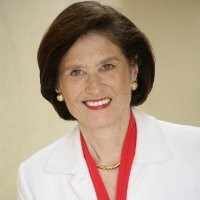
Welcome to our Podcast with Jeannette Hobson | On the Brink with Andi Simon
Summary
What happens when highly successful professionals reach retirement—and discover they’re not ready to stop? In this episode of On the Brink with Andi Simon, Vistage Chair Jeannette Hobson shares a powerful story of reinvention, curiosity, and lifelong growth — how to Rethink Retirement. Together, we explore why retirement today is less about ending work and more about redesigning life—with purpose, structure, and community at the center.
The Big Shift: Retirement Is No Longer an Ending
For decades, retirement has been framed as a reward: work hard, save well, and eventually step away. But that model is breaking down. Today, it is time to Rethink Retirement. Join me as we interview Jeannette Hobson. Jeannette is a highly respected Vistage Chair who often has to advise her members on how to prepare their life plan for the next stage, as they sell their companies or leave their careers behind.
What she has learned is that happiness in retirement comes after you cultivate your curiosity, you prepare, and you plan–at a moment when you have not idea how to “retire.”
Today, millions of professionals are discovering something unexpected:
They planned financially—but not personally.
As I shared in this episode, we are in the midst of a cultural transformation of retirement. It’s no longer a clear “off ramp.” It’s a transition—often without a roadmap.
And that’s where Jeannette Hobson’s story becomes so valuable.
A Life of Pivots: The Power of Staying Curious
Jeannette’s journey is not linear—and that’s exactly the point.
From studying math and science to working at AT&T, moving into banking, earning an MBA, launching a consulting firm, losing that business, and eventually becoming a Vistage Chair—her career reflects something deeper:
Curiosity as a lifelong driver.
She describes a key insight:
Her curiosity often outpaced her skills—but instead of stopping her, it pushed her into new opportunities.
That mindset—of testing, learning, and pivoting—is exactly what many retirees don’t apply when leaving work.
They stop experimenting.
And that’s where things begin to unravel.
The Hidden Risk: A Financial Plan Without a Life Plan
One of the most important ideas in this conversation is simple—but profound:
Many people retire with a financial plan, but no life plan.
That gap shows up quickly.
- The first “honeymoon year” feels exciting
- Then structure disappears
- Identity fades
- Social connections weaken
- Purpose becomes unclear
And suddenly, retirement doesn’t feel like freedom—it feels like loss.
Jeannette sees this coming in her work with CEOs:
“We always know when someone is going to sell their business… so we start working with them a year ahead to plan what comes next.”
That kind of intentional preparation is still rare—and deeply needed.
The Four Pillars of a Successful Transition if You are Going to Rethink Retirement
In my work—and reinforced in this conversation—there are four critical areas that shape a successful retirement transition:
- Identity: Who Are You Now?
If you’ve always introduced yourself by your title, what happens when the title disappears?
Retirement challenges your sense of self.
- Structure: How Will You Spend Your Days?
Without meetings, deadlines, and responsibilities, many people feel unanchored.
A meaningful day doesn’t happen by accident—it must be designed.
- Purpose: Why Do You Matter?
A recent Wall Street Journal insight echoes this: Mattering is essential to well-being.
You need to know where you contribute—and who values that contribution.
- Community: Who Is Your Tribe?
Work often provides built-in relationships.
But many retirees discover those connections don’t continue beyond the workplace.
And loneliness becomes a real—and often unspoken—challenge.
What Works: Lessons from Real Life
Jeannette offers a practical and hopeful model through her husband’s transition:
- He immediately pursued art, something meaningful to him
- He found a volunteer role at a hospital
- He stayed socially and mentally engaged
The result?
A life with rhythm, purpose, and connection.
No drift. No void.
Just intentional living.
Five Practices for Rethinking Retirement
From this conversation, five powerful practices emerge:
- Start Early
Begin planning your life transition at least a year before retirement.
- Test Before You Leap
Try new activities, roles, and interests while you’re still working.
- Stay Physically, Mentally, and Socially Active
A fulfilling life requires all three dimensions—not just relaxation.
- Remain Curious
Curiosity isn’t just for careers—it’s essential for reinvention.
- Reject Age as a Limitation
As Jeannette says:
“Age is irrelevant. It’s what you do with the years that matters.”
A New Narrative: From Success to Significance
Perhaps the most important shift is this:
Retirement is not about stopping.
It’s about redirecting.
From:
- Achievement → Meaning
- Career → Contribution
- Structure → Self-designed living
This is not the end of your story.
It’s the beginning of a new chapter—one that requires intention, reflection, and courage.
Key Takeaways
- Retirement today is a cultural transformation, not a fixed stage
- Curiosity and adaptability are essential for reinvention
- A financial plan without a life plan leads to dissatisfaction
- Identity, structure, purpose, and community are foundational
- The most successful transitions are planned, tested, and intentional
Final Thought
Every day is a gift—but how you design that day matters.
Don’t drift into retirement.
Reimagine it.
Connect with me:
- Join my Substack Newsletter Rethink Retirement
- Website: www.simonassociates.net
- Book Website: www.andisimon.com
- Email: info@simonassociates.net
- Learn more about our books here:
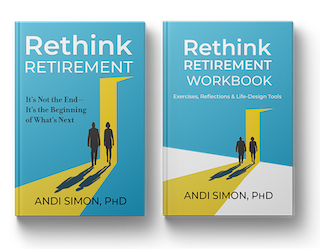
Now–it is time to share our new book with you!
Rethink Retirement: It’s Not The End–It’s the Beginning of What’s Next
Out on Amazon and WalMart, and in your local bookseller and Rethink Retirement: The Workbook
Listen + Subscribe:
Available wherever you get your podcasts—Apple, Spotify, Stitcher, YouTube, and more. If you enjoyed this episode, leave a review and share with someone navigating their own leadership journey.
From Observation to Innovation,
CEO | Corporate Anthropologist | Author
Simonassociates.net
Info@simonassociates.net
@simonandi
LinkedIn
If you would like to dive into the text, read on…
Andi Simon 00:00:03 Welcome to On the Brink with Andy Simon. As you know, my job is to get you off the brink. I’m here to help guide you through areas that are changing so that you can begin to do what an anthropologist might see. Feel and think in new ways about things that are beginning to affect you in your daily life and in the stages of your living. I’m beginning to change the focus of many of my podcasts. For almost eight years now, we’ve been talking about business change and the changes of people inside businesses going through great transformations. No doubt there are some things happening now that are going to be continuing to change you. But one of the things that I’m most fascinated by is the great cultural transformation of this thing called retirement. And it is a most interesting time because few people have planned for it. And many people, like me and my guest today aren’t going to retire. We’re going to retire the word retirement. Because when we think about it, the world that we’re in. The work that we’re doing is more interesting than giving it up to do what we’re not quite sure about.
Andi Simon 00:01:09 But each one of these podcasts are going to begin to build stories for you. And remember, when you hear a new story, your own mind changes. Your story does as well. And I’m so glad to have Jeanette Hobson here today to tell you about her story. Jeanette, thank you for joining me. It’s a pleasure to see you again. Thank you. Andy, it’s always a pleasure to be with you. Now, I’ve met Jeanette. She’s a vintage chair, amazing woman. And I’ve done 500 vintage talks. So I’ve got lots of background in the world of vintage. And if you’re unfamiliar with vintage, I would urge you to look up about it. It’s a wonderful place for business leaders to be. But I asked her to come and talk about it. She’s a chapter in our new book, Rethink Retirement, and I think her story is a very exemplary one of how life moves along and one of the kinds of changes that you face and how to begin to embrace them in different ways, you might share with the listeners of your story who is Jeanette and how has your career developed? Well, first of all, I have to thank you for inviting me to answer some of these questions that you’re posing, because it makes me think about what my life really has been and what’s made these things happen.
Andi Simon 00:02:25 we don’t reflect on that very much until somebody asks the kinds of questions that you’re asking. So thank you for that. I got some insights just thinking it through. let me begin by saying I didn’t know this in the beginning, but one of the things that I’ve learned that became very evident to me is that my curiosity and my intellect didn’t always match up. you know, we’re born as babies, were born with this great curiosity, and then something happens as we go through life. And I’m happy to say that I never lost that curiosity. And it’s been a driver for all the different pivots that have happened in my life. But when I say to my curiosity, my intellect didn’t always match up. As I quickly take you through the story, I think it’ll become evident to you exactly what I mean by that. The other thing that became evident as I started thinking about this is how much help I’ve gotten from people who redirected me. They didn’t tell me what to do. They simply told me that what I was doing wasn’t all that efficient or effective, and maybe I needed to rethink what I was doing.
Andi Simon 00:03:41 which was very helpful because sometimes we need that kick in the rear. You know, we go down a path and we’re absolutely certain this is what we need to do. Yeah. and then when it’s really harder than we thought, We wonder, is this because I shouldn’t be doing it, or is because I’m just not working hard enough? And so I have to laugh. But I have.
Jeannette Hobson 00:04:03 Been there, and I know it’s well when someone comes along and asks a very benign question, you know, are you on the right pathway?
Andi Simon 00:04:10 Yeah, exactly, exactly. And so I’ve had a lot of those people come along in my life, thank goodness, how lucky I am. so let me give you a few examples that’ll quickly take you through the story. I have this endless curiosity about how things work. My favorite book, when I was like 7 or 8 years old, was this book called How Things Work. And that book went with me everywhere. The problem was, and this is where there’s the disconnect between curiosity and intellect.
Andi Simon 00:04:43 The problem was, I love to take things apart to see how they worked. I couldn’t put them back together again. That was a big problem. That was a really big problem. when I was in, high school, I loved math and science, and at the high school level, I was pretty good at it. Well, of course, we think that if we’re good at something at that level, therefore we’re good at it. And then I went to college and I found out what it really meant to be really good at it. And I was not I was not. then, the idea of taking a five credit calculus course your first semester and almost failing it. Is, is a pretty big shot in the rear end when you’ve come out of a high school environment where you’re the tops and everything, you know, and then then you just go way down to the bottom and the, the professor said to me, if you can pass the exam, I will pass you in the course.
Andi Simon 00:05:48 But if you don’t promise me that, you will not continue on this path that you’re on. I’m going to walk you in the course and make sure that you don’t, that you don’t continue on this course. So that was a pretty obvious pivot. You know, it’s time to rethink what I’m doing here. after I graduated from college and I did pivot and went into, arts and science and got a degree in French and economics, which is useless, I mean, useless, but it was something I could do, which was which was important. So I come out of college and I kind of stumble into my first job at AT&T and the stock and bond division. I had no idea what they did there. I love.
Jeannette Hobson 00:06:36 Your story.
Andi Simon 00:06:39 And no idea what they did, but I was pretty good on the phone. They trained us to be on the phone to talk to the shareholders who were calling in, and I was pretty good, and I have some very funny stories about that. But I got thinking about, oh, stocks and bonds.
Andi Simon 00:06:51 That’s what happens on Wall Street. This is kind of interesting stuff. I should go for the big time. I mean, I’m working for AT&T and that’s a big company. But stock and bond divisions kind of small, and I should go for the big time. So I took myself to Wall Street and started walking up and down the street with my resume in hand. No clue. Not a clue what any of these companies did, but I figured if it was a bank, you know, it’s like Willie Sutton said, why do you rob the banks? That’s because where the money is. I said, well, if I go to work for a bank, I’ll learn about how all this works. Which is exactly what happened. I learned about how it all works. And it’s that that curiosity of, well, how does this work? Well, how where does the money come from? And what do people do with it, and what is business and what makes business work? And so after a period of time, I wangle my way into the investment part of the bank.
Andi Simon 00:07:48 And that was that was great because that’s where I learned how businesses work, and that’s where I learned finance. The bank sent me to Columbia because for some reason they thought that I might be useful to them. So I got an MBA at Columbia while I was working there, and after a while, I began to realize that this was great and I and I was doing really, really well. But I wanted to see what it was like to be on your own. I’d been working, studying all these businesses and working with clients about investing their money, but I thought, that’s not the same thing as actually starting a business. What would it be like to start a business? So I left the bank, another pivot and started a consulting business, and I was immensely curious. At that time, marketing was just beginning to rear its head. People were just beginning to even be able to spell the word marketing. And what I realized was that in the financial services business, nobody knew anything about marketing.
Andi Simon 00:09:00 I said, well, they don’t know anything about marketing, and I can at least spell the words. So I guess I know more than they do. So I started this consulting business to work with financial services firms to help them understand how to use marketing. and, and that was very interesting because it was an uphill battle. Nobody really knew. Nobody really understood. And then just at that time, the public utilities industry was becoming deregulated. And if there’s a place that didn’t understand marketing, it was the public utilities industry. So I took my consulting business and what I knew about what had happened in banking and deregulation and banking and said, it’s the same thing going on in the public utilities business. I can help them. So that was kind of interesting. And then from that, I kind of stumbled into the fact that there were new technologies arriving on the scene, and these technologies were being used to take marketing and use marketing in technology, to use marketing to help people do their marketing better.
Andi Simon 00:10:13 Nobody knew what that was, but I stumbled across somebody who he and I partnered, and we took our consulting business and we did that. So that was kind of fun. And from there, unfortunately, he died unfortunately, very suddenly. And I was not at all prepared to handle where the business was. Then I was prepared for where it started. I was not prepared for where it was then. and I lost the whole business.
Jeannette Hobson 00:10:45 Oh.
Andi Simon 00:10:46 Yeah, that’s a real shot in the arm. so that was another pivot. So what am I going to do now? And it was at that point, that this stitch came along and some friends of mine who knew about this stitch told me about it. And what I began to understand was this stitch was answering this question for me. Now, I understood how business worked, but I didn’t understand how people inside organizations worked. You know, like what’s what? What makes the people tick, that make the businesses run. And I realized that that’s really what this stage is all about.
Andi Simon 00:11:29 So at that point, I was 50. So I’d spent a lot of years coming to this place where I was starting all over again. Most people, when they’re 50, they know what they’re doing. They’re really good at it. They’re on a roll, and I’ve starting all over again, figuring out something new. you know that saying it takes 10,000 hours to start to be good at something? Yeah, that’s about five years. It took me about that amount of time to begin to figure it out. And then once I got an idea of how to really be competent at this vintage chairing thing, running these groups, talking to CEOs about their businesses, helping them figure out, it took me five or 6 or 7 years to, to start to get into it. And by then I’m already late 50s. Fine. and I realized that I’d been practicing malpractice for the first 6 or 7 years of that time, but nobody knew it, right? Nobody. I knew it, but nobody else knew it.
Andi Simon 00:12:40 So I figured I’d better get my act together. and I was very curious because people talked a lot about leadership, people, that that was a big topic among the Vista community. And I started thinking, I got to get some competence here. I got to learn about this leadership thing. I don’t know, I don’t really know what it is like. What is it? How do you define it? How does it work? It seems to be really important. I got to figure that out. So again, the curiosity, and into my life came this person called Lee Thayer. Lee Thayer, unfortunately, is gone now. But he was a very, very prominent, consultant, author, coach in the area of leadership. He’s written 20 something books on leadership. And he had put together a very rigorous two year course for vintage chairs to teach us about leadership. What was a perfect time for that to come into my life? And it completely changed everything that I understood about who leaders are. What do they do? how do they show up? And therefore, how could I, as a coach, help other people become better leaders? It was just the perfect time in my life for that to happen.
Andi Simon 00:14:04 And it changed everything. It changed everything about how I was showing up in my work in vintage. So then another pivot happened and vintage asked me to take on a role that was now. I was going to become an employee of this stage, rather than being one of the chairs as an independent contractor. they had decided to restructure their internal organization. They were creating these new roles for regional senior executives. and I was invited to be one of those people. And I thought, I’m just getting it about being a chair. I’m really, I’m in my stride. I’m getting there. I don’t know that I want to stop doing that and go and be an employee executive, but still an employee. So I thought about it for a while and I said, okay, I’ll here’s what I’ll do. I’ll do it for three years because at the end of three years, I either will have accomplished what you want me to do or I won’t. And you will have either fired me or you won’t. But at the end of three years, I’m going to go back to being a chair, because that’s what I love.
Andi Simon 00:15:19 I found my place. I finally found my place. That’s what I love. And so I did that job for three years and then went back. And I since 2013, I’ve back being a chair and I absolutely love it.
Jeannette Hobson 00:15:37 Now I don’t hear the word retirement. I don’t hear a thought about the next stage. I don’t hear anything about where you’re at or even where your visage members. For those of you listening. Visage is an organization that brings together the CEOs and key leaders of companies, and they come together on a monthly basis with somebody like Jeanette, that to help them be better leaders of their companies. And they are really smart. They’re curious. They really want to learn, and they bring in speakers like me to begin to help them see things through fresh lenses. And they are fun to work with and for. But Jeanette’s passion for it has kept her doing it in very different ways than you might think, because she isn’t just, growing more skilled, competent and confident at it.
Jeannette Hobson 00:16:31 She’s adding an enormous transformation to it as well. Share with us what you’ve begun to build in both the chair and the chair. Groups that you’re working with. And I don’t think you’re ever going to retire. We’re both going to forever be non-retired. Retire?
Andi Simon 00:16:45 Yes. You’re right. I think I think what I bring into the Vista group today is far different than when I first started doing the work. I think what I understand is that CEOs are people who have unique sets of talents, unique to each of them. I don’t mean unique in the world. I mean each person is a unique individual, and the way that they run their business, the way that they lead their company, the way that they think about the purpose of what they’re doing is unique to each one of those people. And what makes the Vista experience so valuable and wonderful is the ability to take that uniqueness of each person and use it to problem solve for everybody. It’s unique. Each person has a unique view. And when you can take that and extract what each person’s particular competencies and talent and, and purpose and put it into the mix of solving problems, you come up with such a rich conversation.
Andi Simon 00:18:13 And that’s what I wanted to create. It’s not about me. It’s about causing that to happen in the room and creating a safe place where people feel they can talk about whatever’s on their mind, but they have to feel safe, and they have to believe that each person is there to help them, not to get anything back. Well, and I think now that that’s where we are.
Jeannette Hobson 00:18:42 Well, and the most effective chairs that I have spoken for, are extremely collaborative. They’re very enabling. They’re facilitators. They. Nobody is to take charge. Tell you how to do it. they tell you there may not be on the right path like you were told and how to pivot to improve, but unless you can bring the problem and then have others help you redefine it in a way that’s actionable in some fashion, it’s hard to solve it. And there’s no safe place where you can find solutions very often. And your staff expect you to have the solutions not to wait for them to necessarily yourself.
Jeannette Hobson 00:19:21 But you know, your story is full of rich pivots. You have been on a journey. and as you’re looking forward, you and your husband have really gone through this journey together. And when we were talking about rethinking retirement, you mentioned a good deal about your husband who has retired. And I’m very curious about how husbands and wives navigate these transitions in a healthy way so they can balance each other’s new daily activities and the kinds of needs they have. Is there something you can share?
Andi Simon 00:19:55 Well, thank you for asking about that. I think it has been a very successful partnership between the two of us since my husband. It always has been a successful partnership since he retired, though I think what’s been successful about it is that he had very important things to him that he wanted to do. So as soon as he retired, he immediately began taking art classes because he wanted to paint.
Multiple Speakers 00:20:29 I don’t know.
Andi Simon 00:20:30 And then he immediately found a volunteer position at our local hospital because he knew that he needed to be around other people.
Andi Simon 00:20:42 And he wanted to be in, in that kind of a serving role. And so he’s been he’s been doing both of those things for many, many years. He’s become quite an accomplished artist. And the people at the hospital love him. And I hear stories of the people that he sees on a regular basis. If we take a vacation and he comes back and they say, where were you? We missed you. And of course he loves that. Who wouldn’t?
Multiple Speakers 00:21:10 Of course.
Andi Simon 00:21:11 So I think what’s worked is that he’s got things in his life that are very valuable and important, that he that are that he does every day. And I do things in my life that I do every day.
Jeannette Hobson 00:21:24 And your life continues to grow, though, if I if I remember correctly, you’re also working with other chairs to develop their skills, and I’m beginning to shed your own wisdom so that the next coming a group of chairs can begin to see their roles in different ways than they might have anticipated. Am I right?
Andi Simon 00:21:43 Yes.
Andi Simon 00:21:44 Yes. And now that word wisdom is an interesting one. And I appreciate that you that you use that. I hear that word used a lot, and I have to stop and think, why? Why do people. Are people just saying that? Because they know it’s something that I’m going to like to hear? Or is it really true? And without having any ego involved, I think what happens is as we go through life, we gather so many experiences that we develop really, really good instincts from those experiences. And other people see that as wisdom. I just see it as, yeah, I’ve been around a long time. I’ve seen a lot of stuff happen. I’ve made a lot of mistakes. I don’t want to do them again. Let me help you not do the ones that I did.
Jeannette Hobson 00:22:37 But the learning that comes from mistakes. There’s a whole field of mistake ology. There are several books on it that are quite good, because what you learn from the mistakes stay with you in that depth, and much better than the things that weren’t mistakes.
Jeannette Hobson 00:22:52 Your brain protects you from doing them again. But if you don’t share them, only you have learned from them and your ability to communicate it with others and to put a perspective on it gives it a richness that is difficult to capture in some fashion. I love listening to you because being a speaker, we come in and we share some wisdom and we leave, and we hope that they go back and don’t blow up their office trying to change too fast in too many ways. I’ve heard enough about vintage fatigue. The staff duck under the table every time they come back in the next day, but they’re full of energy and idea generation and your curiosity. So you, your, you know, your common marker all through this is you’re just curious and you love to take things apart and reassemble them in some fashion. And now as you look forward, many of the vintage groups, the chairs are talking about the fact that their members are looking to sell their business or they’re looking for the next stage for themselves.
Jeannette Hobson 00:23:53 And what are you seeing that is, is a wisdom that they should begin to think about before they go jump. because you too have not jumped, and instead you keep building on top of what you keep learning and life is rich for you. So, you know, a little wisdom for them might be helpful too.
Andi Simon 00:24:14 Well, so before I answer your question, let me tell you that the things you talk about in when you come and speak to the groups are very meaningful. And people do remember and they do take action on them. So I just want you to know that.
Multiple Speakers 00:24:28 Thank you.
Jeannette Hobson 00:24:30 I they keep inviting me back, and I have 12 for this year, so I’m honored. It’s a privilege. It really is. but I’m also concerned about too many of them jumping from what they know, their business that they’ve built to something they don’t know, which is the golf course, which may or may not be good for them, but I can’t I can’t advise, but I do think there’s some learning to go on about thinking about your life in a journey fashion as opposed to work and not work or, you know, I made it.
Jeannette Hobson 00:25:02 I’m done. This retirement thing creates this end, but it’s really the beginning.
Andi Simon 00:25:09 We always know when somebody’s going to be selling their business because it’s a long process and we’ve got at least a year, if not more than that, to work with the person, not just through the sale process, but through their next life process. And so when I have a member who is, starting that whole whether it’s retirement because not everybody’s the owner of the business, some people just retire or whether they’re selling their business. I start about a year ahead of time bringing up to them. We got to think about what you’re going to do next. We got to start shaping your life so that the day after you retire, or the day after you sell your business, you know exactly what you’re going to do, and you can go right into it. I don’t want you to wake up that first morning and have nothing on your calendar.
Multiple Speakers 00:26:00 Yes.
Andi Simon 00:26:01 And I learned that from my husband, from watching my husband. and so that’s what I do with the people that I work with is by the time that day comes, they know exactly what they’re going to do.
Andi Simon 00:26:15 They’ve tested. I say to them, test some things. You’ve got a whole year. Talk to people, test some things, figure out what you’re going to like. Because that first day when you wake up, or you better have some stuff on your calendar.
Jeannette Hobson 00:26:31 well, and, you know, this podcast is, is beginning to morph into many more about, how to get people off the brink with this topic of retirement or rethinking retirement. And so many of the stories as I’ve been sharing are people who didn’t plan that way. They had a financial plan, but not a life plan. And the stories, even folks in our book, are some of them have come back and say, oh my gosh, I got to go back into work or business or find my way again. because I’ve had a honeymoon for a year and it isn’t what I thought. and I and enough of them are saying that that it opens up our minds to think about this intentionally as opposed to I made it.
Jeannette Hobson 00:27:13 I’m now the category. So the four things that I find myself focusing on as I coach or counsel people and in our workshops are masterclass. The first is who am I? What’s my identity? I can’t tell you how many trips I’ve been on, and I’ve met people and they said, oh, I’m retired. When we’re still in business. So what is a retired? You’re part of the club or the clan or the tribe of retired? Do you do anything? The second thing is, how do you structure your day? I mentioned this wonderful client friend of mine who gets up in the morning, goes to the gym and gets his coffee and has nothing to do for the rest of the day and is beginning to think, I’ve got to go find some way of structuring my day. And he’s not alone. And the third one is purpose. The Wall Street Journal had a recent article about why mattering is as important as anything else in retirement. Who? Who do you matter to? Who cares if you show up? And don’t wait for that to happen.
Jeannette Hobson 00:28:08 Think really quite carefully and intentionally about, you know, why is this an important time in that transformation? And the last thing is community. You and I were talking about it. Too many of the folks I interviewed had no friends. They were all in the office. Once they left the office, the office had nothing left to do with them. In fact, they didn’t know what to talk about. And it’s really a disturbing realization about I thought I had all these friends and now nobody wants to meet with me. I’m the outsider now, not the insider. And where do I go? Build a community. Serious questions for smart people who haven’t thought or prepared about it. So as you’re thinking about it. Any insights to share?
Andi Simon 00:28:56 It’s interesting the way you laid out those four things, because they match up very much with what I talked to my clients and members about. I put it a little bit differently, but it all amounts to the same thing. I talked to them about, having A purpose.
Andi Simon 00:29:18 I talked to them about making sure that they have physical activity. Because sitting around and reading all day maybe, maybe very attractive. But you got to get up and move. And so some of what you do has to have physical activity. It has to be mentally engaging, and it has to have a social component to it socially involved. and then I talked to them about two other things. I talked to them about remaining curious. Keeping an open mind and recognizing that reality is in is in my head. And your reality is in your head. And the other person’s reality is in their head. And so stay curious about those things.
Multiple Speakers 00:30:11 Yeah.
Andi Simon 00:30:13 and then, and then the last thing I talk to them about is one of my own operating principles, which is age is irrelevant. And when somebody tells me over and over and over again how old they are, I look at them and say, so what do you want me to do with that information? What does that mean? Because it’s irrelevant.
Multiple Speakers 00:30:41 It’s not.
Andi Simon 00:30:43 It’s not how long we’ve lived. It’s what we’ve done with the years that we’ve lived.
Multiple Speakers 00:30:48 That’s right.
Andi Simon 00:30:49 And so I don’t it doesn’t matter what your age is. It’s what are you going to do that’s going to make an impact.
Multiple Speakers 00:30:56 Okay.
Jeannette Hobson 00:30:57 And every day is a gift. Do not waste it. And you have no idea what tomorrow brings. But there are fewer ahead of you than behind you. And. And you are such a rich and exciting and curious person that it’s the time for you to share that wisdom and excitement, regardless of where you are in that curve or that journey. And it is. It is much more exciting to get up and do than it is to sit and wait for whatever that is. One of the women in my workshop said, I didn’t realize TV was so awful. I’ve never watched so much TV, and I’ve got to find something else to do. But that seems to be my thing now and I got to get away from it. And you become intentional about it.
Jeannette Hobson 00:31:40 And one of the other women said, you know, we have a summer cottage and it’s wonderful. Everyone comes all summer long. And then during the winter, I’m looking at myself trying to figure out what now? and so you are a not alone B, you don’t have to try and do this alone, but you do need to have intentionality and a reality and a desire to go in and find some things that are going to be meaningful and make you happy. It’s a great time for a happy time. So I think we are about ready to wrap up. I’m enjoying the conversation. I could keep going. Janette Hobson is an amazing woman, and I’m honored to have her on our podcast today. Janette, let me thank our listeners and let me tell you if you thought today’s episode was interesting, I’m going to be bringing you lots of people, some of whom are in the book and some who are not. To help you understand this really important next stage in our society. There are 75 million boomers.
Jeannette Hobson 00:32:38 I have a few of those who are going to be in this stage called retirement. If you think that you’re going to participate in the not for profit world, be kind. They don’t have enough people to manage all the people who want to help them in the not for profit world, and they don’t even know how to use your skills wisely. You’re going to have to be intentional about what it is you’d like to do and for whom but stay connected and really think intentionally about how you’re going to build your friendships and take your community and make it worthwhile for you and for them however you do it. Our intentionality is an important word. these are questions you may be asking without a guide. And I’m anxious to begin to offer our workshops and our masterclass and even one on one coaching to help people begin to make the transition and transformation. You don’t need to do it alone. And there are lots of folks out there who are becoming certified retirement coaches, and I’m going to bring a couple of them onto the podcast so you can see different styles for doing this.
Jeannette Hobson 00:33:39 I think it’s a time for us to help each other, and I’m enjoying the journey. The book Rethink Retirement. It’s Not the end, it’s the Beginning of What’s Next will be available at Amazon by March 1st. There’ll be an audible and e-book and a softcover, and they’re all waiting for you to enjoy it. And I made a workbook up so that if you buy the audible, you can have a workbook as well. It’s work, but each of the ideas in there are tied to some of these themes, and they’re intentionally designed to help you do something. And there are pages in there to write in so that you can start to build your own story. Maybe you want to write a book. I want to thank all the people coming to. On the brink. Remember, you’ve made us number 18 among the top 100 podcasts on the topic of change. Most of the time I talk about change in business, and you’ll continue to hear that. But I do think there’s a massive transformation going on in our society.
Jeannette Hobson 00:34:31 Our culture is going through change. And it’s not just the AI machine learning our robots. Everything is going through a great transformation. And some of the conversations we’re going to have about how companies should better prepare for the retirement of all of their senior people so that they don’t find themselves in a brain drain. Lots of interesting topics to share. Janet. Jeanette, thank you so much for coming. I can’t tell you how much I appreciate you being here today.
Andi Simon 00:34:58 Thank you, Andy, for allowing me to think about this and have a conversation with you. Much appreciate.
Multiple Speakers 00:35:05 It.
Jeannette Hobson 00:35:05 And I’m honored. Everybody. Have a great day. Bye now.