



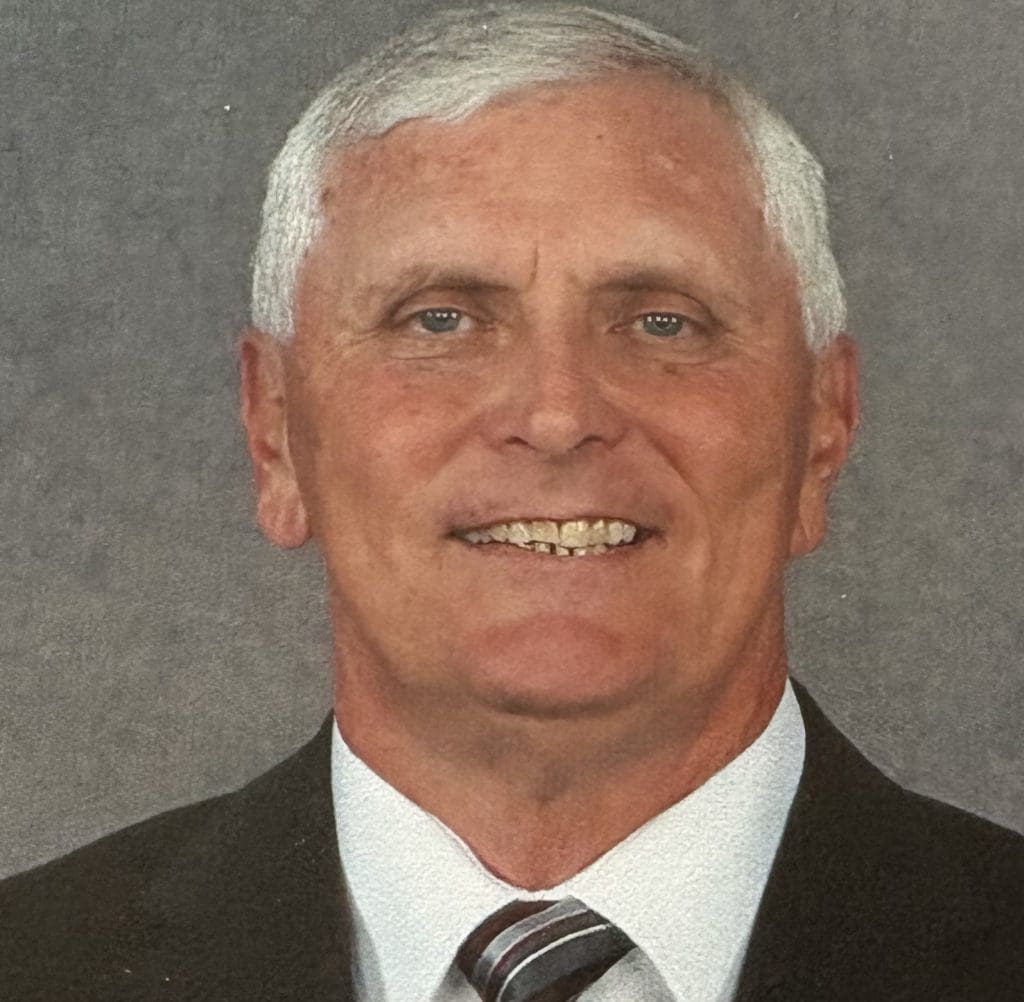
What can one of America’s greatest basketball coaches teach us about designing a remarkable next chapter? Quite a lot.
Some people redefine success. Bob Hurley Sr. is one of them.
Most people know Bob as one of the winningest high school basketball coaches in American history. During nearly 40 years at St. Anthony High School in Jersey City, he won more than 1,100 games, captured multiple national championships, and helped launch dozens of young men into college and professional basketball.
But if you ask Bob what he is most proud of, it isn’t the championships. It is the students who graduated, the young men who became productive citizens, and the lives transformed along the way.
When Bob joined me on On the Brink, I expected to talk about retirement. Instead, we talked about something much bigger: how a life built around purpose never really retires.
Purpose Doesn’t End When Work Ends
Many people approach retirement as though they are walking away from their identity. Bob never did.
Throughout his life, he has seen himself as a teacher, mentor, coach, and community builder. Basketball was one expression of that purpose, not the purpose itself.
When St. Anthony’s unfortunately closed in 2017, he certainly experienced loss. But he did not ask, “Who am I now?” Instead, he asked a far more powerful question: “How else can I continue helping people?”
Today, he and his wife lead the Hurley Family Foundation, mentor young athletes, support scholarships, champion girls’ programs, run basketball camps, and help shape the future of Liberty State Park.
The title changed. The mission never did.
That is an important lesson for all of us. Perhaps retirement is not about finding a new purpose. Perhaps it is about finding a new way to live the purpose you have always had.
Community Is Something We Build
One of the greatest challenges I hear from people preparing for retirement is loneliness.
One woman told me, “After 38 years, all my friends were at work. When I retired, they disappeared.” Another gentleman called his former office hoping someone would have lunch with him. No one did.
Bob’s experience is different because he has intentionally kept building community throughout every stage of his life.
As jobs changed, his circle changed. As roles evolved, new relationships formed. His advice was refreshingly practical: go where people are. Volunteer. Teach. Coach. Help.
Community does not simply happen. It grows because we participate.
Stay Curious. Stay Connected. Stay Young.
One observation Bob shared stayed with me. He laughed about constantly being surrounded by younger people. The children in his gym today are often the grandchildren of players he coached decades ago.
Rather than withdrawing into the past, he enjoys learning from every new generation. His grandchildren keep him current. The young athletes keep him energized. The conversations keep him growing.
He reminded us that staying young is not about pretending to be younger. It is about remaining engaged with life.
As an anthropologist, I could not agree more. Human beings thrive in communities that span generations. We learn from one another.
Structure Still Matters
One of the biggest surprises retirement brings is freedom: wonderful freedom, and sometimes overwhelming freedom.
I have written often about people who wake up, go to the gym, drink their coffee, read the newspaper, and then wonder, “Now what?”
Bob has solved that problem beautifully. His calendar remains full. Monday, Wednesday, and Friday are dedicated to the gym. Tuesday and Thursday are for conversations, meetings, and projects. He schedules workouts, travel, and family. He even jokes about keeping White-Out beside his calendar because plans sometimes change.
What struck me was not how busy he is. It was that his days still have rhythm.
Structure is not the enemy of retirement. It creates the freedom to enjoy it.
Your Experience Is Your Greatest Gift
Near the end of our conversation, Bob said something that deserves repeating: “I’m so much smarter and more mature than I was. I have so much life experience to share.”
Exactly.
Society often celebrates youth, but wisdom belongs to experience. After decades of solving problems, raising families, leading organizations, overcoming setbacks, building careers, and serving others, we possess something younger generations desperately need: perspective.
Retirement does not diminish that gift. It increases its value.
My Takeaway
Bob Hurley reminded me that retirement is not about slowing down. It is about redirecting your energy toward what matters most.
Keep learning. Keep serving. Keep mentoring. Keep building community. Keep moving.
And perhaps most importantly, wake up each morning asking not, “What do I have to do today?” but rather, “Whose life can I make a little better today?”
That may be the greatest championship any of us will ever win.
Connect with me:
- Join my Substack Newsletter Rethink Retirement
- Website: www.simonassociates.net
- Book Website: www.andisimon.com
- Email: info@simonassociates.net
- Learn more about our books here:
Now–it is time to share our new book with you!
Rethink Retirement: It’s Not The End–It’s the Beginning of What’s Next
Out on Amazon and WalMart, and in your local bookseller and Rethink Retirement: The Workbook
Continue the Conversation
What does retirement mean to you?
I’d love to hear your thoughts. Share your experiences in the comments or join one of my upcoming Rethink Retirementworkshops where we explore the questions that matter most—not just about your finances, but about the life you want to create.
Listen + Subscribe:
Available wherever you get your podcasts—Apple, Spotify, Stitcher, YouTube, and more. If you enjoyed this episode, leave a review and share with someone navigating their own leadership journey.
From Observation to Innovation,

CEO | Corporate Anthropologist | Author
Simonassociates.net
Info@simonassociates.net
@simonandi
LinkedIn
Read on for the entire conversation:
Andi Simon 00:00:00 Welcome to On the Brink with Andy Simon. Welcome today for an extraordinary person for us to listen to, because my job, I’m Andy and my job, as you know, is to get you off the brink. As an anthropologist, I want you to see the world through a fresh lens. It’s a time of change. But then working with people now on the issue of retirement, a really new thing for me because I’m not retiring. But as an anthropologist, I was curious about what was this thing that I wasn’t interested in trying. How is our society dealing with it? How are individuals really beginning to understand what retirement could be? There are 75 million boomers. They are all going to be over 65 by 2030. That’s a whole lot of people who are going to be practicing something for the first time that they’ve never had to do before. So I’m curious. And so today I have with us Bob Hurley, senior, And Bob, thank you for joining me. It’s a pleasure. Pleasure.
Andi Simon 00:01:04 My introduction to Bob came through a wonderful gentleman, Mike Seabrook, who said, you really need to talk to Bob because you need to understand what he’s been able to do after extremely successful years of coaching Saint Anthony’s High School. Let me read you his bio to set the stage for today’s conversation, because you’re going to really think about yourself in through his own journey and say, well, if Bob has done this, what can I do? Because it’s in your hands. So Bob Hurley, senior is widely regarded as one of the greatest high school basketball coaches in American history. Now he will tell you about the joy of having his grandkids at home. But right now we’re going to talk a little bit about his past. He was born and raised in Jersey city, new Jersey, and he became synonymous with Saint Anthony High School, where he coached boys basketball for nearly 40 years despite operating in a small Catholic high school with limited resources, Hurley built one of the most successful basketball programs in the country during his coaching career.
Andi Simon 00:02:07 Saint Anthony won more than 1100 games, multiple national championships, produced dozens of Division 1 players and several NBA athletes. Remarkably, he spent most of his career teaching and coaching because he believed deeply in the mission of helping young people, many from challenging backgrounds. Now, what made him unique is that he never measured success solely by wins and losses, and this is really an underpinning for today’s conversation. He often said his greatest pride came from helping students graduate, attend college and become productive citizens. Under his leadership, Saint Anthony maintain an extraordinary graduation and college placement rates. His two sons both went into the world of NCAA championship. Bob Hurley, a two time NCAA champion at Duke. Longtime college coach and Dan Hurley built one of the premier programs in college basketball and led UConn to national championships. Many. My husband would say, if you look at the UConn game, there’s the dad, Bob Hurley, in the audience watching his son and ruining him on. To me, I’d like I’d like you to talk Bob a little bit about both the past and the kinds of things that a resume or bio doesn’t capture, what you learned and how it set you up for then the retirement, because Saint Anthony’s closed and you found yourself in the next stage of life, the next chapter beginning to say, who am I? What am I doing? How do I make this a meaningful and important part of our lives? But thank you for joining me.
Andi Simon 00:03:44 Let’s start a little bit with Bob Hurley. Share with our audience your own journey.
Bob Hurley 00:03:48 I would say I’m an urban, urban guy, you know, lifelong Jersey city stickball, all the things that you play box ball. You know all the things related to urban. You know, urban being raised in urban area. My dad was a Jersey city police officer. My mom was part time nurse. You know, somebody had to be home in the house all the time. I had two brothers and a sister. I grew up in a section called Greenville, which was a terrific place to grow up. I grew up very close to Roosevelt Stadium, which is where Jackie Robinson played his first game in 1946. I can’t say I was there. I was born the following year in 47. But I loved my, you know, my grown up years involved in all sports in the neighborhood, had tons of friends who always, you know, after school playing ball until the church bells at 6:00. Everybody to leave came and break up immediately.
Bob Hurley 00:04:42 You have to get home for dinner, and then if you had homework done, you could go out for a while. And then that was the streetlights. So the streetlights went on. The block emptied. And unfortunately some of the kids still didn’t go home. And, I mean, you look back at those kids, they start to get in trouble because they didn’t have any, any hours that they had to adhere to. And I, I went to Saint Paul’s Grammar School and Saint Peter’s Prep and then Saint Peter’s College, so entrenched in the neighborhood of Greenville, met my wife in the playground where I ran a summer league. I was in college. My wife was she’s two years younger. She came in and I guess she liked the way I was refereeing, and we became an item, I guess, that summer and we’d been together since I raised my two sons, which you mentioned, and also my daughter Melissa, who was a teacher here in Jersey city and have seven grandchildren.
Bob Hurley 00:05:35 And I’ve done a bunch of things. I started off as a probation officer, Vietnam War. I was a history teacher, had a minor in criminal justice. Couldn’t my father, just any cop who was now working as the court clerk in Jersey city, and he suggests that I go over to probation. They had the jobs were open. So I went in and within a week I had a caseload of about 175 men on probation. And I didn’t and I didn’t know what I was doing. I had no, you know, I was I was in gyms all the time. If I was on a street corner for a while, but not too long, then I was home and all of a sudden all of life’s issues are right in front of me, and people need me to meet out some advice. So, boy, that was you know, that was an eye opener. It did it for about 30 years. And then, in 2001, I became the director of recreation for the city.
Bob Hurley 00:06:30 A former US marshal asked me if I’d come in and take over recreation and be proactive with doing as many things as we could to get kids off the street, give them activities, get involved in. And I did that until, I guess, around 2009, where I began the phases of retirement. You know that. So if we continue along now, now 2009, I have retired. I have a pension now from the state of new Jersey, and I begin working now more at Saint Anthony’s. I’m able to now, instead of being a coach who was out of the building now, probably in the kids minds and the coaches in the building too much now, you know, and that that that morphed after a few years, that morphed into me becoming the president of the school. And I was the president of the school. I guess the last three years the school was open, it closed, unfortunately, in in 2017. And for the last nine years, we had to come up with something else because I say we because, you know, I’m not in this alone.
Bob Hurley 00:07:34 My wife’s got to live with this. And, you know, we had to come up with things for me to do. So in oh nine, right after school closed, which is June. We maintained the gym that we opened here in Jersey city, and we rented it, and we started the Hurley Family Foundation, which was going to be a way of giving back now. Different age, different circumstances. Not the same involvement lives. But we began and we’re doing it now for nine years and it’s been very rewarding. We have a lot of connections because of the years with Saint Anthony’s and both of us lifelong Jersey city. And it has, as I say to people all the time who retire. We like it because if we didn’t like it, why would we be doing it? We’re in retirement right now and we’re not doing it. There’s no there’s no salaries, the pension and other things, you know, pay bills. So that’s one thing. And then I’m the president of that now for the last nine years and for the last five, I’ve been president of the People’s Park Foundation, which is trying to get in Liberty State Park here on the outskirts of Jersey city.
Bob Hurley 00:08:44 We’re trying to get some active recreation to go into the park as they renovate it and take it to, to make it a more modern version, but not excluding young people and younger people who could use to park for a variety of activities and sports. So I think, and we can throw in, I shall run basketball camps during the summer, so I’ll be heading up to the Pope. Not a this is not a pitch to get people go to camp, because I think the listening audience is probably not interested in going away to a fantasy camp. I don’t run fantasy camps. This is this is still a grammar school, high school skill camp. We run three this summer up in the Pocono Mountains, and I have one week of day camp, and that would be in September. We’re back in the gym again. We start all over.
Andi Simon 00:09:32 You have had a beautiful life. Sometimes people talk about, well, I succeeded and achieved there and now I need something that gives me purpose, meaning, significance.
Andi Simon 00:09:43 But my listening to you and for our audience, in some ways you need to find your entire life with purpose. You know, help them. Because I often say to people, what was your purpose before you retired and why? And how can you sustain that afterwards? And you know, some feelings that you created then that made you continue to do the kind of work that was so meaningful for you, and now you just find new ways of doing it.
Bob Hurley 00:10:12 Yeah, I would say, Andi, that, you know, this last phase, the last nine years with the Hurley Family Foundation has allowed us to get involved in the community here. You know, the gym is open, we teach kids how to play. We take away kids the basketball camp during the summer. Kids that would not have that chance to go away to camps. Because camps can be pretty expensive. We pick up all expenses to the kids, but we’re involved in scholarship programs in the local schools. We’re trying to help with, you know, we’re trying to really emphasize not for profits that are related to female activities, because about 70% of not for profits money goes into the into guys.
Bob Hurley 00:10:51 And you know that’s not I have a I have a young granddaughter who’s, you know, entering a high school shortly and she has the same interest in soccer as my grandson, who’s three years older. So we kind of learned that, you know, and being around the grandkids all the time, that was certainly a spot that we could step into. And we weren’t going to be out of touch because we had the grandkids to bounce things off all the time about doing this and doing that. And it’s been it’s been an absolute joy. And, you know, the best advice I can make is that if you’re going to get involved with something, you know, you have to have enthusiasm for the task, you know, because you just may have finished a job. Like in my case, I was a probation officer, that it was unintentional. It was an opportunity to be employed while my kids were young. And I learned that I learned amazing things from that job, which I think every place you go, you’ll learn something.
Bob Hurley 00:11:45 But being a probation officer made me a way better basketball coach because the experiences I had only with men on probation, and they would share with me their story all the time about, you know, why they wound up where they were and why they are there now, and what are they going to do about it? And it always went back to late in grammar school, early in high school, changing a circle of friends and maybe losing interest in school. And if you had an activity you really liked, if you’re not in school anymore, then you’re not going to be involved in that activity. Then all of a sudden now, you know, in an urban area, you’re out on a street corner and, you know, even during the day, nothing good happens in a street corner and at night nothing good in the city happens. Good happens after midnight.
Andi Simon 00:12:32 You are creating a vision of your own experience with family around you, and the lessons that you learned as a probation officer gave you wisdom to bring into the classroom, or to the coaching basketball thing or into your summer camps, you may just really become part of your who you are.
Andi Simon 00:12:53 I have a hunch it is one person, Bob Hurley. Community is one of the things that people who retire often lose. It sounds to me like you have built a community that has continued to thrive right past the retirement moment. For example, one woman retired after 38 years and found herself with no friends. They were all in the office and nobody would come back. Another gentleman said, I called the office and nobody will have lunch with me. This gentleman who I mentioned before we started needed to go and find friends after he got divorced and found himself retired and realized he was empty of community. But community is so important. Share with our listeners a little bit about how you see it and how you keep building it.
Bob Hurley 00:13:36 Yeah, well, I can totally understand the, you know, the people that I work with in probation. And that ended in 2001. I only keep in contact with a few. And then when I went to recreation and I left that in 2009, I still see some of them in the city.
Bob Hurley 00:13:53 And then you go to the next phase. And I became finishing at Saint Anthony’s and then starting this not for profit and then working, you know, with Liberty State Park, you keep changing your circle. But the good thing about changing your circle is getting younger. You know, it’s telling me it’s helping me a great deal. You know, I, I can’t say that, you know, I can go like, six, seven. Okay. I could do 6 or 7, but I’m not totally sure what six seven is. But I know if I do it in a gym, if something’s going on, I’m not sure I’ll go six seven and the kids will all laugh. Or at least they did. I think it’s out now, so you can’t use that anymore. But again, having the grandkids is it’s tremendous when they can keep you somewhat in touch with what’s going on. And there’s no question you’re being kept younger by being around younger people. You know, the kids in the gym are grandkids of former players.
Bob Hurley 00:14:43 Former mayor of Jersey city Jerry Healy. His at least five of his grandchildren are in the gym in the afternoons when they’re not involved in other sports. And, you know, we try to stay involved as much as we can here. We tried to be commuters, we tried to move out of Jersey city and live at the Jersey shore and then come back for things, and it wasn’t happening. We, you know, we couldn’t go to sleep early and get up early. We still keep the same basic hours that we’ve kept over the years. So, you know, I watched the entire NBA game last night. And, you know, it was very excited that the next one and I’m not at the gym today, but I’ll be at the gym tomorrow and all the kids will be talking about the next game. And I’ll be able to share information that a bunch of those people that work for the Knicks, the assistant coaches, our guys that I either had work with me or I coached against them, which makes me really cool.
Bob Hurley 00:15:39 As long as the Knicks keep winning, I do well.
Andi Simon 00:15:42 And my husband was up late watching it, and it seems to me. Oh, the whole world is now watching an amazing, amazing team. But you know it does. But you also build amazing teams. Are there some wisdoms that came from that that are shareable because, you know it is. You’ve said something important that the measure of the game was, not the number of games you win the measure of the coach, but it was the time and the lives that you changed and that are being changed here. You know, you’re watching the game. These men are being transformed, and the coach of the Knicks has just brought along an amazing experience going on.
Bob Hurley 00:16:21 Yes.
Andi Simon 00:16:22 As a former coach who is still a coach, you are still coach. Some wisdom about, you know, what do coaches do and how do they see it and how do they elevate the spirit of the people who they’re working with?
Bob Hurley 00:16:35 Yeah. Well, I think first of all, you’re when I would talk to coaches, I still the only speaking things I do now are basketball related.
Bob Hurley 00:16:42 I go to coaching clinics and speak to young coaches, and the things are you have to you lean back on who you played for. So your high school coach, if you’re fortunate to play in college, they influence you originally as you begin coaching. And then if you want to do this well, you need to be the lifelong learner and you need to take from those from really successful. Take things that relate to you as a person, where you are a city and the kind of kids you’re going to coach. So when I started coaching, John Wooden was a great coach at UCLA. I coached so long ago that, like most people are going to have to, but no, we have seniors. So like seniors would know John Wooden’s name. Most of the young world would know John. And John was just he built an entire pyramid of success about all the qualities necessary to build something that will last. And the foundation is the way you build something. So in in teaching kids. Not only.
Bob Hurley 00:17:45 We were trying to teach the sport, but we wanted the second part of it, the academic part of it, to be so much better than it had been before. For the kids, which means we had to set up very, very extensive tutoring things, you know, with a limited budget. We would get volunteers to help us, and we started utilizing Saint Peter’s College reading program and get kids that would be in school during the summer, improving their reading level while they’re still playing basketball all summer. But then by junior year when they’re getting letters from colleges, this is something now that’s viable because they have been doing the work before they even knew that this was going to ultimately, you know, come to fruition. So it was a process of using John Wooden. There were a couple of great high school coaches in the United States when I first started coaching. Jack Curran was over in New York City, and there was a coach in Washington, D.C. Morgan Wootten was at DeMatha High School, and I use those two as my well, this is what they do at the high school level.
Bob Hurley 00:18:47 John Wooden and other people that have had a chance to hear in clinics, I’m going to utilize that stuff. And I’m a, I would say my coaching style. I’m self-taught. You know, I worked in as an assistant coach in high school at Saint Anthony’s for five years before I became the head coach, a man named John Ryan hired me. He was there for a couple of years, and then another man, Bill Brooks, took over for two. And then I became the head coach. So I was only around other than my high school and college coach, two people. And I took from them things that I considered. And then the next thing is you have to be it’s got to fit your personality. Yeah. So I’m a I probably can feel it. The audience is probably feeling very intense because me loosening up, I don’t know what loosening up is for me. You know, the not a kumbaya moment when I loosen up. I’m very, very intense.
Bob Hurley 00:19:39 And that was the way I was successful. I think I’m a I think I’m a grinder. I think I really because of like loving what I was doing as a player. I played all the time and as a coach I’ve tried to teach the kids that, you know, we don’t lose anybody if we go in and if we’re prepared and they’re just better than us that day, then we’re going to lose. But we can play teams that are better than us, and they’re not as prepared as we are. We’re going to win that day and you’re going to learn lessons about, you know, preparation meets opportunity, which is a John, one of many John Wooden phrases that these kids would just be rattling around in their heads for the next, you know, 10 or 15 years of their lives after they played at Saint Anthony’s. So it’s over the course of time, it got easier because people became aware of what we were doing, that we weren’t in it. I wasn’t trying to win games to get a college job.
Bob Hurley 00:20:34 There was never in my mind that I was going to coach in college. I was raising a family and my wife, and I were just trying to do the best we could with them. But also, you know, both of us were just captured by the amount of kids’ lives we were able to influence. I can’t tell you how rewarding it is to look around and see the people that have played for us. A lot of them retire now who I see at events and they’re in, you know, their politics, they’re in government, they’re in, you know, I see regularly see people in their lawyers and medical field. It’s just it’s great. And then we want to share all the stories when they were the, you know, the ultimate knuckleheads and they and look at where they are now. And by the grace of God, we all got to that point. And it’s, you know, tremendously rewarding.
Andi Simon 00:21:23 You speak in a way that builds a community around all of the people you touch.
Andi Simon 00:21:31 None of them are outside your community. They all are part of this world that you have all built together. And to be better, I think it’s wonderful when people retire around. You knew they. Do you ever find them volunteering or is there a shortage of volunteers? Or should they be, you know, beginning to find things similar to what you’ve done? Or can you give them some wisdom? How much?
Bob Hurley 00:21:56 Yeah, yeah, I think the biggest thing is look around for something that you always wanted to do when you were, you know, you were working and you had family responsibilities and you might be working a second job, and you just couldn’t do it. But you always wanted to do it and do it now, you know, like walk in the door and volunteer. A bunch of guys that are friends of mine live in 10th, live down Florida, and they’re walking into gyms with a Saint Anthony shirt on, or Bob Hurley basketball captured on, and they’re watching. And then after the workout, they’re asking a coach if they need somebody to do to help it all to volunteer coach.
Bob Hurley 00:22:33 And in this day and age, if you can say to somebody, well, this is what I did. I played high school basketball. I played college basketball. I don’t need a paycheck. I just need a place I can coach your summer league team. I can go in the gym. When you have an open gym and I can, I can watch it. All the kids are like me because I’m not going to be somewhat like the coach. I’m going to be a little a little more removed from the coach, kind of the grandfather coach as opposed to the coach. And yeah, and I think that’s the first thing. The second thing is like, is there something now there’s something you wanted to do, and now you look around. You’re entirely different person than when you were younger. So now you know, what would you what would you like to do now? You know, income notwithstanding, you just do things that you truly enjoy. Like, I, I guess I run camps during the summer because there’s some income involved.
Bob Hurley 00:23:23 At least that’s what my wife tells me. But I just I just kind of think to camp is so hard. I couldn’t be doing it if it was, I was doing it like there were days at camp. We were in three sessions, as I said, where I’m on the court from nine in the morning till nine at night. Three days each week. Yeah. So I’m still doing that. So it’s got to be more than the money because I’m already like, I have a pension. We live; we live simply. We’re not, you know, we have one residence. It’s in Jersey city. We travel. We travel primarily with the youngest grandkids and in a lot of travel and following, you know, college basketball obviously. But just pick you pick your spots. And if you complain about something, get rid of it immediately. Or look yourself in the mirror that night and say, damn, look, what am I what am I doing here? I’m complaining about something I really wanted to do.
Bob Hurley 00:24:13 And how about the people that had to put up with me that day when I’m. When I’m. I’m grouchy. Nobody wants to, you know, like, I got to be, like, a fun guy. And maybe every once I rouse the troops, I can’t be a crouch. Nobody wants to be around. There’s plenty of there. Plenty of crouches in the world right now.
Andi Simon 00:24:29 Yep. Well, and the other point is, what’s the point? You know, at the end of the day, what’s the point? Life is short. You know. I’ve got a gift. Both of your health and well-being. The financial plan is working just fine. And now, here, my wife and I and all my family and all the folks I’ve touched are all elevated and celebrated. And we can have a wonderful life together at a time when we should. And I can learn from the youngers, and they can learn from me. And let’s keep moving forward at a time when, I don’t know, maybe we’ll live to be 100.
Andi Simon 00:25:00 I’d love to. My father did, and it would be really cool to see what the next period of time you know, people have gained 30 years of extra living. That’s a lot of having time to do good things and just reach out and it’s in your hands. Do it. It’s pretty cool. Yes. You are going to say.
Bob Hurley 00:25:20 I couldn’t, I couldn’t agree more. You know I’ll be in the gym, I was in the gym yesterday and the guy sort of helped me in the gym are all my daughters age which puts them, puts them in mid 40s a little younger maybe somebody in the gym gets the 50, and then we’ll start talking about something, and then I’ll talk about something like I mentioned, Roosevelt Stadium, going to see something in Roosevelt Stadium. And then they have to remind me that the stadium was knocked down in 1984. And, and some, some, some were born somewhere in Florida. And I’m talking about and like I’m talking about like decades of experience I had there.
Bob Hurley 00:26:03 And they can only they can only look around for a picture of it to be able to identify with it.
Andi Simon 00:26:07 But those are important, particularly for the next generation and the grandkids after them. And I find, you know, thanks to AI, we’ve gone back to research things that were important in our lives that we don’t have any pictures of stories about. And the stuff we find isn’t exact. But while we’re finding is enough to be able to provide the next my grandkids at least with some stories about our legacy and our and they and I think we can say that this is an exact. But let me tell you about it, and at least you’ll have some idea about what I did, what I grew up at, my grandmother standing over the trees, watching me play with my friend Eddie because she didn’t want anything to happen to me. I said, how do you know that? She said, Eddie told me that, and you know, but you can’t. There’s no way they would ever know.
Andi Simon 00:26:53 And so now’s our time to pull our legacy together. One question that came up and comes up often is, it sounds like you don’t have any problem getting up in the morning. Many of the folks say, I have nothing on my calendar for the rest of the day. It doesn’t sound like that’s an issue for you at all. My sense is that you have filled your calendar with more than you can possibly do and enjoy every minute of it.
Bob Hurley 00:27:17 I can’t. I have a calendar book, okay? And I get worried. I have Tuesdays and Thursdays are usually the days that I can put something into the calendar and as like as us doing this today and talk and talk about like life and it’s fun. The other days, Monday, Wednesday and Friday, I have the gym open. My wife and I try to she constantly goes to the book I plan out I’m doing. I’m doing some stuff at USA Basketball in October. I have the out of conference games. UConn is going to play in the calendar book already.
Bob Hurley 00:27:56 UConn’s team is on campus already. I’m going up on the 18th and I’m going to watch the new team workout. And then we’re going to stay at Mohegan Sun overnight, have dinner there, and come home the next day. I want stuff written down in the book, and I have white out right next to it, because if something doesn’t work, I can write it out because it’s not. It’s not going to be. It’s just something that’s gone now for whatever reason. And I love the way like things are going. I love Tuesdays and Thursdays. Yeah. Because it’s a little bit some hours of freedom. But I couldn’t do a week of Tuesdays and Thursdays. Yeah. We need to have things, you know, going to sleep at the same time every single night. I, I I’m, you know, thinking a little bit harder to sleep. I go to sleep at 12:00 every night. Yeah, I get up, I get up about 7:45 every maybe a little bit earlier today, I was up a little bit early in that, but it’s usually 12 to 8 if the Yankees are on their on the West Coast, maybe I’ll take a peek at the game for a while, but by and large, that’s my hours and I try to work out every single day.
Bob Hurley 00:29:01 I alternate between cardio. I have a bicycle, so I drive into Liberty State Park and yeah, I’m in there too. For me it’s about an eight minute ride to get into the park, and I can ride around the park for, you know, 35 minutes or so. I’m home in about 15 minutes. And then he did some weight training on other days. Yep. a lot of health issues start to crop up. They would have to. So I monitor a bunch of things now and I keep as people should do. If my wife and I are not happy with a doctor, we’re gone. We’re moving on and we’re using recommendations of those. We’re very fortunate living in a metropolitan area. There’s no excuse for not getting great health care. I have friends that have moved out of the area, and they have to come back to get the best health care. So I think that’s really important that you can do that. And you, you have the confidence that you know nothing better than having a six month appointment on something like, you know, to see a cardiologist and they gave you six months.
Bob Hurley 00:30:04 That’s pretty good. You know, that.
Andi Simon 00:30:07 Even on that every week. I don’t have to see it every day. Yeah.
Bob Hurley 00:30:10 I feel pretty good about that.
Andi Simon 00:30:12 I want to emphasize your point about the schedule because it’s not inconsequential. I met a woman whose husband sold his practice, and they moved down to the Villages in Florida, and she said we were having it was like summer camp. It was every day. It was Saturday. And I said, and no Monday. She said, well, my husband is really beginning to think he needs a Monday.
Bob Hurley 00:30:35 0002 Our Tuesday and Thursday are days when I don’t mind having like, loaded up, you know, like being in the gym. We’re in the gym from 4:00 to 630. Three days a week. And we have maybe, maybe 40 kids will be at the gym all varying ages. We now have kids that are heading off to college that originally were with us, and they’ll come back and be around, but there might be something else that we need to do.
Bob Hurley 00:30:59 Like the Liberty State Park at night, and we’ll just will shorten it. We’ll get the volunteers to finish it off. We’ll head off to the second thing. And when you finish that day and you get home, it’s you’re tired. And if it’s Monday, boy, Tuesday is going to be good because.
Andi Simon 00:31:15 You know, it feels like every day is a gift. And I truly believe it is. And to wake up in the morning and feel, how can I be kind and caring today? How can I help somebody else become the best they can be? It’s really. It’s the kind of thing that wakes me up in the morning. You know, and this is wonderful. I’m thrilled to have had you today. Last passing, last thought that you might like to leave for our audience, young and old. Because we do have a mix of ages, and people are going to be passing this along to others because it’s a Bob Hurley Senior podcast. But any last wishes?
Bob Hurley 00:31:53 Well, what you said, Andy, what you said earlier about like the number when I was a kid growing up in Jersey city, guys that were I’m a late teen, early 20s, still playing basketball and summer leagues, still playing softball.
Bob Hurley 00:32:08 30 year old guys didn’t have sneakers anymore. They basically had given up that there was anything in maintaining themselves. And I remember reading articles and I found that I could maintain till 35. And then after 35 there was going to be some decline, so I was running in the park regularly. First got married. I run, you know, five days at least, you know, five days a week. Had my high school team running, doing all those things. And now here I am. Now I’m going to turn 79 in July, and I have bad knees, so I can’t run anymore. But I do most things I did before. Yes, I’m so much smarter and more mature than I was. I can I have a I have so much life experience to share. If somebody asked me a question, they’ve got to be ready for the answer. It’s going to be a long one, and.
Andi Simon 00:33:02 You and I are going to get to 100 and we’re going to say we made.
Bob Hurley 00:33:05 It absolutely right. So we have so much to offer. And people, you know, looking at the way societies go, and young people have been, you know, their, their, their social skills or have deteriorated so badly because of the devices, you know, people getting together. You know, I was asking I spoke someplace Tuesday at a grammar school, and I had to ask the kids if there were dances anymore because dances were a big deal when I was a kid. Yes. Not that I was dancing all over the place, but it was a place that you went to. You know, to socialize. And I’m asking kids and kids to talk about. Oh, yeah, we have dances. I was excited for them because here in Jersey city there aren’t that many dances. And I asked my grandson, who’s now junior in high school. I said, what do you do? There’s no dances. How do you how do you connect? And he starts talking about Facebook and everything else.
Bob Hurley 00:33:51 But that’s all long, long distance stuff. I don’t know.
Andi Simon 00:33:54 Like, you know, my grandson when he was here, said nobody in the office goes out for drinks on a Friday afternoon and there’s no place we go and socialize. People go and they leave and they, he and others go to the gym as an alternate, but not a social event, you know, a personal kind of thing. But I do think we need it because humans need people. You know, we need to have fun. We need to laugh. We need to enjoy. I’m going to play a little basketball. But, you know, I think life is a really good time for. And I’ll say to your point, we’ve learned a lot. Let’s not waste it. You know, we’ve got so many years to go upstairs. Let’s help others and be kind. It’s been wonderful. I can’t thank you enough, my friend. It’s been a great day to share with Bob Hurley, senior. For my audience, I want to thank you for coming.
Andi Simon 00:34:42 You’ve made us number 18 among the top 100 podcasts on the topic of change.
Bob Hurley 00:34:47 Well, I hope. I hope, I hope I don’t cause this to go to 19 or 20. I hope we can at least hold that position. Thank you so much. This is so much. This is so fun. Just talking.
Andi Simon 00:34:57 It’s so much fun to just talk, isn’t it? And I agree. And quite frankly, when people say, well what do you do with them? I said, I just share. I mean, I don’t need to monetize it. I need to like you coach others. I help the stories, help people see the world through a fresh lens. My job. And if I can help you, see you through Bob Hurley’s eyes, I can tell you, his story. I can read his bio, but when he tells it, it comes alive and I. I’m cheering you. I will tell you that when you come plays. My husband’s going to be watching.
Bob Hurley 00:35:28 I’ll be looking for you.
Bob Hurley 00:35:29 I’ll be. Yeah. And we always try to get the seats elevate a little bit because he’s one of one of the tips. If you get a seat right behind the bench. These basketball guys are tall. When they stand up. When they stand up, you can’t see. So like you, you could have that seat right behind the bench. But it’s not a good you want to go up about. If you can get up about ten rows you see the court much better.
Andi Simon 00:35:51 Well, I will remember that. Goodbye, Bob. It’s been a pleasure, everybody. Thank you. Thank you for coming. And it’ll be fun to share this and to see all the kinds of reactions that people come back with. I’d love to hear your ideas about how to spend the next years of your life rethinking retirement. It’s not an end. It’s the beginning of what’s next. And it can be your very best time in life where you’re in control. So have fun. Bye.