



Summary
Meetings dominate our workdays—but what if they could become a source of intelligence rather than inefficiency? In this episode of On the Brink with Andi Simon, I speak with Ramsey Pryor, CEO and founder of Rumi, an AI‑powered meeting intelligence platform that is redefining how organizations capture knowledge, collaborate, and make decisions. Together, we explore how artificial intelligence is reshaping the future of work by transforming everyday conversations into actionable insights.
The Problem with Meetings Today
Let’s start with a simple truth: most meetings underperform.
Professionals spend 30% or more of their time in meetings, and much of that time is wasted repeating information, catching people up, or trying to recall what was previously discussed. As Ramsey noted, research suggests that two‑thirds of meeting time is spent rehashing prior conversations—a staggering drain on productivity and morale.
Across industries—from banking to healthcare—I’ve seen meetings with no agenda, no clear outcomes, and no shared understanding of next steps. Attendance becomes the work, rather than progress.
So the real question becomes:
What if meetings could finally work for us instead of against us?
Ramsey Pryor founded Rumi during the pandemic, when virtual meetings exploded and attention became fragmented. His idea was deceptively simple:
Capture everything that happens in meetings and turn it into usable knowledge.
Using AI, Rumi:
- Automatically transcribes conversations
- Summarizes key insights
- Identifies and tracks action items
- Creates a searchable “meeting memory”
Instead of relying on human recollection—or scattered notes—teams gain access to a living, searchable database of institutional knowledge.
This is where the transformation begins.
From Note‑Taking to Knowledge Creation
Traditional note‑taking is reactive. You jot things down and hope they make sense later.
AI flips that model.
With meeting intelligence, employees can:
- Ask: “Why did we make this decision?”
- Find: “Who has expertise in this area?”
- Track: “What actions were assigned—and to whom?”
As Ramsey explained, this reduces interruptions, eliminates redundant conversations, and accelerates decision‑making. Instead of digging through emails or pinging colleagues, employees can query their organization’s collective memory directly.
The result is simple but powerful:
Less redundancy. Faster decisions. Better alignment.
Changing Habits—and Culture
This shift is not just technological—it’s behavioral.
We are moving from:
- Listening and forgetting → capturing and retrieving
- Individual memory → shared intelligence
- Meetings as events → meetings as data assets
Just as many of us instinctively turn to tools like ChatGPT for answers, organizations are beginning to turn inward—to their own data—for insights.
This represents a profound cultural transformation.
The Global Dimension: Culture Still Matters
As an anthropologist, I find the global implications especially compelling.
Meetings are deeply cultural:
- In some regions, hierarchy shapes who speaks
- In others, open debate is expected
- Communication norms vary widely
AI can help bridge gaps—especially in language, documentation, and clarity—but it cannot replace the need to understand how people interpret and act on information.
Technology enables. Culture determines adoption.
Measuring the Impact of AI on Meetings
The value of AI‑powered meeting intelligence is not theoretical—it’s measurable.
Ramsey shared an example of a 300‑person sales team that saved 33,000 hours annually by reducing repetitive tasks and improving access to information.
That’s the equivalent of adding 15 full‑time employees—without hiring anyone.
This is where AI shifts from “interesting” to indispensable.
A New Way to Think About Meetings
Here are three key insights to carry forward:
- Meetings are a hidden source of value
They contain knowledge your organization is already paying for—but not fully using.
- AI turns conversations into assets
What was once ephemeral becomes searchable, actionable, and scalable.
- Behavior change is the real transformation
The technology matters, but the real shift is in how people think, ask questions, and access information.
Final Thought about Meetings in an Age of AI
We are at the beginning of a major shift. Just as the internet democratized access to global knowledge, AI‑powered meeting intelligence is democratizing access to organizational knowledge.
The question is no longer:
“What did we say in that meeting?”
It is:
“What can we do with everything we know?”
To learn more about Ramsey Pryor:
Ramsey’s profile: linkedin.com/in/ramseypryor
Website: podcasters.spotify.com (RSS Feed)
Connect with me:
- Join my Substack Newsletter Rethink Retirement
- Website: www.simonassociates.net
- Book Website: www.andisimon.com
- Email: info@simonassociates.net
- Learn more about our books here:
Now–it is time to share our new book with our listeners.
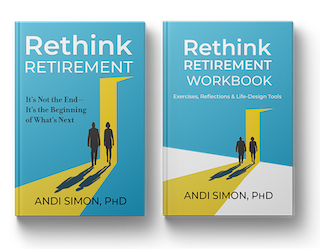
Rethink Retirement: It’s Not The End–It’s the Beginning of What’s Next
Out on Amazon and WalMart, and in your local bookseller and Rethink Retirement: The Workbook
Listen + Subscribe:
Available wherever you get your podcasts—Apple, Spotify, Stitcher, YouTube, and more. If you enjoyed this episode, leave a review and share with someone navigating their own leadership journey.
From Observation to Innovation,

CEO | Corporate Anthropologist | Author
Simonassociates.net
Info@simonassociates.net
@simonandi
LinkedIn