




Cognitive neuroscientist Phillip Campbell explains how leaders can improve focus, adaptability, and strategic thinking by strengthening their brain skills. In this episode of On the Brink with Andi Simon, he explores “fluid thinking,” the neuroscience behind change, and why developing cognitive adaptability is essential in the age of AI.
Summary
In this episode of On the Brink with Andi Simon, cognitive neuroscientist and executive brain coach Phillip Campbell shares powerful insights on how our brains shape our ability to lead, adapt, and innovate. Drawing on decades of research and coaching experience with Fortune 500 executives, Campbell explains why most change initiatives fail, how subconscious brain habits influence our thinking, and why “fluid thinking” is essential in the age of AI. As technological disruption accelerates, leaders who strengthen their brain skills—focus, adaptability, strategic thinking, and creativity—will be better prepared to thrive in uncertainty. This conversation explores how we can literally rewire our brains to improve performance, resilience, and success in a rapidly changing world.
Rewiring the Brain for Success in the Age of AI: Insights from Cognitive Neuroscientist Phillip Campbell
How do leaders adapt when change is happening faster than ever before?
In this episode of On the Brink with Andi Simon, I spoke with Phillip Campbell, a cognitive neuroscientist, executive brain coach, and CEO of enigmaFit . His work focuses on something many leaders overlook: the way our brains are wired to resist change, even when we know intellectually that change is necessary.
Campbell has spent more than 25 years coaching Fortune 500 executives and entrepreneurs around the world. His mission is to help leaders improve their brain skills, adaptability, and cognitive performance—capabilities that are increasingly critical in an era defined by artificial intelligence and constant disruption.
Why Technology Initiatives Often Fail
Campbell’s journey began with a fascinating insight. Early in his career, he discovered research showing that 70% of technology implementations fail—not because of the technology itself, but because of human resistance to change.
Organizations often invest heavily in systems and tools but overlook the most important element: the human brain.
Campbell realized that successful transformation requires more than training people on new tools. Leaders must understand how individuals think, process information, and respond to uncertainty. When organizations align technology with how people actually work and think, adoption improves dramatically.
This insight led him to develop his executive coaching firm, enigmaFit, and the TRACER methodology, which focuses on rewiring the brain to improve leadership performance.
The Power of “Fluid Thinking”
 At the center of Campbell’s work is the concept of fluid thinking.
Fluid thinking is the brain’s ability to adapt, solve new problems, and respond creatively to unfamiliar situations. It differs from what psychologists call crystallized knowledge—the facts and information we already know.
For example:
-
Crystallized knowledge: remembering the capital of France.
-
Fluid thinking: solving a problem you’ve never encountered before.
In today’s fast-changing world, fluid thinking is becoming far more important. As Campbell explains, AI is transforming work by taking over routine cognitive tasks. That means humans must rely increasingly on adaptability, creativity, and strategic thinking.
For listeners who want to go deeper into Phillip Campbell’s work, he has generously provided special offers tied to our conversation.
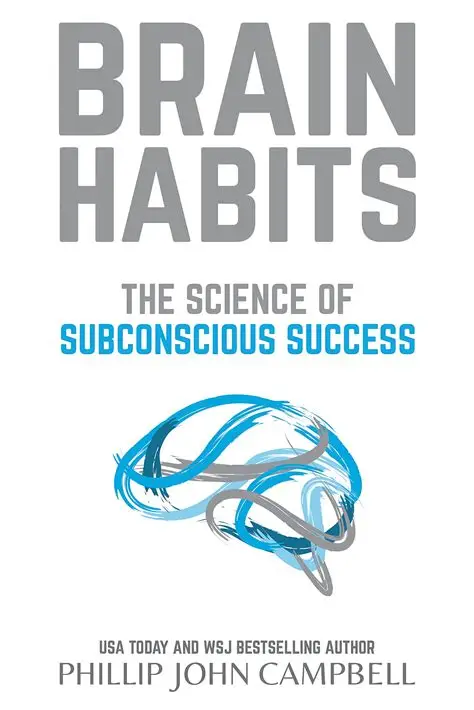
His book, Brain Habits, is available to listeners at a 20% discount through April 30, reducing the price from $29.95 to $23.95. The book introduces practical ways to strengthen how we think, learn, and solve problems by developing better cognitive habits.
The Ten Subconscious Brain Habits
Campbell identifies ten subconscious thinking habits—also called brain skills—that determine how effectively we think and perform.
These brain habits influence abilities such as:
-
Focus and attention control
-
Strategic thinking
-
Analytical thinking
-
Creativity and innovation
-
Adaptability and flexibility
-
Leadership and decision-making
One of the most surprising findings from Campbell’s work is that 90% of executives have only low to moderate focus thinking.
In other words, many leaders struggle with distraction and attention management. Modern workplaces—with constant emails, messages, and digital notifications—make the challenge even greater.
When leaders strengthen their focus thinking, however, they often gain an extra hour of productive time each day and experience far less mental fatigue.
Why Habits Drive Leadership Performance
From an anthropological perspective, this insight is powerful. Human behavior is deeply shaped by habit and subconscious patterns.
Campbell emphasizes that simply telling someone to “be more strategic” or “think more creatively” rarely works. That’s because conscious intention cannot override subconscious brain habits.
Instead, the brain must be trained through deliberate practice.
This is similar to learning how to drive a car. At first, driving requires intense concentration. Over time, repeated practice builds neural pathways until driving becomes automatic.
The same principle applies to leadership thinking.
Through structured exercises and cognitive training, individuals can literally rewire the brain’s neural architecture.
Brain Capital in the Age of AI
Campbell’s work aligns with a growing global conversation about “brain capital.”
Organizations are beginning to recognize that their most valuable asset is not simply technology or intellectual property—it is the cognitive capability of their people.
According to research highlighted by the World Economic Forum, brain capital includes:
-
Brain health (mental well-being)
-
Brain skills (thinking abilities)
Companies that invest in strengthening both will have a significant advantage in an AI-driven economy.
The Three Types of People Facing AI
Campbell observes three common responses to technological change:
-
The Ostrich – people who hope the change will go away.
-
The Wait-and-See Group – those who delay action until forced to adapt.
-
The Innovators – individuals who proactively develop new skills and opportunities.
Innovators tend to thrive in uncertain environments because they are continually improving their adaptability and cognitive agility.
The encouraging news is that people are not trapped by their current thinking patterns. With intentional effort, anyone can strengthen their brain skills.
Building a Brain Ready for the Future
The pace of change in today’s world can create stress, anxiety, and burnout. Many professionals feel overwhelmed by the constant pressure to adapt.
Campbell’s message is ultimately optimistic.
By strengthening focus, analytical thinking, creativity, and adaptability, individuals can build resilient brains capable of thriving in uncertainty.
In other words, the future belongs not just to those with the most knowledge—but to those with the most adaptable minds.
To learn more about Phillip Campbell and his work:
Phillip’s profile: linkedin.com/in/phillipcampbell001
Website: enigmafit.com
Email: phillip.campbell@enigmafit.com
Don’t Forget These Offers
Brain Habits Book – 20% Discount until 30 April 2026


Connect with me:
- Website: www.simonassociates.net
- Book Website: www.andisimon.com
- Email: info@simonassociates.net
- Learn more about our books here:
Now–it is time to share our new book with our listeners.
Rethink Retirement: It’s Not The End–It’s the Beginning of What’s Next.
Out on Amazon and WalMart, and in your local bookseller. Rethink Retirement: The Workbook
Listen + Subscribe:
Available wherever you get your podcasts—Apple, Spotify, Stitcher, YouTube, and more. If you enjoyed this episode, leave a review and share with someone navigating their own leadership journey.
From Observation to Innovation,

CEO | Corporate Anthropologist | Author
Simonassociates.net
Info@simonassociates.net
@simonandi
LinkedIn
Here is the full text of our podcast:
Andi Simon 00:00:02 Welcome to On the Brink with Andy Simon. I’m Andy, and as you know, my job is to get you off the brink. Good anthropologist wants to help you see, feel and think in new ways so that you can understand the changes that are happening faster and faster all around us. And I have a wonderful guest with me today. Phillip Campbell is here from Australia, and he is bringing to us today some marvelous information about how we can have our brains work better around our subconscious success. Let me introduce him and then he will tell you about his journey and about the processes he uses to help people see, feel and think in new ways. Because he combines the brain in a way, you know, I can talk about it and I can help you experience it, but he’s got a real great process here that you’re going to find fascinating. So Philip Campbell, CEO of enigmaFit.com, He’s a cognitive neuroscientist, an executive brain coach, a speaker, and an author. he’s a global executive brain coaching company committed to cognitive excellence.
Andi Simon 00:01:13 For the last 25 years, he’s coached fortune 500 executives and entrepreneurs across the globe. But I think what’s so interesting about it he’s a pioneer in leadership development. He’s leveraged the principles of neuroscience to create the track that, pardon me, track our methodology, the tracker methodology. He’ll explain more. And it’s a methodology based on this concept of fluid thinking, which focuses on strategically rewiring the brain’s ten subconscious brain habits. And that becomes more complicated conversation than I care to do all by my lonesome. But we’re going to talk about these ten things in a way that you’re going to walk away saying, focus. Analytical. How can I work on this? Philip, thank you for joining me today. It’s really an honor. It’s a privilege.
Philip Campbell 00:02:02 Thank you very much for having me as your guest.
Andi Simon 00:02:05 And, well, this is fun. Tell us a little bit more than I’ve given the audience about who is Philip Campbell? Tell us your story. Sets the stage for what we’re going to be doing on all the work that you’re doing with our brains, please.
Philip Campbell 00:02:18 Sure. Well, let me give you a little bit of my historical background. So, Andy, I went to nine different schools in my 12 years prior to university from there, and that was quite amazing because my brain got wired to be very adaptable socially, academically, psychologically, and I just fell in love with the whole concept of change and innovation, and I wanted to know how it all worked. So after my first degree, I went back and did a master of cognitive science, which is just the way the brain and mind works, so I could understand more what had really intrigued me. And it was interesting during the time I did that, I found one piece of research that showed about 70% of technology implementations fail, and the major reason was because of the people and the human change factor, not the technology itself. So I started a company called Workforce Transformations, and we completely revolutionized working with the senior leadership team to get people on board. So most of the time a new system comes in.
Philip Campbell 00:03:28 You go to a one day training program; you get stamped on the forehead that you’ve been accredited there. They go back and they go, what am I meant to do? We you know what it’s like. It’s kind of yeah, you got all the knowledge, but how does that apply to my job? So we reversed it. We looked at people’s work processes and work systems and showed them how to do that with the new technology. And so they were up and running from day one. Now it took a lot more effort, but the payback was really immediate from that side of things. And, we had one situation with one company where they put in a new system. The people rebelled against the salespeople, and they brought us in, and we went and looked at the way salespeople do their job. And we said, cut out this, cut out that. But it was essentially the same system. Yes, but we addressed it from the what’s in it for them? And, you know, the feedback that the salespeople gave the head of it.
Andi Simon 00:04:28 I can’t wait to hear.
Philip Campbell 00:04:30 Even though it was exactly the same system. They said, this system is so much better than the previous.
Multiple Speakers 00:04:36 One now, but the power of the.
Andi Simon 00:04:39 Illusion was really that you had invested in them, not in the system. How interesting. Wow.
Multiple Speakers 00:04:45 But we would.
Philip Campbell 00:04:46 Position the system in their world rather than the IT people positioning the system from an IT perspective, and it makes all the difference in change management. And with your background, you know exactly what I’m talking about.
Multiple Speakers 00:05:01 Yes. And then.
Philip Campbell 00:05:03 Sorry.
Andi Simon 00:05:04 No, please go ahead. I mean, I’m sitting here smiling for those who are on audio. and it is interesting listening to Philip talk about the tremendous opportunities there are. If only we think differently. So please continue your journey. And I think it’s great.
Philip Campbell 00:05:20 Okay. Thank you. Andy. so then we found that the senior executives of the companies we were working with on technology were saying this meant the ecology can be applied anywhere. Doesn’t need to be just technology.
Philip Campbell 00:05:33 Philip, can you work with us? Can you coach us? Can you get our brains working like you get their brains working so we can be better leaders and executives? So I set up a company called enigmaFit.com. So the Enigma part is about the enigma of the brain. And for those in World War Two historians, it was the Enigma computer, which broke the Enigma code. So we’re looking at breaking the code of the brain architecture and brain skills and brain habits. And then we added fit because we want people’s brains to be as fit as possible, because they get more time back in every day. They’re more productive. And really, interestingly, they’re less mentally tired at the end of the day, because that’s one of the big things that executives are saying to us. So that’s how I started Enigma, and we developed that track of methodology, which stands for, you know, testing the fluid thinking, giving a report on it and then doing the action. Because most people don’t realize that the brain architecture is based in biology and neurology.
Philip Campbell 00:06:44 It’s not the conscious mind, which is an abstraction of what we’re thinking. And the thing is, if we want to change the way a person thinks, We need to change the brain skills and the subconscious thinking habits at the neurological and biological level, not by just telling them what they should do. So. So does that make sense to you?
Andi Simon 00:07:07 Yes, but I’m not sure it makes sense to our audience. So pause for a moment. because you’re getting into something extremely important. You can’t tell somebody to change. the habits take over. The brain is wired in a particular fashion because it’s most efficient. It uses 25% of the body’s energy, and it’s designed to protect you from change. So talk to us a little bit more about this enigma and the kind of challenges that you discovered and understood and began to work with. Because go a little deeper for my audience, if you don’t mind.
Multiple Speakers 00:07:40 Sure.
Philip Campbell 00:07:41 So, so basically, fluid thinking is the ability to adapt quickly and effectively. And you’re 100% right.
Philip Campbell 00:07:50 People don’t wake up. Most people don’t wake up going, what can I change about my life today? We like to get into the routine and the rhythm. But now, in this age of AI, we’ve got such a major disruptor. So for the past 200 years, technology was taking over muscle. Now we’ve got AI that’s challenging our brain skills and our adaptability. And unless we improve our brain skills and adaptability, unfortunately we’re going to get left behind. So as I was saying, fluid thinking is that ability to adapt quickly, easily, and effectively and solve new problems that you’ve never faced before. So you can’t just rely on that past experience. That past experience of past knowledge is called crystallized knowledge. So if I said to you, Andi, what’s the capital of France? What would you say to me?
Multiple Speakers 00:08:44 Paris.
Philip Campbell 00:08:45 Okay. Now, you did that like that so you didn’t have to do any conscious processing and all. You just, dive into your knowledge database and pulled it out.
Multiple Speakers 00:08:57 I hope it didn’t change.
Multiple Speakers 00:09:01 Please.
Philip Campbell 00:09:01 And that’s why we’re. That’s why it’s called crystallized knowledge. Because it’s just locked in there. Now, if I said to you, Andi, what’s 17 times 16 divided by 15 and you couldn’t use a calculator. You’re going to have to use a different type of processing.
Multiple Speakers 00:09:18 Yes.
Philip Campbell 00:09:18 And that’s where we call the fluid thinking. Because you can’t just recall the answer. And as we’re talking about the fluid thinking is made up of ten subconscious thinking habits. Or as they’re being referred to more and more now brain skills.
Multiple Speakers 00:09:35 Yeah.
Philip Campbell 00:09:35 So I can give you some examples of those if that would be useful for you in your audience.
Andi Simon 00:09:41 Yes. Please go right ahead.
Philip Campbell 00:09:44 So the first one we look at is the ability to control the attention. And it’s underpinned by a thing called focus thinking. Now you, your listeners and viewers can see if any of these apply to them. So somebody with a lower focus, thinking they love moving from one thing to another, they think that’s multitasking, but it’s just quickly switching from there.
Philip Campbell 00:10:08 And they tend to leave things to the last moment. And so that they’re doing the hero hours of work and then get the end of the week. They’re so tired from them. And what’s happening is it’s to do with the brain’s signal to noise ratio. So if their brain signal to noise ratio is low, then they just love distraction. And so you know that situation. Oh, Philip, can I grab five minutes of your time? And I’m working on this report. That’s really important. My brain goes, oh, we don’t really want to work on that, Philip. And we go and spend not five minutes, but an hour over coffee with somebody that was never more important than my main priority. So lower focus thinking hijacks your ability to stay focused on your highest priority. And I was watching a video recently and it was with Kevin O’Leary, and he was talking about his time with Steve Jobs, and he mentioned the same thing. Steve Jobs had incredible signal to noise ratio. So there were only 2 or 3 things you wanted to get done.
Philip Campbell 00:11:12 And he was able to stay focused on that. So he would have had it really high focus thinking. But here’s the rub. 90% of senior executives and people who have tested have only low to moderate focus thinking. So our brains are actually wired from historical past where we had we’re in the, you know, the jungles, hunters and gatherers. We had to have wide peripheral vision to see what lunch might be. Or was that Tiger going to have us for lunch there? Yep. And they only had to have narrow focus for 5 or 10 minutes when they needed to get the brain. Now, what we’re asking our brains to do is to be narrowly focused for 90% of the time on these things called computers, and our brain is just not wired to do that. That’s why we have to go in there and we use a thing called, based on Professor Anders Ericsson’s deliberate practice to literally rewired the brain to make it much easier to stay focused. And people are quite surprised. They end up getting an extra hour in each day.
Philip Campbell 00:12:16 They end up being staying in control of their priorities, and they feel much less mentally tired. And that’s just one of the ten subconscious thinking have us to give you an example.
Andi Simon 00:12:28 Well, you know, let’s stay on that. There are nine others, I gather, and I don’t want to shortchange them. but the, when I work with people to change something, I tell them that the habits are their strength and their weakness 100%.
Philip Campbell 00:12:45 Right?
Multiple Speakers 00:12:45 Yeah.
Andi Simon 00:12:46 Because it’s so efficient that you just love going over the habits, but makes it very difficult to find new habits, and actually creating them requires focus. Work on breaking the old habits, or you’re just going to keep doing what you’ve always been doing without even realizing it.
Multiple Speakers 00:13:03 Right, exactly.
Philip Campbell 00:13:04 And you’ve nailed it really well there. And so one of the things that’s interesting is a lot of our clients we work with are kind of whispered to me, Philip, I need to be more strategic in my thinking. Or Philip, I’ve been told I need to be more analytical, or Philip, I need to be more creative and innovative.
Philip Campbell 00:13:23 And then they say to me, if I already knew how to do that, don’t you think I would be doing it?
Andi Simon 00:13:30 So honesty is beautiful.
Philip Campbell 00:13:34 Yeah, but they’re doing it very quietly and whispering one on one then. Yes, but it’s to your point, because what we’re relying on is subconscious below our conscious threshold thinking and habits, and we develop habits and we redesign and redevelop them by rewiring the brain. So it’s a bit like the example I use is think back to when you first learned to drive a car. So conscious mind processing was information overload and stressful. Then you had a professional driving instructor and they would give you a bite sized chunk of how to drive the car. Now that’s where the learning happened. But it’s not where the development happened. And it’s not where we came up with the subconscious habit about driving a car that occurred when you went out with your parents and your friends and practiced 3 or 4 times a week. Yeah. And then as you practice that, that neural pathway, that biological change happens and you go from driving a car consciously to automatically because it’s gone into the subconscious and then they’ve got their license.
Philip Campbell 00:14:47 They drive to work. They’re thinking about a work problem, and then they get there and they go, who drove the car?
Multiple Speakers 00:14:54 How did they get it?
Philip Campbell 00:14:55 You ever had that experience?
Andi Simon 00:14:56 Oh, but, you know, you wake up to that experience when the road you normally take is blocked or there’s a traffic jam and you want to go around it, and then you have to focus very hard. And it feels exhausting to pay attention to that GPS. And it is interesting, isn’t it, when you break the habit. It hurts.
Philip Campbell 00:15:16 Yeah. Well, what you do need to do then, if that habit can’t be totally on automatic pilot, you need the adaptability. This is where the creativity and innovative and strategic thinking comes in. Oh, what am I going to do? This road’s closed here. What are my different options? What’s the best option? And then you mentally strategize your approach, plan out your path, and then you execute it. But too often what’s happening in business now? We’re running so hard and fast we forget to step back and work out the strategy, the part and the plan, and we jump into execution because most people are overdeveloped on what we call operational thinking.
Philip Campbell 00:15:59 And there’s the sort of people that they’re happy with planning on the fly. That little step one and step two, and then step three and four will unfold. But it actually limits how high you can go in an organization. Because to keep on being promoted, you need to get more strategic thinking so that you can lead the thinking of others and get more leverage. But funnily enough, we get promoted early in our career when we’re working in our silo because we’re the go to person or we make things happen to our own efforts. And I’ve had people come up to me and I said, it’s not fair, Philip. I’ve gone from this; I’ve got promoted to this situation. And now I was working in a really deep, specialist expertise. Now they want me to forget all of.
Multiple Speakers 00:16:44 That and think.
Philip Campbell 00:16:45 Horizontally. My brain doesn’t work that way. Help me out.
Andi Simon 00:16:50 And it’s not going to help you to say my brain doesn’t work that way because it will work that way, but you need to retrain it.
Andi Simon 00:16:56 Wow. Go ahead please.
Philip Campbell 00:16:58 Well, it’s interesting you bring up that point because, the conscious mind will never override a subconscious thinking habit or brain skill. So, you know, when people are being told, be more focused on, be more strategic, then you can have all the willpower and intention in the world. And I’ve had people that one person was told that, look, you’ve got about as far as you can go because your strategic thinking is just not at the level that we want. They were really puzzled because at university they aced corporate strategy and.
Multiple Speakers 00:17:35 They said, look what’s going on.
Philip Campbell 00:17:37 And I said, well.
Multiple Speakers 00:17:38 Corporate.
Philip Campbell 00:17:39 Strategy, remember we spoke about crystallized knowledge earlier. That’s what you know. Thinking is what you used for, what you know into action. And your boss is telling you the fluid thinking. Personal strategic thinking isn’t developed enough for you to put that into action. Anyway, they did our program and they got promoted and eventually got promoted above their boss. And I ran into them and said, so have you gone back to thank you, your boss, for pointing out that your personal strategic thinking isn’t high enough? And they said it’s a work in progress.
Multiple Speakers 00:18:15 Feeling it.
Andi Simon 00:18:19 A little humility isn’t bad either, but it.
Multiple Speakers 00:18:22 Is. But they.
Philip Campbell 00:18:23 Were working towards, as they told me.
Multiple Speakers 00:18:26 Yes.
Andi Simon 00:18:27 are there more elements here, or do you want to talk to us about this fluidity and how your program helps it? Which one would you like to do?
Philip Campbell 00:18:35 I probably think it might be useful to go a little meta a little higher. so the last, October, November of last year, I did round tables in London and New York and LA. And the topic was AI is a cognitive revolution, and brains need to develop faster than AI. And it got a lot of great response. And then in January this year, the World Economic Forum came out with a report called The Human Advantage Stronger Brains in the Age of AI. So it’s no longer just me saying this is a critical aspect for every individual and every organization, which is the aggregation of the individual capability. And what they came up with is another sort of summarize it with this formula that organizations need to be looking at brain capital, and they basically said brain capital is brain health, which is mental wellbeing plus brain skills.
Philip Campbell 00:19:42 and they listed things like analytical thinking, creative thinking, social leadership, resilience, flexibility, etc., which are all the dimensions of the fluid thinking and the ten subconscious thinking happens. So to all intents and purposes, what they’re calling brain skills is what I have in my book called Subconsciously Key Habits. I’m happy to go with brain skills because it’s kind of intuitive, but my concern is that individuals and organizations are going to do what happened in the technology days. I’ll give people a one day course, and then they’ll stamp their forehead, and all they’ve done is increase their crystallized knowledge about brain skills. But if they haven’t improved the fluid thinking skills and the brain skills, then they’re not going to be able to put it into action. And so we’re working with organizations basically saying, you know, think of your brain skills and your brain health as a capital asset, because that’s what’s going to happen more and more. And the AI is such a disruptor that, as I was saying, unless your brain is upgrading quicker than AI, I’m afraid you’re going to get caught behind.
Philip Campbell 00:20:58 And I’m noticing three different categories. So one category is I’ll put my head in the sand and hope this goes away, or that I can retire before.
Multiple Speakers 00:21:07 Before.
Philip Campbell 00:21:07 I have to deal.
Multiple Speakers 00:21:08 With it.
Philip Campbell 00:21:09 The second category is basically, oh look, I’ll take a wait and see. You know, the jury’s still out. Well, if you look at the amount of money that’s being invested in it, it, you know, it may not come to pass.
Multiple Speakers 00:21:23 But.
Philip Campbell 00:21:24 I think a lot of people are back in. And then the third category is what I call the innovators. And the thing about innovators, and that’s the type of people and companies we work with, they’re already really good at what they do. But as you know, because I think you’re an innovative there and you’re from our discussions, how can I get even better? You know, if it ain’t broke, don’t fix it is not something that’s in your lexicon there. It’s how this is fascinating. If I did this, this and this, I could get this.
Philip Campbell 00:21:55 And you look at all the different ways that things can happen. And so that’s who we tend to work with. It’s the innovators that want to get ahead of the curve that are saying, yeah, I’m prepared to put the effort in, because when you do brain skills development, again, it’s like driving a car, which happens over learning to drive a car. It happens over a number of months. It doesn’t happen on a one day training. So they’re saying, yeah, I’m going to be proactively invested. In fact, this is fun and engaging, and then I’m going to get a lot more time back in my day. I’m going to be much more productive. And really importantly than I hear it so often, it’s just getting this mental energy back. I think unless people do something like this, we’re going to see even more and more of the burnout syndrome.
Andi Simon 00:22:42 Now, when you’re saying that, there are a couple of things that go to mind. The ostrich I feel for, you know, just put your head in the ground and, this won’t hurt me.
Andi Simon 00:22:56 I’m going to just sort of get through it. the wait and see, folks. I’ve met too many of them. I’m. I’m asking, what are you waiting for? I may have mentioned in our prequel that we had dinner with our accountant who reached over and said, are you guys using chat yet? And my husband said, for years, you know, most of my clients are. And I said, well, they are wait and see and don’t know that fear of unknown is what the human brain, the amygdala, hijacks it. It is impersonal. Its job is to protect you from the unfamiliar, the unknown, and it runs away from the things it doesn’t know. To your point.
Multiple Speakers 00:23:37 Absolutely.
Andi Simon 00:23:38 And then the innovators are fascinating because very often they aren’t quite sure what the outcome of their innovation is supposed to be. and I love what you’re talking about, because once you give them a new approach to seeing things now, it doesn’t matter what the outcome is. It’s the actual doing of new ways of seeing and controlling that hijacking of the brain.
Andi Simon 00:24:00 So it doesn’t stop allowing them to be curious and to go exploring. You know, when I did my archetype, I’m an explorer by nature. I like to take things apart and put them back together and see how to improve them and understand them better. Which is why our conversation, I’m sitting here saying, this is so fascinating because the brain is complex, but it’s also understandable. And we know the brain does exactly what it thinks you want it to do. So if you don’t want to do this, you won’t do it. And but if you get into it, oh my goodness, your brain will open up and begin to flow in ways that are going to be exhilarating. You’re going to get high on what’s possible. So tell us some more. So how does this all begin to change over a period of time? Because we don’t have months to do this, but we have a moment to begin to inform our listeners about what’s possible now, please.
Multiple Speakers 00:24:52 Sure.
Philip Campbell 00:24:52 And I’ll pick up on one point you brought up, which I think was an excellent point there.
Philip Campbell 00:24:57 So, you know, I could see you were an explorer and an innovator from our previous discussions there. And what people don’t realize, whether they fit into the head in the same category or the wait and see category or the innovator category is already predetermined by their brain architecture. So it’s not a conscious choice that they make.
Multiple Speakers 00:25:20 Because.
Philip Campbell 00:25:21 Most people don’t realize their brain architecture. And by that, I mean the biology and neurology of their brain was driven by the games and hobbies and activities they did as a child.
Multiple Speakers 00:25:34 Yes.
Philip Campbell 00:25:35 And so all of these brain skills and these ten subconscious thinking habits have been written in their brains, but they weren’t written intentionally or purposefully. They were just to do with the things that they did. So when I talk about people that are putting their head in the sand, it’s almost like they don’t have a choice.
Multiple Speakers 00:25:57 Because that’s the way.
Philip Campbell 00:25:57 The brain habits work. And when I talk about somebody on the wait and see, they don’t have a choice either, because that’s the way their brain computer program routines have been written.
Philip Campbell 00:26:09 And when I say somebody is an innovator, well, you’re lucky. So whatever you were doing as a child growing up wired your brain architecture that way. So that’s your natural way of doing things. So what we’re saying to people is, listen, if you’re an innovator, let’s make you an even better innovator. But if you’re a wait and see or the head in the sand, you know what? You don’t have to be a prisoner to what you were doing in your child. We will literally work with you to rewire your brain, and we can redesign and redevelop and rewire the brain. Much as you learned how to drive a car, you do a repeat activities which get harder and harder period of time. And that’s how we rewire the brain to change somebody from a wait and see to, boy, this innovative space is much more interesting and whatever. And besides that, I’m just going to protect my career and accelerate.
Multiple Speakers 00:27:01 My career development.
Philip Campbell 00:27:03 Wait and see. And head in the sand is not a recipe to success.
Philip Campbell 00:27:09 But I do feel sorry for those people because they’re not consciously making that decision. It’s a subconscious way. Their brains whine. And that’s why I’m so passionate, because you can see the way we can help people there.
Andi Simon 00:27:21 Andi now this is an about free will a little bit, but we always have this illusion of free will. And what you’re telling us is maybe not so free. Once you reach a certain point, you are who you are, and that brain is going to see the world in a particular way. But you can change the story and change it too.
Multiple Speakers 00:27:42 Yeah.
Philip Campbell 00:27:42 Now you’re getting into the philosophical part of cognitive.
Multiple Speakers 00:27:45 Science, and it’s going to.
Philip Campbell 00:27:48 Take us three. That’s going to take us three hours. But let’s give the big version there. So the way I mentioned to people is that, say somebody’s analytical thinking is moderate and we want it to be optimal. They will still get a high quality outcome, but it’s going to take them longer and take more mental energy than somebody that is already at the optimal level.
Philip Campbell 00:28:19 Now, the problem is, if you’re running a business or you’ve got your own business or you’ve got a whole team, what happens is there’s meetings that go on and your brain needs the time to mull it over. And tomorrow you think of three things that you should have said yesterday, but the decisions have been made. So these are very, very real consequences here. So often it’s taking people that are high quality thinkers that just take longer to process it and increasing their processing time, but we can also work with people that they.
Multiple Speakers 00:28:51 Go, oh, Philip.
Philip Campbell 00:28:52 If I have to do that analytical think it drives me crazy. I have to look at the details and it’s just a massive noise and I don’t know what’s going on and I try to avoid it there. But I’ve got the stage in my career, I can’t, but it’s just so unnatural for me. Well, in that case, what we have to do is improve the quality of the analytical thinking, but also improve the speed of the analytical thinking.
Philip Campbell 00:29:15 So you can see it’s just going to take a bit longer to get there. But the difference is still immense.
Andi Simon 00:29:21 Now, what do you do to actually help them do this? I might as well get into the tactical, practical way of your strategy.
Multiple Speakers 00:29:28 Sure.
Philip Campbell 00:29:28 So let me take the example of the focus thinking, Because as I say, 90% of people are low to moderate. And that and The Economist magazine did some research that showed that knowledge workers are distracted 30% of their day. So basically working at 70% productivity and everybody goes up and the rest it’s more like 50% then. So we’re working with the brain signal to noise ratio. So what we do is we create these activities where we have a signal. It might be a drawing; it might be a shape or something like that. And then we do mean things like drawing lines and nasty shadows and things like that around it, which are the noise of the office there. And so what we do is show them how to amplify the signal, which in work terms is the priorities, and to decrease the noise.
Philip Campbell 00:30:21 So, you know, the pop ups that you get from the emails, the SMS that comes in the social media. I’ll just have a look at LinkedIn, you know, can I have five minutes? Because as I say, our brains want to be distracted. They don’t want to stay focused. And so by we do those activities that get harder and harder. But what’s really different about what we do because we’re about behavioral change is at the end of each session we say, Andy, tell us, what have you learned about today? We capture that. We say, Andy, over the next week, I want you to start controlling your attention. I want you to notice every time your brain is about to be distracted unconsciously, because whatever grabs your attention drags your brain. We want to reverse that. So your brain controls where your attention goes. And so we do harder and harder and harder exercises over a period of time to get that brain’s natural signal to noise ratio. Then we do it using fun and challenge.
Philip Campbell 00:31:26 Because, as you know from your background, that’s how people learn quickest and most effectively. Then the brain doesn’t care whether it’s being focused on work, whether it’s being focused with the family, whether it’s being focused with social interactions. In fact, we had one senior executive that was worried that this their short term memory was too good. And what we found is that they were what we call a very high conceptualization. So they connect the dots quickly. They finish the sentence for you. And if they’re to that way, they can be a bit frustrating. But what was happening was his brain was going so much faster than the rest of the people in the room, and he had low focus. So once he got it, his brain drifted and he started thinking of other things, so he wasn’t literally encoding in his working memory what was being said. So we gave him tools and approaches to make sure he encoded it, and he said, thank goodness for that. I was getting really worried about what was happening.
Philip Campbell 00:32:28 So focus effects basically everything that we do. So does that give you an example of one of the ways we do it? But it’s all about doing it harder and harder. Repeated brain exercises, because that’s the way the brain, neurologically and biologically rewires its brain skills.
Andi Simon 00:32:47 Okay, well, I’ll make an analogy. It’s not that different from working out. It’s getting the body slowly but surely, stronger and stronger and the muscle of the brain, that needs to be, exercised in a way that its new skills become actionable as opposed to external to it, that something you saw or you heard about, but you don’t internalize it at all. And so it’s a whole body kind of activity that begins to get you. I mean, this gentleman who was worried about his short term recall, a memory, the brain Was obeying him, but, you know, he was done. And. And now what? And how do we get better at it? The interesting part, and I’m really fascinated by what you’re doing, is that this is going to be essential at a period where there is so much change that people are going to be looking for the stability.
Andi Simon 00:33:48 The human brain wants to protect itself, it wants continuity, it wants autonomy, and it wants, you know, to make sure its relationships are good and it wants family. And how do we enable it to when everything that we know to be true, it’s changing. And it’s not just a one, it’s not AI, it’s everything that’s constantly.
Philip Campbell 00:34:09 And there’ll be something else out there. AI we all know that. And it’s interesting what I hear people that I’m dealing with say, is that they’re losing a sense of control.
Multiple Speakers 00:34:22 They are. It’s not even.
Andi Simon 00:34:23 Appealing. That’s right.
Multiple Speakers 00:34:25 Yeah.
Philip Campbell 00:34:25 The change is happening so fast. It’s just really hard to keep up with. And that’s creating, anxiety and that’s creating stress. And more and more people are running on adrenaline and cortisol all day, every day.
Multiple Speakers 00:34:45 Yep.
Philip Campbell 00:34:45 And the brain wasn’t designed to do that. It was designed to have its fight or flight. So hopefully you only did that once a week or whatever. And that’s why I’m seeing the increase in in burnout.
Philip Campbell 00:35:00 So what we’re looking to do with people is nobody can know 100% in the future. We’re trying to equip them and enable their brain with the brain habits and the brain skills, which will support adaptability, because that is going to be the single most important skill into the future, because it’s the only way a person can have some semblance of control, not of their environment, but of their ability to adapt. No matter what happens in the environment. Because if you don’t have that ability, it’s going to get really, really stressful really, really quickly.
Andi Simon 00:35:39 Let me ask you one question, and then we’ll begin to wrap up in my own reading, the brain. When it’s under stress, the amygdala produces cortisol that floats around in your brain for I think 26 hours. It gives you it literally is pain. And I have a hunch you are addressing this in the work you’re doing, so that the work you’re doing doesn’t get aborted by the very chemistry that the brain is feeling. It wants some oxytocin or serotonin.
Andi Simon 00:36:07 It wants to feel like this is a happy time, not a scary time. And I can say that you can feel happy. You’re scared, but your brain’s chemistry is going to want to protect you. What do you have thoughts on that? And then we’ll wrap us up.
Multiple Speakers 00:36:20 Cool.
Philip Campbell 00:36:21 Well there’s a I’ll try and paint a word diagram for the listeners, But there’s a thing called the UK’s DoD Cognitive Performance versus stress level graph. And it goes up and like an inverted distribution curve. And so the peak performance you need a certain amount of stress and adrenaline. But it’s quite narrow that peak performance and then doesn’t take a lot of stress to decrease the cognitive performance by 30, 40, 50%. And that’s what most people are running on during the day. What our clients tell us is once they’ve been through the program, instead of it being a sharp curve and drop off, it turns out to be a lot wider U-shape. So it takes a lot more stress.
Andi Simon 00:37:08 To not.
Multiple Speakers 00:37:08 Get.
Philip Campbell 00:37:09 A big cognitive performance than knock them out of their sweet spot.
Philip Campbell 00:37:12 That’s probably the simplest way that I could explain it.
Andi Simon 00:37:15 well, none of this is quote unquote simple. All of it is understandable. And I think this is really cool. So a couple of things you don’t want our listeners to forget, and then we’ll talk about how they can reach you, sir.
Multiple Speakers 00:37:27 Sure.
Philip Campbell 00:37:28 So one thing that I haven’t introduced yet is fluid thinking goes up through childhood peaks at young adulthood and then drops off as we age. So that’s why when people get quite elderly, anything that disrupts their routine is really detrimental to them. And again, they’re not being a mean or obstreperous. Their brain just can’t handle that from them.
Multiple Speakers 00:37:54 Yep.
Philip Campbell 00:37:54 So that’s why it’s so important. No matter what age you are, to increase your fluid thinking to a level above what it was at young adulthood. Because what kept you at young adulthood was back to the activities you did growing as a child.
Multiple Speakers 00:38:09 Yes.
Philip Campbell 00:38:10 So I’m trying to futureproof individuals and organizations by improving their brain skills, which drives their adaptability and their fluid thinking, so that they’re going to be prepared no matter what change is coming ahead.
Philip Campbell 00:38:26 Because my concern is that if you’re stuck in the category of head in the sand or wait and see, the world is going to pass you by or pass you by before you even realize.
Multiple Speakers 00:38:37 It.
Andi Simon 00:38:37 You and I need to talk some more about how to adapt this for the aging population. And you know, as I had mentioned to you, my new book is called Rethink Retirement. And I’m really this is a cultural transformation in our society that’s unprecedented. And nobody has nobody retires before they retire. And then they have they have this wonderful, you know, in in the States I made it and then I have a year I call it the honeymoon I’m finding. And then, oh my gosh, what have I done? I have no daily structure. I don’t know who I am, I have no purpose and I have no community. I have no friends. And so now I have to recreate it. I don’t know how to I don’t even know how I built it the first time. But you’re talking about something that could be extremely valuable if through.
Andi Simon 00:39:26 And I’m thinking it’s a bit of gamification, we can get folks ready for that next phase through the games that could help them really prepare their minds for a new, new. And it’s a new stage. It’s not the end stage and it is the best stage. But unless they make it something special and their brain is going to fight it until they can make a little sense. Is that.
Multiple Speakers 00:39:50 Cute? Yeah, yeah, I’d.
Philip Campbell 00:39:51 Love to have that conversation because, you know, a lot of our clients are saying a couple of things. One is the older ones approaching retirements are saying, Philip, are you sure you can teach an old dog new tricks?
Multiple Speakers 00:40:06 I said, it’s really simple.
Philip Campbell 00:40:08 It’s biology. You do this over and over and over again. You’ll strengthen that neural pathway. It’s the same. I’ll say them if you go to the gym and you work your biceps and your biceps going to get bigger, well, of course they are for the same thing. So. And the other thing so what they’re saying is I would like to not have the journey that my parents had when they retired.
Multiple Speakers 00:40:31 Yes.
Philip Campbell 00:40:32 So how can we work with that. So I talked to them about that. So that could be something that and again the gamification that’s the means to the end.
Multiple Speakers 00:40:41 Yes.
Philip Campbell 00:40:42 The end is rewiring the brain. So they stay continually engaged because one of the other things they’ve found, and you would probably know better than most, is people’s cognitive capability is greatly diminished because they don’t have to use their brain all that much anymore.
Andi Simon 00:40:58 That’s great. I see.
Multiple Speakers 00:40:59 That.
Andi Simon 00:41:00 That’s very good.
Philip Campbell 00:41:02 It’s actually a strong predictor of how healthy and how long the life will be. So I’d love to have a chat to you about,
Multiple Speakers 00:41:11 We shall we.
Andi Simon 00:41:12 Shall we shall, because I do think it’s needed in very quickly. And, and I think those corporations need to prepare their pre Retiring people for the next stage in a way that will prepare them to be valuable and use their knowledge. I mean, I don’t want a talent drain that’s unnecessary because we have so much wisdom. We just need processes for opening them up and thinking better.
Andi Simon 00:41:36 How can they reach you? This has been such fun. I don’t want them to lose the fence.
Multiple Speakers 00:41:40 So.
Philip Campbell 00:41:41 I’ll tell you how they can reach us and also how we can help them there so they can reach us on my email, which is Philip Campbell. And I think you’ll put that up at the end there. But we can help them in three ways. So I’ve written a book called, Brain Habits The Science of Subconscious Success. So read that and you understand about brain architecture of the biology and the neurology. It’s quite a different book than most people have read. It’s been translated into Chinese, Korean, Arabic and Turkish. So there’s obviously a global Africa. So we’ll give you the information on that. Secondly, what we can do is we have this, fluid thinking profile that people will do, and I’ll send you the links and we’ll give them a special discount with your name on it. We’ll keep that open for a month after the, the podcast. And if they really want to know what their fluid thinking like, as people say to us, it’s like getting my own personal brain manual.
Multiple Speakers 00:42:43 For.
Philip Campbell 00:42:43 The first time. I really understand how my brain works. I never did before. And then the third level we can do is that we can work with people. So people are those strong innovators and want to work with us, reach out to us and they want to know more about the program and how it works. and even people, if you’re in the wait and see, all the head in the sand, if you don’t want to be there anymore, then come and talk to us.
Andi Simon 00:43:08 That’d be a little kick in the pants to move us forward sometimes, but this is so exciting. Thank you so much for the conversation today. And we shall talk some more, because I think there’s an application here that’s waiting for it to emerge for you, our listeners or our viewers. Thank you. Remember, you have made us ranked 18th among the top 100 podcasts on the topic of change. We’re honored. But I also know that this is sharable, and our job is to really help you see, feel and think in new ways.
Andi Simon 00:43:36 What a perfect topic for today. The times they are changing. Please don’t be an ostrich and try to help. And if you’re going to wait and see. Okay, don’t wait too long. but if you’re looking to really move ahead and capitalize on the opportunities, don’t think of them as problems. They’re opportunities. You just don’t know what the solutions are yet. Go explore. Experiment. Try. I mean, what could be wrong and go see what it can do for you because it’s here to help you. You may think it’s here to take your job. Maybe it’s just going to help you change your job. And I think this is going to be an exciting time for humans. And I’m fascinated by when Chad talks to Claude to create a new solution for a thing. I mean, there’s a whole new world emerging. What the heck? It’s already here.
Multiple Speakers 00:44:24 Don’t.
Andi Simon 00:44:26 Anyway, thank you for coming today. I appreciate it. And we’ll put all that information up on the podcast.
Andi Simon 00:44:31 And so that you can reach out to Philip Campbell and find out ways that he can help you do what you want to do with a better brain. Ready for the future, sir?
Philip Campbell 00:44:42 Well, thank you very much, Andy. I really enjoyed that. And I’ll add one quick thing. I will be in New York in April, and part of what I’m doing there is I’m presenting at Columbia University to their, practice on human capital management, their masters students, and, and their staff there. So this is really getting a lot of traction from there. So, so, yeah, if anybody wants to reach out to me while I’m in New York, let me know as well.
Multiple Speakers 00:45:12 Thank you very much, Andy. Thank you.
Philip Campbell 00:45:13 I really enjoyed.
Andi Simon 00:45:14 It. And I do as well. Bye. Bye now. Bye, everybody. Have a great day. Bye now.