


Summary
What if work didn’t have to feel exhausting, overwhelming, or misaligned with who you are?
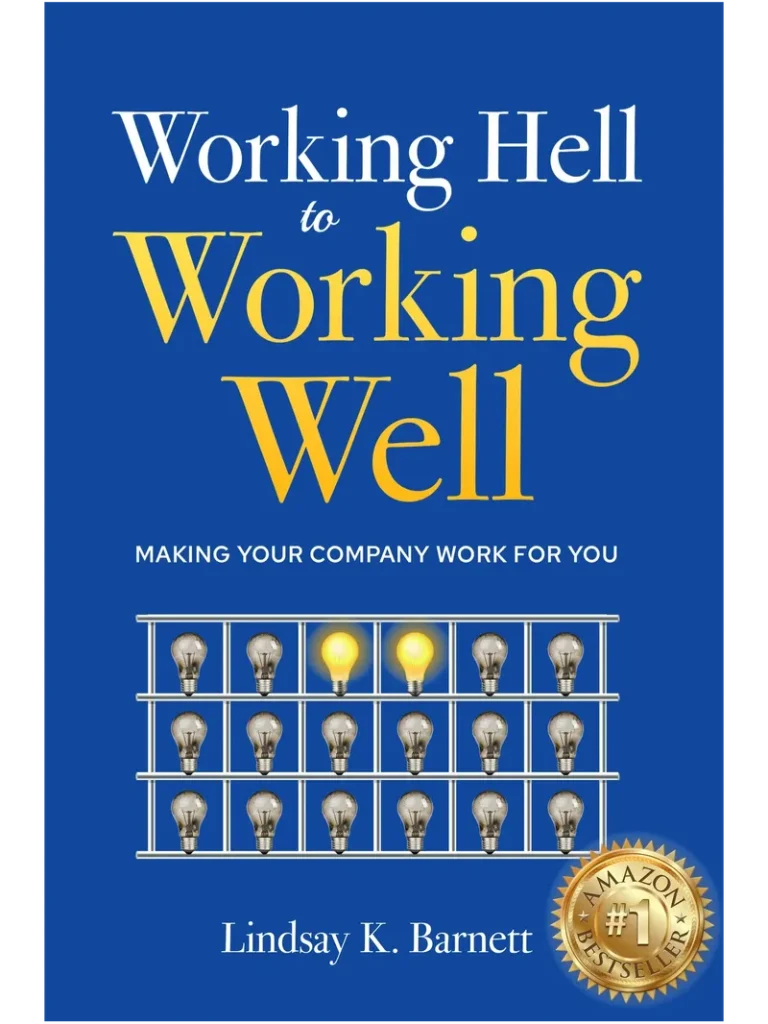
In this powerful episode of On the Brink with Andi Simon, I sit down with executive coach and HR consultant Lindsay Barnett, author of Working Hell to Working Well, to explore how individuals and organizations can transform the workplace experience.
In a world where burnout feels commonplace and “busy” has become a badge of honor, what if we paused long enough to ask: Does work have to feel this hard?
Designing the Workplace of Tomorrow, Today
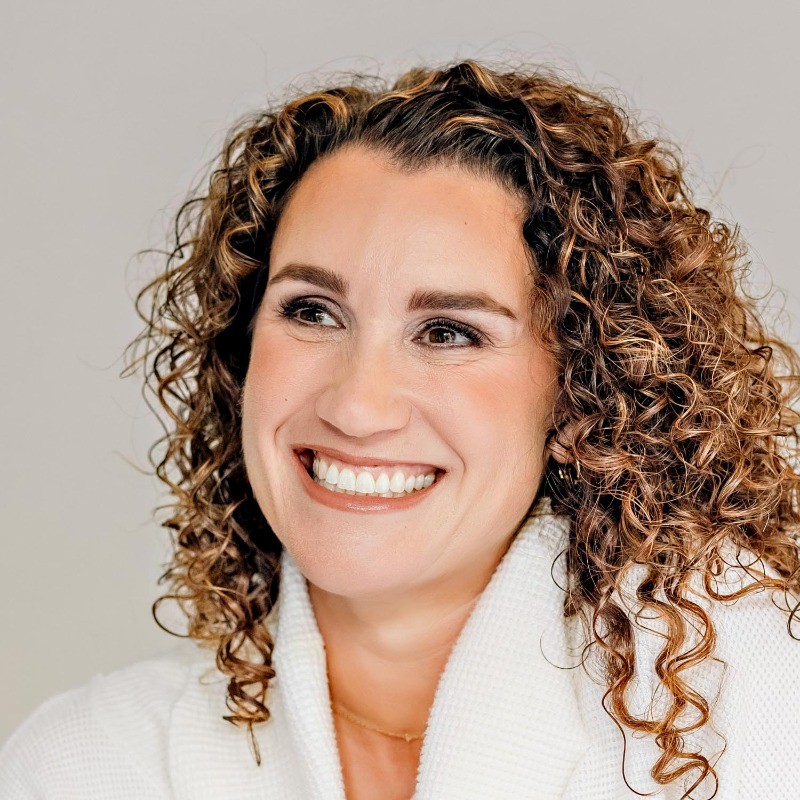
In a recent episode of On the Brink with Andi Simon, I had the pleasure of speaking with Lindsay Barnett—executive coach, HR consultant, and author of Working Hell to Working Well. Lindsay’s journey from anthropology student to organizational change leader offers a fresh and deeply human lens on how we can transform our workplaces—and ourselves.
As someone who often describes myself as a corporate anthropologist, I was delighted to discover Lindsay once used that same phrase. Her academic roots in anthropology and organizational behavior shaped her understanding that companies are, in many ways, small-scale societies. They have rituals, hierarchies, insiders and outsiders, power dynamics, and shared myths. When conflict arises at work, it is rarely just about tasks—it’s about people navigating culture.
Lindsay Barnett was Finding her Through Line
Lindsay’s path was anything but linear. She began studying archaeology, fascinated by the lives of people long gone. But as research leaders increasingly asked her to help with team dynamics, she realized her gifts were better used with the living.
She moved into advertising, then human resources, always following a deeper curiosity about human behavior. Later, when her family relocated to Australia, she experienced a powerful shift. As a working mother who suddenly was not working, she confronted a loss of identity.
That moment became pivotal.
Through reflection, Lindsay identified what she calls her “Three I’s”—the core needs she must meet to feel fulfilled in her work:
- Intellectual challenge
- Impact
- Interaction
Once she named them, she saw that these needs could be met in multiple ways. Writing children’s books, forming a writers’ group, and returning to organizational development were not disconnected moves. They were creative responses to those core needs.
There is a powerful lesson here: when you understand what truly energizes you, your options expand dramatically.
The Workplace Stalemate
 In Working Hell to Working Well, Lindsay addresses a tension many of us recognize. Leaders often say, “You are responsible for your own wellbeing.” Employees respond, “How can I manage my wellbeing when expectations and workloads are out of control?”
The result? A stalemate.
Lindsay’s approach is pragmatic. Don’t wait for the other side to change. Start with what you can control. Model healthier behaviors. Create safety through example.
When leaders visibly leave work to attend a child’s event—or even “leave loudly,” as one leader she interviewed described—something shifts. Turning off the lights, closing the laptop, and saying goodbye intentionally signals permission. Culture changes through what is normalized.
The Three P’s: A Practical Framework for Working Well
For those who want tools, Lindsay offers a memorable framework: Planning, Pacing, and Playing.
Planning doesn’t require a 30-page strategy document. It can be as simple as choosing one intentional action—like buying a larger water bottle to improve hydration. Small commitments, consistently executed, compound into meaningful change.
Pacing involves awareness. Are you rushing blindly toward tasks? Are you collaborating across silos or duplicating effort? Slowing down just enough to ask better questions can unlock faster progress.
Playing introduces experimentation and curiosity. Whether you call it “play” or a “pilot project,” approaching change with a spirit of experimentation reduces fear of failure. Play fuels innovation.
These aren’t abstract concepts. They are immediately actionable.
Charging Your Energy Battery
Beyond productivity, Lindsay speaks about energy. Traditional advice focuses on sleep, diet, and exercise. While important, she expands the conversation into three types of energy that recharge us:
- Creative Energy: Designing, building, imagining. Creativity restores vitality.
- Connection Energy: Relationships, purpose, time in nature, or alignment with mission.
- Completion Energy: Finishing something—even something small. Making the bed or folding laundry can provide a tangible sense of accomplishment that renews motivation.
During the pandemic, some executives criticized employees for doing laundry at home. Lindsey reframes this. Completion energy matters. Small wins sustain momentum.
As anthropologists of work, we must ask: what assumptions are we carrying about productivity that no longer serve us?
The Power of the Pause
When asked to share her top advice, Lindsey emphasized one simple but profound practice: pause.
In a culture obsessed with output, pausing can feel counterintuitive. Yet it is in the pause that we ask:
- Do I need to be doing this?
- Is there a better way?
- What does my body need right now?
- Who else should be involved?
The pause creates space for intention. And intention drives sustainable change.
Role Modeling Change
Culture does not shift because of policies alone. It shifts because people see others behaving differently and feel safe to do the same.
Whether it’s taking a midday walk, setting boundaries around meetings, or openly prioritizing family, visible modeling invites replication.
As Lindsay shared, we don’t have to wait for permission to begin.
From Observation to Innovation
What I appreciate most about Lindsay’s work is its grounded optimism. She does not deny that workplaces can feel like “working hell.” But she believes transformation is possible—through small actions, mindful energy management, and courageous modeling.
As you reflect on your own work life, consider:
- What are your core needs?
- Where could you plan one small shift?
- What might you pace differently?
- How could you introduce more play?
And perhaps most importantly: when will you pause?
If we are willing to observe our own habits with anthropological curiosity, we can turn those observations into innovations. That is how we move—from working hell to working well.
To learn more about Lindsay Barnett and her book, visit your favorite bookseller or connect with her on LinkedIn.
Lindsay’s profile: linkedin.com/in/lindsaykbarnett
Website: barnettcoaching.com
Email: lindsay@barnettcoaching.com
Connect with me:
- Website: www.simonassociates.net
- Book Website: www.andisimon.com
- Email: info@simonassociates.net
- Learn more about our books here:
Now–it is time to share our new book with our listeners.
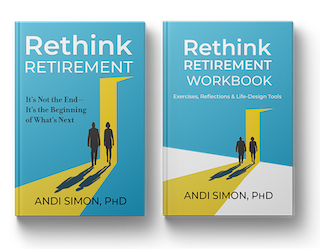
Rethink Retirement: It’s Not The End–It’s the Beginning of What’s Next.
Out on Amazon and soon in your local bookseller. Rethink Retirement: The Workbook
Listen + Subscribe:
Available wherever you get your podcasts—Apple, Spotify, Stitcher, YouTube, and more. If you enjoyed this episode, leave a review and share with someone navigating their own leadership journey.
From Observation to Innovation,
CEO | Corporate Anthropologist | Author
Simonassociates.net
Info@simonassociates.net
@simonandi
LinkedIn
Here is the full text of our podcast:
Andi Simon 00:00:00 Welcome to On the Brink with Andy Simon. I’m Andy, and as you know, my job is to get you off the brink. And I look for guests where they find me, who want to help you see, feel, and think in new ways. A little like an anthropologist, Mike. And I often leave my podcast with those words because I want you to listen with purpose. There’s a reason that certain people come to you at certain times to help you change your story, so that you can begin to see how you can develop the kinds of skills you need to adapt in these very fast changing times. And I don’t care whether you’re employed in a large corporation or you’re an entrepreneur, or you’re simply a woman who’s running a small business. There are times where you need to learn some new things so that you can understand the challenges you’re facing and get some tools to help you address them. Today, I’m so delighted to have Lizzy Barnett with us. Now Lindsey is going to tell you how she found us, and it’s an interesting and fun story, but let me read you, her bio.
Andi Simon 00:01:01 Just a spec so you have an idea of what we’re coming to today. Lizzie thought she was going to be all things an archaeologist. I remember those two. Those were great times. Their research leaders kept asking her to help with team members who were not getting along, and she realized her gifts were better used with living people than with the archaeology of those who were no longer with us. She then fell into the HR world through chronic volunteering for recruiting training programs. While working in her first career in advertising. When she made the shift into human resources full time, she saw firsthand how much unnecessary suffering was being experienced in organizations. It’s sort of a wonderful story when you think about it. She’ll tell you a little bit more about, you know, how she went from being fascinated with archaeology to getting into human resources. She has a wonderful book out, Working Hell to Working Well, and I think you should all pick up a copy and read it because she hopes the book will help people find more choice, particularly you, about how to make world workplaces better places to work.
Andi Simon 00:02:09 And I don’t know why that’s so difficult. You know, why should a workplace be a bad place for people to be? They spend most of the day there. In fact, sometimes they spend most of their life there. She is an exceptional executive coach and human resource consultant, and she leverages her 20 years of experience working with fortune 500 companies and growing startups to help employees and companies thrive with their employees, not despite them. And occasionally she goes, this is historical sites like I do, and we are endlessly fascinated by how people have evolved in the archaeology of their remains and all their artifacts of who they were and how they did it. Lindsay, thanks for joining me today.
Lindsay Barnett 00:02:51 Thank you so much for having me.
Andi Simon 00:02:53 Tell the listeners about you.
Lindsay Barnett 00:02:55 Own.
Andi Simon 00:02:55 Journey. It’s much better than my reading your bio. I like your bio. I particularly like the fact that you were fascinated with archaeology like I was, and we both been on digs and I can’t wait to go to Francis coming summer and to see the cave art in Dordogne.
Andi Simon 00:03:10 So who’s Lindsay?
Lindsay Barnett 00:03:12 Yeah. So thank you so much for sharing that. I think you would love to just share a little bit of how I found you, because my story is represented in that. And, you know, I think through the years I got my undergraduate degree in anthropology, went to business school focused on organizational behavior, which is kind of the business side of anthropology in a lot of ways. And then in the working world did a lot of work and organization development, which was a lot of team culture, organization culture. And so for many years, I referred to myself as a corporate anthropologist. And one day I just said. Does anyone else talk about themselves like that? And so I think I just I don’t know if I googled corporate anthropologist or, or how I got to you, but I got to you and I looked you up on LinkedIn and connected, and you were so gracious to connect with me. And it just has been such a joy to share that love of humanity in a lot of ways of, you know, you.
Andi Simon 00:04:24 Know, people say to me, I thought anthropologists study small scale societies. And I said, well, what makes you think a company, an organization isn’t a small scale society, right?
Lindsay Barnett 00:04:36 Yeah.
Andi Simon 00:04:37 And you found exactly that, didn’t you? Yes, I know it has all the rites of passage, and it all has the insiders and the outsiders and the internal conflicts and the status and the hierarchies, and who wants to be in the top dog and who has to be abused down below? And it is. Humans are crazy critters.
Lindsay Barnett 00:04:58 And they are.
Andi Simon 00:04:59 And then we have to go work together. So I’m so glad you found me. I’ll tell you an interesting story and then we’ll get back to you. My publisher, I went on to AI because she had never heard of a corporate anthropologist either, and so AI was very kind and provided her with all of them. Perspective of how we apply anthropological methods and theory to corporate companies of all sizes. And then at the bottom, she said, now, if you want to know more, you should talk to Andy Simon.
Andi Simon 00:05:26 And we had just hired her as a publisher, and she said, I guess you’ve made it into the AI world. And I said, yeah, well, I asked AI how to do that, and it told me how to keep my content fresh and how to keep telling stories. But your story is an important one to share, in part because of your book, but also because of the way you help organizations help their folks come together and do better. So let’s talk about how you kept developing yourself and you kept growing. Talk about that whole process. Because, you know, in some ways, I have a hunch the doors opened. You went through it and never looked back. They seem to have opportunities on the other side that seem.
Lindsay Barnett 00:06:08 To.
Andi Simon 00:06:09 Share it with the listener.
Lindsay Barnett 00:06:10 Yeah, I think, you know, it’s interesting. It’s always easier when you look backwards right in the moment. I think you’re more in the moment. but when I look at my career there, there is a through line and I’ve had different places of experimentation and intentional development.
Lindsay Barnett 00:06:32 And, you know, I started as we shared, right with the archaeology and the dig and like, why am I trying to focus on people who aren’t around anymore? Right? Like, that’s not really where my zone of genius is. but then transitioning into advertising and then finding, you know, find that through line there. Still had an Anthropologie place for me because in a lot of ways, advertising is about the artifacts of our cultures, right? That’s really what it is. And so that was my connection there. And then moving into HR, still within advertising, I found my way to kind of the human behavior side of business and stayed in that for quite a bit. But I had an opportunity. I moved to Australia with my husband’s job, was able to live there, and I kind of said, well, maybe I’ll write books. Right. And so there I started writing children’s books. Oh, wow. And so, you know, I was reading a lot of them to my toddler.
Lindsay Barnett 00:07:45 I was like, I can do better than this. And I wanted to, you know, keep learning and growing. And what was really interesting is that I had been a, you know, a, a worker, a leader for many years. And then I became a working mom. And then all of a sudden, when we moved to Australia, I was no longer a working mom, and I had lost a part of that identity. And so it really caused me to think about, well, what is it that I get out of work, what’s important to me? And so I was able to really identify what I call my three I’s, which were my three core needs that I really needed to get out of work, which was intellectual challenge.
Andi Simon 00:08:35 Yes.
Lindsay Barnett 00:08:36 Impact. And the last one was interaction, and in Australia was interaction with adults because I was spending a lot of time with the toddler. so that really anchored me into a different way of thinking about my identity, which I know is a big part of your upcoming book.
Lindsay Barnett 00:08:59 and so once I had that identified and I talk about this in my book, too, all of a sudden, I was able to look at my work and how I was getting those needs met in different ways. And so the children’s book writing comes into play because I didn’t just write in isolation. I learned about it. I took classes, write it, met that intellectual challenge need. I formed a writers group for who in this class wants to join me? Let’s do a writers group. Right. I got my adult interaction, and hopefully the content I was writing about would impact generations, right? So There was a way. All of a sudden, my eyes were open to. If I know that these are my core needs, then I. There are endless possibilities for getting these needs met. So even though I moved back into human resources and learning and development, when I came back from Australia, I still was able to always hold those so that I could figure out how I could keep growing and developing, knowing how to meet those needs.
Andi Simon 00:10:14 What’s interesting is that we know there’s no straight path. You didn’t grow up and people said, what do you want to be when you grow up? And even when you began to launch, there was no destination. And neither you nor I had spent our entire career in one place with one job doing the same thing. I met a woman not too long ago who spent 20 years doing just that, and I went, whoa, I can’t do that. I’m too curious about all kinds of things that are different, and I like that you do as well. But now this has become interesting because, the workplace still is fascinating to you. And I do think your book is as much about reflections on and helping to improve the places where we work, wherever that might be. And the pandemic taught us a whole lot about how much we could get done without being together, but also how lonely it can be not being together. Everything has a tradeoff and, and so you’re beginning on this next stage of your development as an executive coach and HR consultant.
Andi Simon 00:11:21 There’s some real interesting wisdoms you’re bringing to companies. And, you know, share with us some of them, because the book is full of insights and wisdom that is very important for corporate leaders to understand, for them to create an environment for humans to thrive. Help us.
Lindsay Barnett 00:11:39 So there’s different things that I share in the book, but I think one of the key premises that I find a lot in this place of workplace wellbeing is that we’re in a little bit of a stalemate, right? Leadership businesses are saying, well, you’re responsible for your wellbeing. Individual and individuals are saying, well, I can’t control my wellbeing until you control the amount of work and expectations. So we’re kind of doing this. And so I think a lot of where I wanted to start with the book is just saying we don’t have to wait for the other people to change. We can start with ourselves. Whether you’re a leader, you know, in HR or someone you know, representing the needs of the organization or the individual.
Lindsay Barnett 00:12:34 And so I really wanted to take people on that journey of how can I be the change? Because if I’m being the change, I’m also role modeling it and making it safe for others, right? I don’t have to slink out and, you know, dodge to the back corner, exit to go to my kids play or my son’s baseball game. If it’s okay for me to take care of my own work life, harmony, and my own well-being, it’s socially accepted. We don’t need as much social capital to go do those things if we’re all doing those things. So that’s some of the premise of the book is creating that safety around role modeling well-being.
Andi Simon 00:13:31 Well, this is a big topic, though, because, and you said something important before. It’s one thing to say you’re responsible. It’s another thing to enable you to take responsibility. And often the lack of understanding of what that means. for a guy to take off, to go see a child or play a sport that may or may not be considered a good balance of work and life.
Andi Simon 00:13:59 And if a woman does it, it’s often seen as an intrusion on the work side, not a good balance. And so and, and the, the control factor of it is very important because it gives people power over each other in ways that are subtle and powerful. yeah. That, that, you know, if, if you go and watch your child and a school play, there’s something diminishing about it as opposed to elevating, and I can’t quite figure out in the world that we’re in why more places don’t have childcare at the office. and are part of me really concerned about the children that we’re raising in our society, that they have the proper place to grow up with a mother and a father, or just one or the other, who are able to spend enough time to raise them happily. And so this is important now, when you talk about it, you’re going to try and help us understand how to create better balance using, planning, pacing, and playing. You want to explain those a little? I thought they were great words.
Andi Simon 00:15:02 Your three piece.
Lindsay Barnett 00:15:03 My three P’s. Yeah. So I think, you know, some sometimes people are like, I want this, but I don’t know where to start. Right. And so one of the things that I talk about is just figuring out what are some things that you can actually plan for. And so one of the stories that I love from, from the book is I had a friend who she wanted to be intentional about getting healthier. There are endless possibilities of how you can go pursue that, right? But her plan was to just get a bigger bottle of water. A bigger water bottle. That was it. She took one action she knew she could commit to, but guess what? She lost weight. Her skin got better. She felt better. She had more energy. Right. So sometimes we get all in our head around I need it. Yeah. It doesn’t need to be a 30 page Excel workbook, right? We can just be intentional about what we’re going to commit to.
Lindsay Barnett 00:16:18 So some of that is the planning piece. Then pacing is just really noticing a few different things, right? Noticing our own pacing, are we constantly feeling like we’re stressed all the time? Sometimes pacing can be how we’re working across functionally, so I, I know I fell victim to this all the time. I would get, you know, a project going. I didn’t realize over here and another part of the organization, they were doing something similar. If I had taken a little bit of time to do a little bit more pacing, instead of being all eager Beaver to get this project done, I might have been able to find an opportunity to collaborate, and then I would have a lot more time, right? Because I wouldn’t be doing it and I probably would be more impactful. Yes. So there’s a component of pacing that’s a little bit of self-awareness and a little other awareness. And same with planning, of course. And then playing to me is so important I think when you’re trying on something new to whether you call it playing or whether you refer to it more for the more scientific folk as an experiment.
Lindsay Barnett 00:17:40 It puts you in a place of curiosity, which can help us not have so much fear of failure. So those are some of the that’s kind of my recipe, if you will, the three P’s of getting started with creating greater work life harmony, at least for yourself. And obviously you can apply that as well if you’re a team leader or, or whatnot.
Andi Simon 00:18:07 It’s interesting listening to you. I’ll share some of my own experiences being yes, I’m both an executive and a consultant. because when I was a banker, I got into Citibank by chance and another story and then I, they said, you know, you need to learn. I was an anthropologist working in a bank environment, helping them change, and they said, you need to get some experience in the line. I said, okay, so they’re going to give me the most profitable bank branch. And I said, no, give me the worst. And so I did. And it was it was not a good place to for.
Andi Simon 00:18:43 It just wasn’t making any money. And it wasn’t bringing in any deposits or making any loans. It wasn’t doing banking. And one of the challenges was that they were all women and they all had children and me. And so came a snow day. It was almost difficult. I was not a teller. But how do you open without any staff? So I said to them, let’s come up with a creative solution here. Yeah. You have your kids at home, you can’t come to work. Why don’t we bring them in? Let’s take the kitchen area. Now, I never asked permission. It was easier to say I’m sorry than it wasn’t as permission. Let me off the chain and come back down. The whole year had been gone. So bring them in and we’ll rotate. Who’s going to be the teacher or counselor, and we’ll bring in a bunch of toys and crafts and stuff, and we’ll spend the day entertaining the kids or letting them enjoy. And then. And you can work.
Andi Simon 00:19:36 Well, yeah, it worked. And we never had any days where we didn’t have everybody in staff because of a child or a child who had to stay home because of snow days. Creative solutions around their needs made mine much easier. And it was always interesting because when I got there the first time, they said, listen hun, you’ll come, you’ll go, we’ll be here forever, so we’re not going to listen to you. I know that’s an interesting way to start our relationship, but they.
Multiple Speakers 00:20:02 Did.
Andi Simon 00:20:03 Because the mutual trust turned into really a fan club. We were really fans of each other and we could collaborate. Now for a second for your pacing. I was an executive. I was a consultant for a health care, organization in Michigan, and my friend was the CEO there, and he had me come in and run a bunch of stuff while he was trying to staff up, and he had a big deficit. And so I would have my morning huddles and everybody would talk about what they were doing.
Andi Simon 00:20:33 And that was the only way they all knew what each other was doing. And so in the absence of a process, you could point fingers, but how would I know? And then we all talked about one thing you could use from somebody. And so it became a collaboration. So, you know, and I made those up. you know, nobody asked me. You should try this. I just borrowed from a football huddle, and I said, this works. We’re going to we’re going to go. We got to get it together. And so you’re talking, I’m reminding myself of how good people I won’t call leaders or otherwise can find solutions under the radar without any penalty points, because the performance demonstrates what, what is required is to get this thing done and then you discovered the same thing as you were doing it. It’s so interesting. Are there any current or recent stories that you can share? Not mine, but clients or things that you’ve seen or stories from the book. I like to tell stories.
Lindsay Barnett 00:21:36 Yes, yes. In terms of as it relates to the three P’s. Yes. So it’s interesting. I have a coaching client who I love, who one of one of the things that I was noticing that we’ve talked about, right, is in that place of pacing. he was very focused on the task. Right. I’ve got to get I’ve got to get the task done. And he would find himself really struggling to be patient with hearing all of his colleagues write in these cross-functional meetings. And one of the things that he’s been working on, that he has been finding to be such a big unlock for, is just embracing curiosity. And so instead of focusing just on the task, really trying to ask a great question to better understand, well, what do they need? What why are they why are they seeming resistant? What’s going on? Why is this slowing down instead of just being impatient with the slowness? He was like, oh my gosh, 1 to 2 questions and we’re unlocked and we’re off to the races.
Lindsay Barnett 00:23:04 So just, you know, finding our habits, our ways in that enabled him to actually go faster.
Andi Simon 00:23:14 Yes.
Lindsay Barnett 00:23:14 But he needed to really sit with the pacing as a as it was in him right now to figure out how to unlock that.
Andi Simon 00:23:25 Are you for yourself as you’re growing your business, practicing the same piece, or you had your three eyes? You have your three P’s. I know you have things too.
Lindsay Barnett 00:23:37 I know everything’s in threes with me.
Multiple Speakers 00:23:39 Well, I think it’s very anthropological. It is.
Andi Simon 00:23:43 But how are you also doing this in your own, in growing your client base and the consulting and coaching work that you’re doing?
Multiple Speakers 00:23:51 Yeah. Yeah.
Lindsay Barnett 00:23:53 So it’s interesting I the planning piece I am good at my little, little p planning. The big P planning is where I am working on. And that is part of my goal for next year. is really getting better at building my planning muscle. I think I’m from a planning sense of having intentions and trying to align my actions to the intentions.
Lindsay Barnett 00:24:31 I would say I’m batting 500. I’m not as good as I’d like to be, just like everybody else. I get distracted and, you know, pulled in different directions. So that’s one of the things that I’m really working on. I think the pacing is one that I’m, I really because there’s a somatic element to pacing. I think that’s something that I think I can key into much easier. And the playing I have no problem with. That’s my that’s my easy one.
Multiple Speakers 00:25:03 I like to, you know.
Andi Simon 00:25:04 But then but that is the self-care one.
Multiple Speakers 00:25:07 Yeah. Yeah, yeah.
Andi Simon 00:25:09 I mean, that’s kind of that kind of, And isn’t that you work all day so you can play. but, you know, because remember, the companies have put ping pong tables in the middle of their, you know, cafeteria area. one, one fellow at a workshop I was doing who was so upset that his new hires demanded that they put some ping pong tables into the into the factory, wherever they were working.
Andi Simon 00:25:31 Yeah. Don’t they know we work from 9 to 5 and then we play. And they said to him, why? And he said, I don’t know why.
Multiple Speakers 00:25:42 Why?
Andi Simon 00:25:43 They said to him, come play with us. And then we go back to work and energized and.
Multiple Speakers 00:25:49 You know.
Andi Simon 00:25:49 Refreshed. And he said, and they were right. and so the old habits are habits, but they’re not sacred. And there’s nothing particularly for forced in something. And sometimes I take a long walk or I, you know, I read a book. I do something to relax the mind, get away from the computer and do something playful. That is, And then and then make sure on Fridays is my day to go play a little golf or, you know, do something that’s play. Play. But it is all work. And no, play is not much of a life. And, and I’m working on this book on retirement, that you had mentioned the stories that trouble me more people who have worked their whole life and hate work and, and that’s a long time to be unhappy every day.
Multiple Speakers 00:26:40 Right? Yeah.
Lindsay Barnett 00:26:41 And that and that will have a big impact on your health and longevity, too.
Andi Simon 00:26:46 I know you’re not.
Multiple Speakers 00:26:47 That’s not a.
Andi Simon 00:26:47 Healthy, happy. You do have some stories about energies.
Multiple Speakers 00:26:51 yeah.
Andi Simon 00:26:52 Tell us about this battery charging that we should do. And it sounds like it’s different than planning and pacing and playing.
Lindsay Barnett 00:26:59 Yeah, yeah. So I think, you know, for me, when I think about energy, typically people talk about energy. They’ll ask you; did you get enough sleep? Are you eating right? Are you exercising? And I think what I was starting to notice for myself and seeing it also in clients, is that there are different ways that we can charge our, our battery. And so, you know, if we are trying to, you know, find wellness at work, how can we connect to those different things that can keep us uplifted? And so the first see is creative energy. So, you know, while there is a lot of research around actual creative taking, creative time is good for your health, good for your brain.
Lindsay Barnett 00:28:00 I tried to keep it simple. Right. Creative energy could be for me, like designing a workshop or, you know, making a slide look pretty. Whatever it is, it’s just something that is really helping me feel like I’m creative. And it could be creative, problem solving, any kind of creativity. But it feels like there’s a place for me to innovate or add value, in a different way and think differently, frankly. and then the second one is connection energy. And so I expand that beyond just relational energy, right. Like oftentimes people think of connection energy as just, you know, relationships to also think about it off, you know, how we’re connecting in the world, right? A lot of my coaching clients, when I’d asked them a little bit about, like, their spiritual practices, many of them would say, well, hiking, being in the mountains, being in nature. Right? So sometimes it can be that connecting to kind of the broader world. It could be connecting to your organization’s purpose.
Lindsay Barnett 00:29:16 Right. So purpose oftentimes sits in that connection energy space. And so sometimes even when I was writing the book and I would be like, oh my God.
Multiple Speakers 00:29:26 What is this going.
Lindsay Barnett 00:29:27 To be over that? The things that would support me in kind of allowing myself to kind of keep charging the battery, not powering through. So powering through is different because powering through is you are still losing energy.
Multiple Speakers 00:29:43 Yeah.
Lindsay Barnett 00:29:43 But to keep maintaining energy would be reframing, well, what am I trying to do with this book?
Multiple Speakers 00:29:51 Like I want.
Lindsay Barnett 00:29:51 To help people. I want to make the workplace better. My kids are going to be in the workplace soon. How do I make that workplace supportive of them? So those are the things that would keep me charged. And then the last one is completion energy. So, you know, the book is a great example of how many times we’re working on projects or initiatives or whatever it is that are just slogs, right? Like, you’re just having to keep going and keep going and keep going.
Lindsay Barnett 00:30:22 And so I joke that laundry is my big source of completion energy.
Andi Simon 00:30:28 Well, I get.
Lindsay Barnett 00:30:28 That because sometimes I just needed that little boost of, I finish something, right? I make my bed, I finished something, I did laundry, I finished something, you know. And even though there were CEOs the world over saying during the pandemic, I don’t want people at home doing their laundry, let them. It’s giving them completion energy. They can’t do it for eight hours straight but let them get a little completion energy to just keep going.
Andi Simon 00:31:00 But that’s so interesting because the assumption was that they were doing bad things, as opposed to something that gave them a sense of completion, which energized them to come back and do more work. And why are they, you know, mutually exclusive? You know, can’t I do two things really well? And, and I do think we’re at an interesting point where the pandemic has opened our minds to possibilities, if you’re curious about it. and the desire to bring them back into the workplace is really selfish.
Andi Simon 00:31:33 because that’s something you want. Not necessarily what’s best for everyone. And I do think that hybrid gives people flexibility and choice. And I do think that gives them the autonomy and responsibility. you know, I had one, one client and she was upset that one of the guys who worked for her and it had taken on a second job where he was doing the same work for another company, but he had enough time because he wasn’t commuting to get two jobs done and he was making more money. He didn’t want to come back to the workplace. Yeah, I said. Did he disappoint you? No. I said, so why don’t you let him? I mean if he if he was completing and he had time. You’re paying for empty space. Let him go make more money. And so the values we have are ready for some revaluation. You know, and I think that’s what you’ve done. Well, we’re about ready to wrap. So there’s three things that you would like people to understand about working.
Andi Simon 00:32:30 Hello to working. Well. Yeah. yeah. You know, 1 or 1 or 2 or 3 things that are important for them to remember.
Lindsay Barnett 00:32:36 So I think the number one thing that I would offer is just the power of the pause.
Andi Simon 00:32:43 I love that. Yes.
Lindsay Barnett 00:32:45 All right. We’re just we’re so wired. It’s, you know, productivity, productivity, productivity, productivity. Just taking a breath to think for a minute. Do I need to be doing this? Is there somebody else I should talk to? What does my body need right now? Whatever it is. But there’s so much power in just pausing to really assess what what’s needed right now and what’s going to best support me or the organization. so that would be my number one thing. I think the number two thing is you don’t have to wait. there’s any number of actions that you can take today. And if you’re feeling stuck, that’s how you’re going to feel unstuck is by starting to take some actions. and then let’s think about the third thing.
Lindsay Barnett 00:33:47 What would be I think just the third thing for me is just the power of role modeling.
Andi Simon 00:33:53 Yes.
Lindsay Barnett 00:33:54 you know, I think one of the stories that I share in the book. That really was one of the. The impetus and kind of how I was thinking about this is I was at a leadership conference on wellbeing, and a bunch of us were chatting around, you know, what are some of the best practices we’ve seen? And one of the people chimed in and said, well, I always make a practice of leaving loudly. And I said, that’s interesting. What do you mean by that? Well, when it’s time to go, I make a big show of turning off the lights, slamming the computer closed, closing my door, making sure. Goodbye, everybody. Right. Of really trying to tell people I’m going to go do the life bit now. Right. And so to me, that role modeling is just it’s so important. That’s how we start to see that ripple effect of change in organizations.
Andi Simon 00:35:01 I’m curious, you may not know whether anybody duplicated what she was doing. And that’s sort of an interesting way, symbolically, anthropologically a symbol to make known that I’m now moving from where I am to the other reminds me, when I was an executive and I’d come home and I still had young daughters at home, I would say to them, I got to take a shower and I’d go into the shower and I come out a mom. I come home a businesswoman, and I go into the shower to have to literally decompress, come out of a different voice and different, different questions, different time. and I, I, I remember symbolically how it was transformational and essential. I was on a stage playing one role, and I had to play another, and I needed some pause, time to go put on a different outfit and come out a different lady. This has been such fun. If they want to buy your book. Lindsey, where should they get it? Yeah.
Lindsay Barnett 00:36:00 So wherever books are sold.
Lindsay Barnett 00:36:04 For the most part, wherever books are sold. And Yeah. But, you know, Amazon, Barnes and Noble, I have an audiobook which, I’ve been told is good fun. I tried to make it fun. It’s me reading it. so. Yeah.
Andi Simon 00:36:21 Yeah, I think that’s.
Lindsay Barnett 00:36:22 Then you can find me also on LinkedIn. Would love to connect with anyone here. I, you know, I try to post things that I hope have value. food for thought, things that people can do to, you know, create better work workplaces, work life harmony for themselves and whatnot.
Andi Simon 00:36:42 Well, you know, you’re really talking about creating better lives. And I do think that’s really important. Unless we’re going to find a way not to have to work. and retirement isn’t a solution. As I discovered. So for all of you who come. Thank you for coming. as I. Oh, it’s been a pleasure. my audience is, as has given us, the opportunity to rise into the top 100 podcasts.
Andi Simon 00:37:07 We’re ranked 18th, and I can’t thank you enough because it’s because of all of you. And the folks I bring are here for you. You know, my job is to get you off the brink. And I want you to listen to what Lindsay has been talking about. Get your three P’s, find your energizes, and begin to see your life and your work life in a different framework. And this is a perfect illustration about how you can learn something in a podcast that you can apply right now, including getting that bigger water bottle. And I drink water all day long and I mean and am I skin must be better. But in any event, like Lindsey, my books are available on Amazon, Barnes and Noble, and my new book comes out in the spring 2026. It’s called Rethink Retirement and it’s ready to go get type, setting off to the publisher to get it to the next stage. So I’m enjoying, like she did, taking our ideas and our stories and turning them into something useful for other people and helping them see, feel, and think in new ways.
Andi Simon 00:38:09 Remember, our job is to take your observations and turn them into innovations. You’ve heard how Lindsay has done it. Now come and share with me how you’re doing it, because as you’re listening or watching, you are beginning to think through, I can do this. Of course you can. I thank you. It’s with great gratitude that you’ve come. And I’m so delighted to have been here with Lindsay. Lindsay, last thought, and we’ll say goodbye.
Lindsay Barnett 00:38:32 Just congratulations on your book again. And just so happy to be spending time with you. So thank you. And thank you to all the listeners for tuning in. If I can be of service, let me know.
Andi Simon 00:38:44 We will be there.