


Interesting title to this podcast, isn’t it? How to Find Your Brand When the Past No Longer Fits You?
As Brooke Foley tells us in this podcast, building and creating big businesses is “…what I was known for, and I came in to work every day crying. I built something that I did not recognize, and I was at odds with the very principles of what people paid me to do for them. I didn’t really know how to manage my own principles. I had to build a business down, not something that people talked about or teach you. And probably the most valuable lesson when you think about all the mergers and acquisitions I sat in on, on all of the bankruptcies that we work clients through all of that, the most important thing I ever learned was how to get out of the things I created.”
For many professionals, entrepreneurs, executives, and even retirees, that moment can feel deeply unsettling. For Brooke and so many others, the bigger question is: Who am I now?
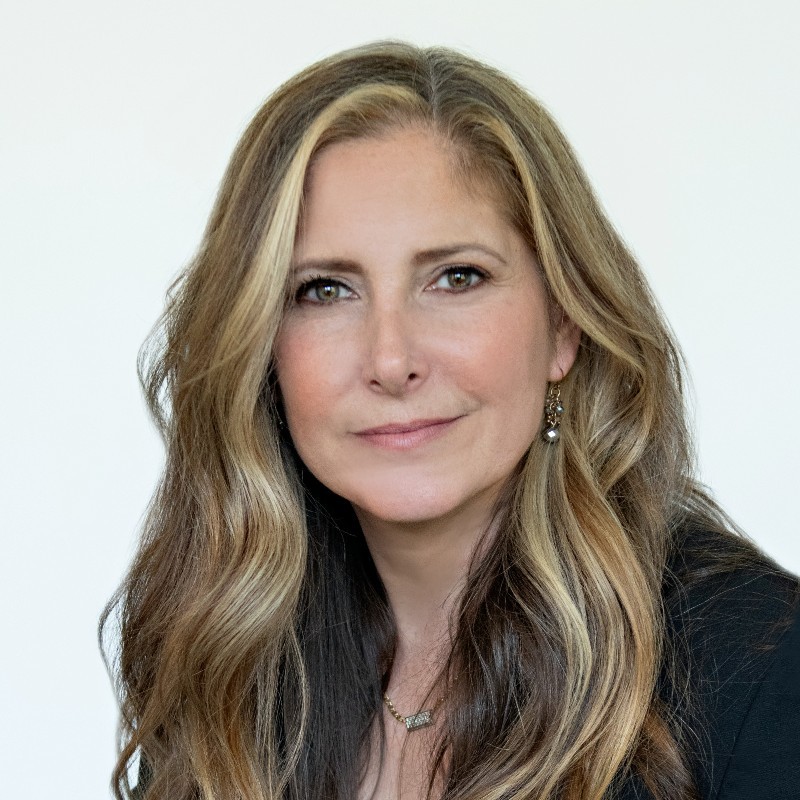
In this powerful episode of On the Brink with Andi Simon, I sat down with branding strategist and entrepreneur Brooke Foley to explore one of the most important transformations happening today—not just in business, but in life itself.
Brooke is the founder of Jayne Agency and Clarity University, and her insights go far beyond logos, websites, or marketing campaigns. Together, we explored how branding has fundamentally shifted from differentiation to attraction, and how individuals must now learn to define themselves before the world defines them.
As Brooke explained so beautifully: “It’s not about differentiation anymore. It’s about alignment and attraction.”
And that idea changes everything.
As she tells us, “It’s funny because I always say that people pay a lot of money to differentiate, but that’s not really the game. That’s not really what’s happening. It’s when a team and a company and an organization or an individual is so aligned within what they do and what they promise that it attracts the right people back into their brand. So it’s actually not about differentiation, it’s about attraction.”
What Do You Do, When the Brand No Longer Fits
Brooke’s own journey began in the corporate advertising world, where she built an impressive career as a creative executive. But after discovering she was being paid dramatically less than male counterparts, she made a bold decision: she launched her own agency.
Like many entrepreneurs, she initially built the company fast and big—only to realize she had created something she no longer recognized.
That realization forced her to do something few leaders are ever taught: She had to learn how to dismantle and redesign what she had built.
That experience became the foundation for her work today—helping organizations and individuals navigate moments of profound change.
As Brooke explained, too many people still define themselves through outdated systems:
- The title
- The paycheck
- The hierarchy
- The ladder they climbed
But today’s world requires something entirely different.
The audience that matters now may not be your boss—it may be your community, your mentees, your boards, your grandchildren, or the causes you care about most.
That shift requires a new understanding of personal branding; of answering the question: “Who am I? And why do I matter?”
The 10 Assets of a Brand in Changing Times
Throughout the episode, Brooke shared the framework she teaches the 10 brand assets through Clarity University.
At its core, the framework identifies:
- Goals
- Objectives
- Barriers
- Strategies
- Audience
- Positioning
- Promise
- Personality
- Tone
- Value
The insight that stood out most for me was this: Most people approach branding tactically instead of strategically.
They think:
- “If I redesign my website…”
- “If I update LinkedIn…”
- “If I hire a marketing firm…”
…then success will follow.
But Brooke argues the real challenge is alignment.
Without internal clarity, no external strategy works for long.
The Great Shift in Branding
Perhaps the most thought-provoking part of our conversation was Brooke’s observation that branding itself has changed dramatically over the past several decades.
Fifty years ago, brands told consumers who they should be.
Today, individuals define themselves first—and then choose brands that align with that identity.
That means the relationship between individuals, companies, and communities is being completely rewritten.
And it also means many professionals leaving corporate life experience what Brooke compared to stepping outside The Truman Show.
The world they thought existed no longer operates by the same rules.
That can feel terrifying.
But it can also be liberating.
Honoring Your Own Value
One of Brooke’s most important insights was surprisingly simple: “If you can take a moment to sit down and honor your own value, then somebody else will.”
That may be the real work of this next stage.
We discussed examples of individuals who did exactly that:
- A former corporate executive who built the career he always wanted after being pushed out.
- Brooke’s father, an engineer who found new purpose teaching cybersecurity and innovation as a university professor in his 80s.
Neither stopped contributing.
They simply redirected their expertise into new forms of meaning and impact.
Designing the Next Chapter
This episode is not just about branding.
It’s about identity.
Brooke reflects on this current world we are living in: “So let’s take someone who is in the process of being packaged out. Let’s just talk about that, right. Every day it seems like their primary audience is the person that they’re reporting to or that’s in control of their package. But if they had control over their ten assets, they might realize that the real audience is the world around them that is aligning with where they’re supposed to head next, not where they’ve been conditioned to be, but where their next step really sits.”
It’s about transformation.
And it’s about recognizing that the next stage of life may be the first stage we truly design for ourselves.
As millions of Baby Boomers move into this transition, we have an extraordinary opportunity to rethink what aging, contribution, work, and purpose can look like. And, what each of them has as a personal brand.
Retirement may no longer be the right word at all.
Perhaps Brooke is right.
Maybe this is really about relaunching.
And for each of us, we need new skills to frame the next phase in our business and in our personal journey.
To learn more about Brooke and her work on branding and personal identity check out her website and LinkedIn profile:
Brooke’s profile
linkedin.com/in/brooke-foley-04a3373
Website
Connect with me:
- Join my Substack Newsletter Rethink Retirement
- Website: www.simonassociates.net
- Book Website: www.andisimon.com
- Email: info@simonassociates.net
- Learn more about our books here:
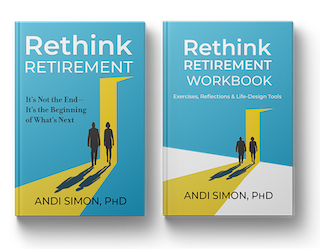
Now–it is time to share our new book with you!
Rethink Retirement: It’s Not The End–It’s the Beginning of What’s Next
Out on Amazon and WalMart, and in your local bookseller and Rethink Retirement: The Workbook
Listen + Subscribe:
Available wherever you get your podcasts—Apple, Spotify, Stitcher, YouTube, and more. If you enjoyed this episode, leave a review and share with someone navigating their own leadership journey.
From Observation to Innovation,

CEO | Corporate Anthropologist | Author
Simonassociates.net
Info@simonassociates.net
@simonandi
LinkedIn
If you would like to dive into the text, read on…
Andi Simon 00:00:02 Welcome to On the Brink with Andy Simon. I’m Andy, and as you, my listeners and my guests, my viewers all know I’m here to get you off the brink. My job as an anthropologist is to help you see, feel and think in entirely new ways, or at least a little new ways, because the times they are changing and you are in the midst of an enormous evolution that humans are going through. Remember, as you listen to the stories today’s for one, your mind changes, its story begins to develop new ideas, and you live the story that every day wakes you up in the morning and makes you think this is real, but it’s not. It’s an illusion. And we’re going through fast time so you don’t know what to believe and what not to. I have with me today someone you are going to love listening to. I’ve enjoyed as we prepared for this. Listening to Brooke Foley. Now Brooke has a business. Let me tell you a little bit about her, and then I’m going to have her tell you her journey.
Andi Simon 00:01:01 Because, as you know, that’s the best way you can capture the essence of who she is. But she started this wonderful company called the Jane Agency in 2009, and I loved her career after 25 year career as an advertising creative executive. Now, she writes, the reason I started my business was related to the fact that I was being paid one third less than my counterparts, who were both men. And I was told that they didn’t pay at the rate I was asking for. So I went out and got four offers within a mile radius, and I put those down the table and I realized it wasn’t going to change anything. So what did she do? Not that different than what I did. We went out and formed her own agency. Why not? You know, and then she’s grown it. She’s made acquisitions, she’s created the Clarity University, and she’s created a brand for branding. It’s the Brooke Foley brand, which is answers a question about why Brooke has really been transformative in the lives of so many individuals and companies as they are trying to adapt.
Andi Simon 00:02:04 The question of who am I in times that aren’t what they were, but we’re not quite sure what they are. One last little piece of anthropology. We are futurists, and there’s great literature on how we have to see the future in order to live today. Impossible, because we’re making it up. But unless you have a vision of what’s coming, it’s very difficult to make decisions. Now that you think are preparing you for, then you can’t really know the future, but you can feel like you’re preparing. It’s an illusion. But we’re going to play around with this because these are times where we’re going to have to work forward and really make sense out of things, in all kinds of ways. My last little pitch. We were ranked 18th among the top 100 podcasts on the topic of change. Do I love change? I love change, but do you love change? No. And nobody really loves change at all. So today we’re going to help you get off the break. Brooke, thank you for joining me today.
Andi Simon 00:02:58 I’m so delighted you’re here.
Brooke Foley 00:03:00 Thanks for having me, Andy. It’s awesome and honored and honored to be here.
Andi Simon 00:03:04 Tell the listener or the viewer all about your journey. You can give it much better richness and it’s your personal brand, so I do not want to mess with it. Who is Brooke?
Brooke Foley 00:03:15 Thank you for asking. I will do the most succinct, wrap up on that as I can, because I know we’ve got some really rich topics to talk about. I started my career as a graphic designer, moved into the agency world. I had phenomenal mentors along the way. I had a what would be considered a dream career in terms of creative. I was living in both the digital age and the traditional age. I got all the dark arts I was taught by the best and got to really sit through the whole dotcom evolution. I eventually got to a point where it was time to start my own company, and when I founded Jane, the first thing I did was grow it really, really big, really fast.
Brooke Foley 00:03:52 That’s what I was known for, and I came in to work every day crying. I built something that I did not recognize, and so were the very principles of what people paid me to do for them. I didn’t really know how to manage them for myself. I had to build a business down, not something that people talked about or teach you. And probably the most valuable lesson when you think about all the mergers and acquisitions I sat in on, on all of the bankruptcies that we work clients through all of that, the most important thing I ever learned was how to get out of the things I created. And so that was a really, really big turning point for our company. And that was the point in which we founded and really grounded in on really owning the methodology of teaching entrepreneurs and enterprises about the ten assets of a brand. Throughout that journey, I had always functioned, just recently stopped functioning as an expert testimonial witness or contributor advisor. Oftentimes, I would evaluate contracts that the governments had with agencies and things like that.
Brooke Foley 00:04:53 And in doing that, you really learn the technical reality of branding, pricing, position, promise, not the hey, tell your story so that people are more inclined to talk to you, but the real things that you can stand up and defend without any imposter syndrome. And so our agency for the last 12 years has really, really been focused on helping people not just get educated but master those ten assets so that they can be in control of what’s happening to their brand as change happens. And so for us, what we recognize, which was one of the reasons I really loved reconnecting with you and coming on the podcast, is that we live in the world of the brink of change for people. People don’t hire Jane when everything is calm and stable. They hire us when they know something’s about to happen, something just did happen, or they are in the moment of change. And so that brink, that moment where you’re realizing that it’s happening is very different than when you start to be able to have the faculties to do something with it.
Brooke Foley 00:06:00 And so we talk every single day about that.
Andi Simon 00:06:04 As you are talking about it, I think about my early period of time when I was in corporate, and I was always there was always a part of me that was marketing, branding and advertising. This has certainly changed, but at the time, branding answered the question why you marketing was why? Now my hunch is that’s both changed and not changed that much, because brand differentiated you from a generic or some other type of thing that could solve a problem. But as a blue ocean strategist, I know that competing one brand against the other has diminished in its effectiveness. And now, unless you’re creating new solutions, you’re going to be already obsolete before the new one comes live. So help us understand a little bit of the ten steps or those ten aspects, but also the journey that people are going through, whether they’re leaving companies to form their own company like you did, or the retiring and then getting back into business, or they’re young and they’re selling their business.
Andi Simon 00:07:04 You know, give the listener viewers some idea about the demographic issues that you’re seeing and why. This is no longer a simple question about why you versus a competitor. It’s no longer that simple. Was it ever simple? I’m not sure, but it’s not that simple anymore. Help us. Help them.
Brooke Foley 00:07:22 It’s funny because I always say that people pay a lot of money to differentiate, but that’s not really the game. That’s not really what’s happening. It’s when a team and a company and an organization or an individual is so aligned within what they do and what they promise that it attracts the right people back into their brand. So it’s actually not about differentiation, it’s about attraction. And I don’t mean by awareness. I don’t mean, advertising attraction campaigns, although it does show up there, but it’s more really being aligned around those ten assets. And those ten assets define your goals. They define which is the numbers. The numbers rule everything. and then talking about your objectives. So people often talk about goals as being smart.
Brooke Foley 00:08:08 We talk about objectives as being smart. Goals are binary. They’re on or off. Right. But your objectives are smart. They need to be simple. They need to be realistic. They need to be measurable, achievable, time bound. When you’re objective, the guardrails of whether or not you’re going to meet your objectives, your goals. When the guardrails are there, then you’re more likely to manage your barriers, which is what’s in your way. And when you invest in your barriers the right way, you turn them into strategies. Most people approach marketing and branding from the standpoint of, well, if I build this website, then this will happen. If I redo this logo, this will happen. If I do this SEO program, this will happen. But there’s this this undercurrent of alignment or lack of alignment that’s actually dictating whether or not they’ll be successful. And we have the data points over the years of serving thousands of clients in that way. And then what happens is you start to become more realistic about your audience.
Brooke Foley 00:09:05 So let’s take someone who is in the process of being packaged out. Let’s just talk about that, right. Every day it seems like their primary audience is the person that they’re reporting to or that’s in control of their package. But if they had control over their ten assets, they might realize that the real audience is the world around them that is aligning with where they’re supposed to head next, not where they’ve been conditioned to be, but where their next step really sits. And when you start to think about that audience, it’s the boards that you’re on. It’s the contributions that you make. It’s the people that you’ve mentored. It’s the relationships you have that are just starting out, like your grandchildren or your friends children’s that just got jobs as much as it is the people who you’ve helped get positions places, but it’s the people who have common interests with you that are your audience, not the people that have stepping stones on the ladders that you’ve been climbing all these years. And that ends up being a fundamental change for us.
Brooke Foley 00:10:05 When you think about audience, and then you start to think about the insights and you start to be able to break that down, that’s a whole other asset that is so valuable to us. And then you can start to talk about where you’re positioned versus the other people. So are you positioned as somebody that is hundreds of people that are being packaged out. Are you being positioned as a new keynote speaker or are you being positioned as a philanthropist? Where are you positioning yourself as you’re making this exit, whether it’s chosen or not? Right. And as we start to really step back and rethink those things, all of a sudden, we’re not a victim of the process of being packaged out. We’re in control of the decisions we’re making about how we want to use our time. And that becomes more of our collateral than anything, and then you start to be able to see. Opportunity. And then what does that promise you want to make to that person? So if my grandchild is going to introduce me to someone, I don’t have grandchildren right now, but we’re working with a lot of people that are in this place.
Brooke Foley 00:11:00 If my grandchild is going to introduce me to someone, what is it that they’re getting out of this? Like, why does that matter for them? And we aren’t thinking that way. We’re just sort of, you know, stressing out about the fact that this is a life change and transition, which is huge. But we have so many more resources and so many more places where we’ve poured into and contributed that can really help us on that next journey, so that if they want to call it, they can call it retirement, but we might want to call it launching. You know, it’s a whole different perspective. And then you could talk about that promise and then you can support it. And when we see people go through that process, their personal tone and personality start to come out. It’s not very different for businesses. So maybe someone a business has been in a bankruptcy or maybe they’re in a transition or they’re in a legacy change. Transition. They all have these. No matter what, anyone who’s offering value to someone for something in exchange has these ten assets that, if they ground themselves into, is coming from a place where they can really make the difference or the impact or the change that they want versus the change dictating what’s about to happen to them.
Andi Simon 00:12:09 Well, you know, we talk about designing your life as opposed to having during the work years. In many ways you have been structured by outside yourself and you’re talking about during your work years. Take charge of yourself. Now, that’s a very unfamiliar phenomenon for most people. That calendar isn’t one that they designed. Although you spoke very well about your own building, something bigger than you wanted and realizing I had to redefine it for myself. But, you know, let’s think about the general audience who’s watching, some of whom are younger and some are in the middle of their careers, some of whom are moving out. But it doesn’t much matter where you are. It’s time for a new way of thinking about yourself, where you can begin to identify. Use those ten things that Brooke was talking about, and we’ll make sure they’re in the in the in the writeup that we do for this podcast. But it’s important now to rethink your value and to whom and how are you articulating it. And as you’re thinking about it, you know, there are four things that have come out of my research on this transformation that’s going on for people.
Andi Simon 00:13:22 And we hadn’t intended to talk about it, but they lose their identity. And that’s what you’re talking about. Their business card was who they were, but they’re not anymore. They you lose their daily structure. What do I do every morning? I have nothing on my calendar. Every day is a Saturday. I heard somebody say that to me not too long ago. And I went, oh, how interesting. What’s my purpose? Do I have any meaning? And that’s as important for a company as it is for an individual. Why are you here? You know you do. I don’t know, equipment for, the inside of kitchens for, you know, fast food restaurants. Is that why you’re here? What is your purpose? And what did you, as an individual have a purpose? And then what’s your community, which is what you were talking about. And I find it interesting because it doesn’t matter whether it’s the individual or it’s a company, they apply equally well. What are you discovering? You know, your Clarity University brings in people to learn these things.
Andi Simon 00:14:21 You’re helping people sell their business and redefine them. You know, is there a case study or two that you might be able to share that’s not proprietary?
Brooke Foley 00:14:30 I mean, Clarity University itself is a case study that is fantastic. And when I say this, I, I, I’ll say this part and then I’m going to add something on to it. I think you’ll like The university came out of an extraordinary amount of data. It is not something I myself personally ever would have built. And I’ve said this on many, many podcasts and I’ve done I’ve written about it in articles. It is truly a user centered, designed need, and the evolution of it and the offerings that it provides are based on what the entrepreneurial and individual and business communities wanted inside of a space that was rejecting marketing. So it was it was not on my radar. It’s never been my life’s desire to build it. But as we saw this data, we felt it was urgent. So when you talk about closing the equity gap, it isn’t just one gap.
Brooke Foley 00:15:24 It’s gaps that keep happening along the way. And as Clarity University has developed, it too has gone through some brand evolution. It too has had to figure itself out. And the data that we get now coming out of Clarity University going into it and coming out is very different than what it was when we started. And you can see the needs and the, the urgency around it has shifted. And so the brand has to react to what it is that people need and want from it. That being said, something I want to touch on what you said about the four things you talk about. One of the things was like, what happens to the business card that used to represent me, and I wanted to share something that is actually a fundamental change in branding, period that isn’t being talked about or recognized anywhere. So if you think about 50 years ago, I will see an ad that said tide dishwasher or Tide laundry detergent. This is how you keep your family safe. And you would go to the store and buy that tide so that people knew.
Brooke Foley 00:16:34 I am someone who keeps my family safe. Right. That is how advertising and brands worked. Right. If you do this, that means you’re that type of person. And somewhere around the 90s, a massive shift happened where it wasn’t that because you told me tide was good? It was that I. I’m starting to define myself and I’ll decide if I want tide or not, but maybe I don’t want tide. Maybe I don’t want to clean clothes at all. Maybe I like being dirty, and that is now a signal of my brand. And whether you like it or not, I’m looking for more people who like to be dirty. Right? So, like. Not that I’m saying I don’t use tide. I’m just saying the desire to brand as an individual. And now, because I’ve decided I’m somebody who doesn’t use tide, I like this all natural soap that doesn’t have a scent, so maybe I. It’s not that I want to be dirty, but maybe I want to be unscented. Right now, I’m really refining how I buy brands based on how I define myself.
Brooke Foley 00:17:36 Cut to today. There are so many different ways that people get information. Find data. What can you trust? What can you not? Product trial and sampling have turned into something very different than it ever was. And if you almost worked harder to get someone to sample something today than you used to, spend time and energy to get somebody to buy something. And so research the research for products and services, whether it’s healthcare, sports equipment, business services, agriculture, whatever has completely changed from a psychological and emotional standpoint. But we still as industry, as buyers, as consumers, as companies and corporations, we still talk about brand and communication like we did 40 years ago. 50 years ago. Yeah. And so if you’re somebody who’s sitting in that world. And your world is about to change greatly, and you’ve been really educated about how important it is to be a part of this company and this culture. And you’ve been appreciated for so long, but it’s time for you to go now.
Brooke Foley 00:18:51 And you can step outside those doors. It’s not like something different. It’s a whole new world.
Multiple Speakers 00:18:59 Yes, it is.
Brooke Foley 00:18:59 And you almost feel like, what were they keeping me inside of? Almost like the Truman Show.
Multiple Speakers 00:19:06 That’s right.
Brooke Foley 00:19:07 And we see this all the time with people. It’s sort of like, wait a minute.
Multiple Speakers 00:19:13 Wait. The world is.
Brooke Foley 00:19:14 Not what I was led to believe by a paycheck every day.
Multiple Speakers 00:19:17 Yeah.
Brooke Foley 00:19:17 And so, company branding, community branding, personal branding. It’s all shifting. It’s all changing. You can’t just buy it in a book. You can’t just go out and declare it. There are people who are so, so savvy about it on TikTok that don’t yet have a driver’s license.
Multiple Speakers 00:19:37 Right. And there are.
Brooke Foley 00:19:38 CEOs who, on a personal level, when they step outside that Truman Show door, do not have anywhere near the skills that that that 14 year old sitting on a couch with their cell phone had and it’s like nobody talks about it.
Andi Simon 00:19:54 But you are.
Andi Simon 00:19:56 and now the question is, how do we have that great awakening? that the times I think Bob Dylan sang it so well in the 60s. The times they are changing but faster than we can, understand and imagine. And part of the challenge for people, you know, I would say demography is destiny. But for those who are on the other side, you know, there are going to be I say this often, and if I’ve said it, I apologize to my audience. But there can be more people retired than there are children in schools. Think of the empty schools, and then there are going to be more people who are having head work than those who are now entering into the workforce. And so we have a whole lot of rethinking. And then we have communities where over half the citizens are elders, and they need a whole new experience. Call it a brand for living there, or they’ll go find some 55 plus, which is really a 65 plus community where they don’t have to worry about a car because they have a and they have a golf cart, they can drive around and they have everything planned from bocce to pickleball to golf to card games.
Andi Simon 00:21:09 And they love to play mahjong, canasta, pickleball and lunch.
Multiple Speakers 00:21:13 And they. Sounds great. Yeah. It does sign me up.
Andi Simon 00:21:18 Maybe, for a year and then what happens? But it is a time of great, interesting change. but, you know, you also said that this thing called a brand has changed. It’s no longer a single message, much less a single buyer. And there is a need to align, which to me is you have to live the brand so that people who are buying it feel they’re part of you. They want to belong. Is the word brand still relevant?
Multiple Speakers 00:21:48 I think it.
Brooke Foley 00:21:48 Is. it is not the same thing as values. Values are how you operate there, how you get the things done that you promise people out in the market. They’re how you actually establish and confirm your positioning by living those values and ensuring those outcomes. so from a brand standpoint, if you think about it. So let’s say we sit down at that table of people who are playing mahjong.
Brooke Foley 00:22:15 I just started to learn to play mahjong. Right.
Multiple Speakers 00:22:19 And every time.
Andi Simon 00:22:21 So go for it.
Multiple Speakers 00:22:22 Yeah.
Brooke Foley 00:22:23 So every time you sit down to play mahjong, there’s some things about you that are very, very consistent. Everybody knows that you’re going to be the one that brings the Swedish Fish. Everybody knows that you’re always going to be ready to go. You’re always going to have a sharp pencil and you’re always going to need to borrow paper, right? They can depend on you for that. But they also know that you’re going to show up. They also know that when you share something you’re going to be open and receptive. That is a form of brand.
Multiple Speakers 00:22:49 It is a brand. That’s who you are. Exactly. And we just we dismiss.
Brooke Foley 00:22:53 It as value. But it’s not because that same set of qualities is the same thing that makes a phenomenal board member that is paid, right. That same set of qualities is the same person that is a great leader inside of an emerging startup that does not have the experience of what it means to consistently show up with Swedish Fish.
Brooke Foley 00:23:16 And while I’m breaking this down into the simple in the mundane, I think so much about marketing sounds like it’s so complicated. But if you’re somebody who is moving out into you, call it retirement. I call it relaunching because I’m watching this.
Multiple Speakers 00:23:30 Happen and I think.
Brooke Foley 00:23:31 It’s phenomenal. If you can take a moment to sit down and honor your own value, then somebody else.
Multiple Speakers 00:23:39 Will. Yes.
Brooke Foley 00:23:40 The hardest part that we see is if you don’t want to honor your value or you don’t care about it, you can’t ask other people to. And so therein lies sort of a rub. That’s a decision people have to make. But when we see people start to actually take hold and think about that value, it is a resource that is phenomenally untapped right now.
Multiple Speakers 00:24:05 Yep.
Andi Simon 00:24:06 On many levels, both the individual who could contribute tremendously, to solve problems in all kinds of different ways to the communities in which they live, who need to come to a reconciliation that as a suburb, raising children where you move because the schools were good might have to be a place you moved to because you, as an older adult have an easier way of living there.
Andi Simon 00:24:32 I mean, it’s not a 55 plus, but it is in some ways without defining it. And you really do want a place where you can go and pick up a mahjong game, play pickleball, and find other people who look and feel like you. They’re living there. And so we’ve got a huge, tremendous transformation going on individually in our in our, in our business because they’re not going to have the same folks working there and in all of our communities. Man, you and I, in about.
Multiple Speakers 00:24:56 Three years.
Andi Simon 00:24:57 Are going to have an interesting conversation about the great transformation. What were you going to say? I’m sorry.
Multiple Speakers 00:25:02 I was going to say I.
Brooke Foley 00:25:03 Have two fantastic examples for you.
Multiple Speakers 00:25:06 So I have.
Brooke Foley 00:25:07 A colleague who actually used to be my mentor, who ended up, finding himself on the other end of the corporate. Thank you. Right. And by really owning his next path and really digging into that personal brand, he’s living the career he always one kid.
Multiple Speakers 00:25:28 Yeah.
Multiple Speakers 00:25:29 Yeah.
Brooke Foley 00:25:29 I mean, he is just, like, on fire. He’s doing amazing. And he’s like, retirement. He’s like, yeah, okay. Did that.
Multiple Speakers 00:25:36 Like, if this is retirement, I’m here.
Andi Simon 00:25:39 You got.
Multiple Speakers 00:25:39 It right? He’s like, I’m done with that.
Brooke Foley 00:25:41 But it’s keeping him so vibrant. His mental faculties are so attuned. He’s heading out.
Multiple Speakers 00:25:48 To.
Brooke Foley 00:25:48 Trade shows and conferences and lunches and doing things and he’s vibrant and he’s contributing. And no one’s talking about the fact that that they no longer saw a role for him. Right. Everyone’s talking about how amazing he’s doing. And he has days where he doesn’t feel great, and he has days where he feels amazing. Right. But the mental stimulation, I think, is one of the most critical things. I’ll give you another second example, if you don’t mind. My dad spent an entire year lifetime of being a technology and electronic engineer innovator. He was always on the leading edge. People didn’t understand what he was talking about.
Brooke Foley 00:26:31 He would sit down at dinner and he would tell me all the time about atom bomb and how energy moved through the circuitry of a motherboard. And I would be like, where’s.
Multiple Speakers 00:26:41 He going now? You know.
Brooke Foley 00:26:42 Later on went out and like, learned what it was. And I would sit there and I would solder on the modeling board with him and I would I would literally be able to like, experiment with current flows. I had no idea what I was doing and that it was dangerous at the time. But as life moved on and he was a consultant, he stopped having relevancy and it was almost like he was like put on a shelf.
Multiple Speakers 00:27:02 Like he was like he was too.
Brooke Foley 00:27:03 Old to.
Multiple Speakers 00:27:04 Do.
Brooke Foley 00:27:04 A lot of the physical labor of being a consultant. And he wasn’t quite what they wanted in a boardroom. And he ended up finding an absolute new career as a professor.
Multiple Speakers 00:27:18 And he has for the last.
Brooke Foley 00:27:20 7 or 8 years, been and he’s gone from being like a guest professor.
Multiple Speakers 00:27:25 To.
Brooke Foley 00:27:26 He is now like a critical part of a curriculum in a global university and is in a constant state of redefining what the curriculum is, what people in the forefront of cybersecurity and a series of other things need to be learning about.
Multiple Speakers 00:27:42 You’ve got.
Brooke Foley 00:27:42 An audience that.
Multiple Speakers 00:27:43 Has.
Brooke Foley 00:27:44 To listen to him. They’re paying. They’re paying to be there. Right? But he’s changed as a person completely and is having a great time. He’s 83 years old and he’s like, on fire.
Multiple Speakers 00:27:57 You know.
Andi Simon 00:27:57 Don’t put out the fire. But we do have to close our conversation for today.
Multiple Speakers 00:28:02 Absolutely.
Andi Simon 00:28:02 I want to be sensitive to both your time and those of our listeners. This is the beginning of a conversation. I think we shall continue, because I also think each of the stories you shared is a learning for the folks who are listening. You’re not the first person who said, and he discovered a career in academics, and the academy could use a lot of the folks who can now take their wisdom and share it differently.
Andi Simon 00:28:27 But all of the folks who all 75 millions of those boomers need to listen to us talk about designing a life you want to live in this next stage, it’s your turn. Nobody’s going to tell you how to do it, but you got.
Multiple Speakers 00:28:39 To take the lead.
Brooke Foley 00:28:40 The one that you’ve had to this point.
Andi Simon 00:28:42 Yes. And keep beginning to understand your personal. Who am I? Why am I mattered? And how is this important? And last thought. And then we will say goodbye. Last thought. Brooke.
Brooke Foley 00:28:56 Well, I just think that the path that you’re pursuing yourself is amazing. It is such an important conversation. And, you know, you take something like professorship or being a podcaster, and there’s just continued incremental value government consulting, starting to define new communities and new spaces. All of it is fantastic. So I my advice to anyone who’s listening is just don’t undermine your value because.
Multiple Speakers 00:29:23 That’s your promise.
Andi Simon 00:29:24 At any age. So and I I’m in awe of what you have done, redone and are redoing again.
Andi Simon 00:29:32 You and I are not that different. It’s a time for reimagining who we are. So for our listeners, thank you for coming. Thanks for writing us so highly. rethink retirement is on Amazon in all flavors, and it is a time for us to rethink. I will tell your life. So while you may think this is the next stage, it’s not the last one. I will tell you. But don’t underestimate the process of your work life and raising that family and getting your kids through college and all the other things that are important. You’re preparing yourself for each stage and think of it as one that you can finally control yourself. One woman said, I have nothing on the calendar for the rest of my life. And I said, is that good or bad? She said, I am not quite sure yet, but I’m going to figure it out real fast. Brooke Foley, thank you for being with me today. We shall be back to talk some more. Goodbye, everybody. Have a great day.
Andi Simon 00:30:20 Bye now.