

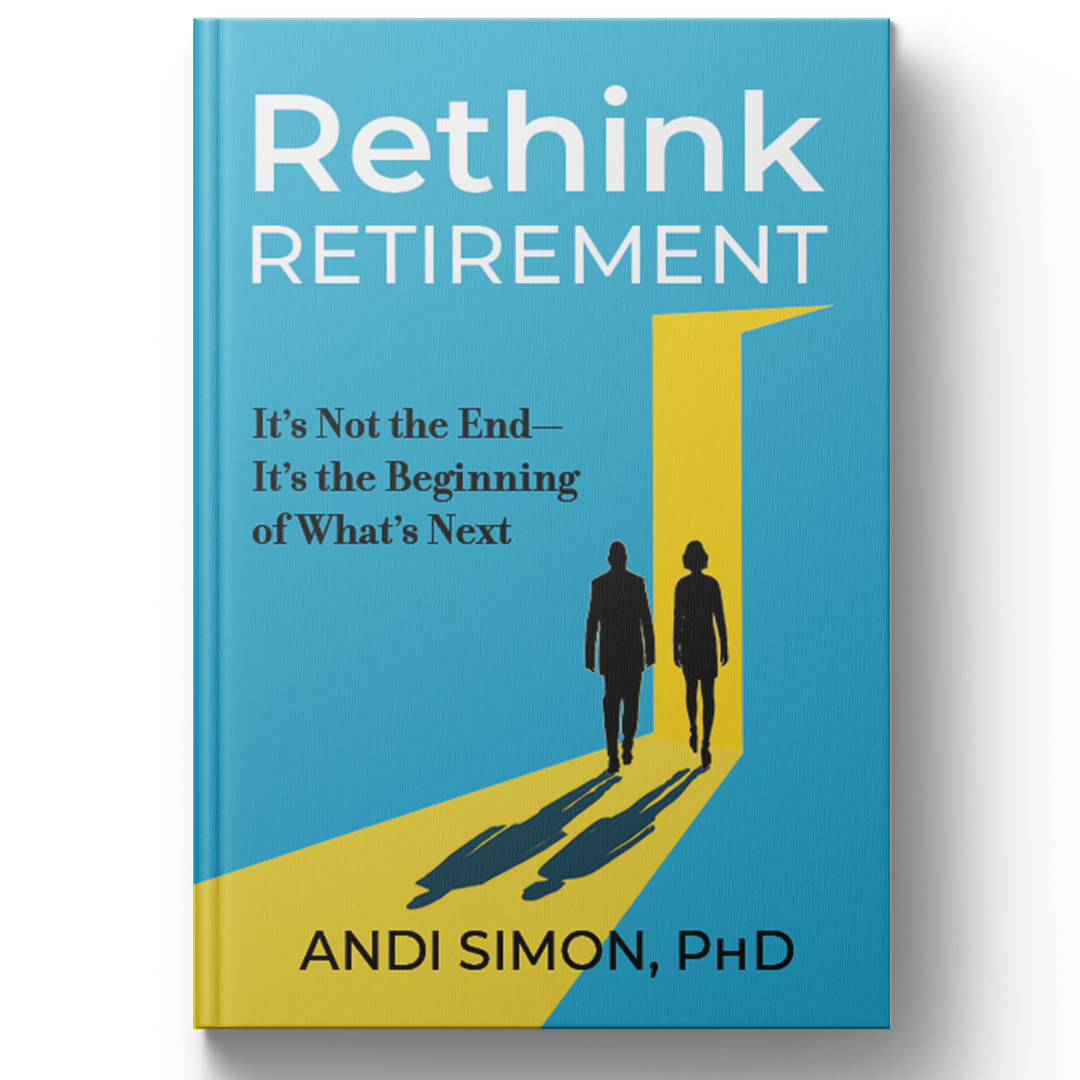
As I await the publication of my new book, “Rethink Retirement™: It’s not the End—but the Beginning of What’s Next,” I have been flooded with questions from people I have interviewed or from people who are managing companies with pre-retiring staff. Far too many folks are wondering about this thing called “retirement.” It is a thing, isn’t it. Who practices retirement before they have to? Who stops the work they are doing to see how it feels to be unemployed, and not on a vacation or holiday?
So the question is a frightening one. Should I retire? And when should I retire? Most people answer this question by checking their 401(k) balance and consulting a financial planner. But new research reveals they are asking the wrong question entirely.
The real question isn’t “Can I afford to retire?” It’s “Am I prepared to retire successfully?” And the answer has far less to do with your bank account than you might think.
The Hidden Crisis in Retirement
Here’s a statistic that might surprise you: the incidence of self-reported depression jumps by 40% during the first few retirement years. Research consistently shows that complete retirement leads to increased difficulties with mobility and daily activities, more illness conditions, and significant declines in mental health over the average post-retirement period.
This isn’t just about people who retire poor or sick. Even successful executives with substantial nest eggs find themselves struggling. Consider the corporate executive forced out in his late 50s who, with no plan and no purpose, defaulted to golf and drinking—eventually developing alcoholism. Or the woman executive who suddenly had nothing on her calendar and faced an identity crisis despite financial security.
The stories are different, but the theme is the same: they had the money, but they lacked everything else.
The Factor That Changes Everything
The most significant predictor of retirement outcomes isn’t your savings—it’s whether the decision was voluntary or forced.
Involuntary retirement creates a cascade of negative effects. Those forced to retire report worse physical and mental health outcomes, including higher rates of depression and anxiety, than those who retire on their own terms. They’re more likely to increase smoking and alcohol use, and less likely to maintain physical activity.
Conversely, older adults who retire voluntarily—to escape job stress or pursue other interests—report higher life satisfaction and lower rates of depression. The difference? Control, preparation, and positive framing.
When retirement is voluntary, it typically allows for anticipatory planning, development of alternative activities, maintenance of a sense of control, and positive framing of the transition. When it’s forced, none of these protective factors are present.
The Planning Paradox
Here’s where it gets interesting: only 13% of people feel very confident about having enough money for retirement, yet this is the one aspect that receives extensive attention. Meanwhile, approximately 43% of older workers aged 51 to 61 have no plans regarding what form their retirement will actually take.
Research with Canadian retirees found that while both financial and lifestyle planning predicted feeling prepared for retirement, only lifestyle planning predicted actual satisfaction. You can be financially prepared and still deeply unsatisfied.
Think about it: most people spend more time planning a two-week vacation than planning a life transition that could span three decades.
What Really Matters: The Three Domains
According to the Stanford Center on Longevity, retirement decisions should consider three domains:
Financial: Do you have enough resources to support the life you want to live? (Not just survive, but truly live.)
Health: Are you physically and mentally capable of enjoying retirement? Will leaving work improve or worsen your health?
Psychological: This is the most neglected factor—and arguably the most important. It includes:
- Sense of purpose and meaning
- Identity beyond your job title
- Social connections outside work
- Plans for structuring your time
- Activities that engage and fulfill you
Research shows that people who report having a sense of purpose live at least seven years longer than those who don’t. Purpose isn’t a luxury—it’s essential for wellbeing.
The Critical Questions
Before retiring, answer these honestly:
- Is this decision voluntary? If you’re being forced out, you face higher risks and need a more aggressive plan.
- What will give you purpose? Thirty-one percent of retirees struggle with lack of purpose. What activities, relationships, or goals will provide meaning?
- Who will you be without your job title? When someone asks, “What do you do?” will you have an answer that satisfies you?
- What’s your social network outside work? Many people’s primary social connections come through their jobs. What will replace that?
- How will you structure your days? Unstructured time can be surprisingly difficult. What will a typical week look like?
- Are you retiring FROM something or TO something? Running away from a bad situation produces different outcomes than running toward an exciting new chapter.
A Different Approach
Instead of treating retirement as a binary switch—working one day, retired the next—consider it a gradual transition. Research shows that bridge employment (part-time work, consulting, or phased retirement) produces better mental and physical health outcomes than abrupt retirement.
Start building your post-work identity while still employed. Cultivate hobbies, develop social connections outside work, volunteer, experiment with different activities. Give yourself permission to test and adjust.
The Bottom Line
Retirement should be a transition TO something meaningful, not just a transition FROM work. Your success depends not on when you leave work, but on what you’re prepared to embrace when you do.
The stories of those who struggle in retirement share common threads: lack of preparation beyond finances, involuntary timing, missing sense of purpose, inadequate social connections, and no plan for meaningful engagement.
Don’t let this be your story. Start planning now—not just your finances, but your life.
Because the question isn’t when you should retire. It’s whether you’re ready to create a fulfilling next chapter.
- Share with a friend or colleague who’s ready to think differently
- And subscribe to our Substack column, Rethink Retirement. Find it here: https://rethinkretirement.substack.com/
Here’s to seeing, feeling, and thinking in bold, new ways — together. To learn more about what do we to help you through your Retirement transition, contact us.