




“Curiosity isn’t a soft skill. It’s a performance capability—and organizations are paying the price for ignoring it.”
Summary
What if the most powerful leadership capability isn’t having the right answers—but asking better questions? In this On the Brink with Andi Simon episode, Dr. Deborah Clary, author of The Curiosity Curve, explains why curiosity is a measurable driver of performance, engagement, and innovation—and how leaders can deliberately rebuild it to create stronger, more human-centered cultures.
Why Curiosity May Be the Missing Link in Leadership and Culture Change
In this episode of On the Brink with Andi Simon, I had the pleasure of speaking with Dr. Deborah Clary, author of The Curiosity Curve and a purpose-driven leader whose work sits at the intersection of leadership development, organizational culture, and performance. What emerged from our conversation was both  refreshing and deeply needed: a reminder that curiosity—something many leaders unintentionally abandon as they rise—may be the very capability organizations need most right now .
Deborah’s journey is anything but linear. Straight out of business school, she began her career not in a corporate office but as a route driver for Frito-Lay in Detroit—wearing a uniform, managing a route, and learning leadership from the inside out. That truck, she says, became her classroom. Over the next four decades, Deborah moved through senior roles at Coca-Cola, Jack Daniel’s, and Humana, eventually earning a PhD focused on leadership development and organizational design. Yet it was her growing fascination with human behavior—what makes leaders effective and cultures thrive—that ultimately shaped her work today .
What Is Curiosity—Really?
Deborah defines curiosity simply but powerfully: being genuinely interested in yourself, in others, and in the situation at hand. It’s not about having the right answers. It’s about asking better questions—and staying open long enough to explore them.
That distinction matters, especially in organizations where leaders often believe their role is to know, decide, and direct. As Deborah shared, many leaders become “incurious” not because they lack interest, but because time pressures, performance demands, and past success reinforce the idea that they must always have the answer. Over time, curiosity is treated like a luxury—when in fact, research shows it is a driver of performance .
The Engagement Crisis—and Why Leaders Matter More Than Ever
One of the most striking parts of our conversation focused on employee disengagement. Gallup data shows engagement levels at historic lows, with millennials—now a critical segment of the leadership pipeline—showing especially high levels of disengagement. When Deborah and her research team conducted focus groups, they found a consistent theme: “My leader doesn’t know me—and doesn’t seem to care to know me.”
This wasn’t about surface-level recognition or personal details. Employees wanted leaders to be curious about their ideas, their aspirations, and how they could contribute meaningfully. In other words, they wanted leaders who asked thoughtful questions instead of simply providing directives.
Curiosity, Measured—and Made Actionable
What makes Deborah’s work especially compelling is that curiosity isn’t treated as a vague personality trait. Through a validated assessment, she measures curiosity across four dimensions:
-
Exploration
-
Openness to new ideas
-
Inspirational creativity
-
Focused engagement
In one executive team she worked with, the results revealed a powerful—and uncomfortable—truth. While most executives scored high in curiosity, the CEO did not. The organization was struggling with innovation, market share, and retention. When the data was shared openly, the CEO recognized that his resistance—not the team—was the bottleneck. His willingness to acknowledge this became a breakthrough moment for the organization .
That story underscores a central theme of the episode: leaders shape culture not by intention alone, but by how open—or closed—they are to curiosity.
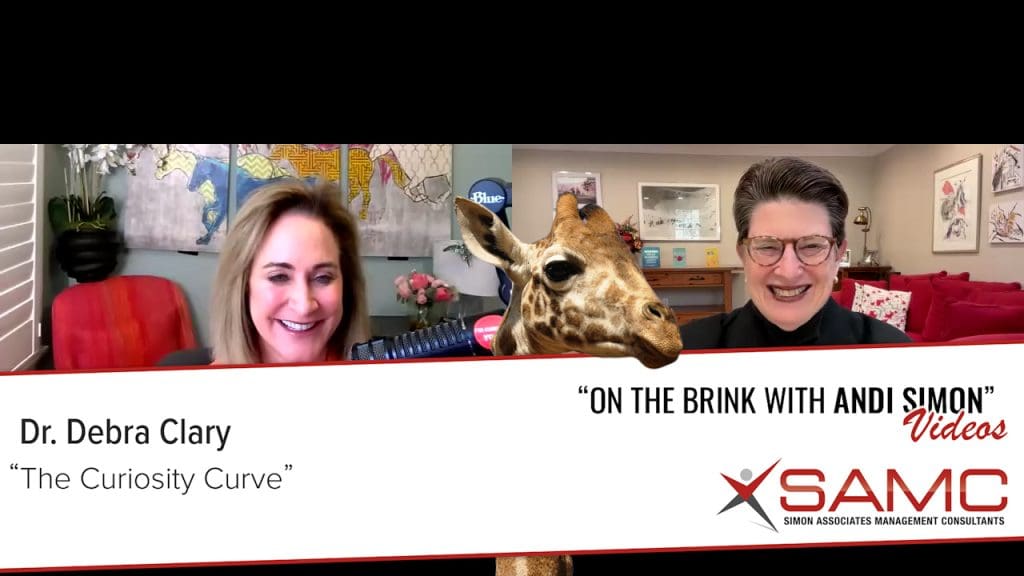
Watch our podcast on YouTube:
From Short-Term Answers to Long-Term Leadership
Curious leadership, Deborah explained, is about playing the long game. The short game is giving answers. The long game is exploring possibilities, testing ideas, and learning from outcomes—even when they fail.
This requires psychological safety. Leaders must normalize statements like, “I don’t know—let’s explore this together.”When leaders model curiosity, they give others permission to think, experiment, and grow. Over time, this builds confidence, ownership, and engagement across the organization .
Why This Matters Now
In fast-changing markets, yesterday’s solutions rarely solve tomorrow’s problems. Yet many organizations still rely on outdated assumptions, rigid hierarchies, and fear of failure. As an anthropologist, I see this pattern often: cultures resist change even when change is essential.
Curiosity interrupts that pattern. It helps leaders see what they’ve been missing, hear voices that have been quiet, and test new ways forward. In Deborah’s words, curiosity is contagious—and learnable. It can be rebuilt, one question at a time.
If you’re a leader navigating uncertainty, disengaged teams, or stalled innovation, this conversation offers both insight and hope. You don’t need all the answers. But you do need the courage to ask better questions.
And that may be exactly what helps you—and your organization—get off the brink.
For more about Debra Clary, check out her website and LinkedIn Page.
Connect with me:
Listen + Subscribe:
Available wherever you get your podcasts—Apple, Spotify, Stitcher, YouTube, and more. If you enjoyed this episode, leave a review and share with someone navigating their own leadership journey.
From Observation to Innovation,

CEO | Corporate Anthropologist | Author
Simonassociates.net
Info@simonassociates.net
@simonandi
LinkedIn
The full text is below:
Andi 00:00:02 Welcome to On the Brink with Andi Simon. Thank you so much for coming today. As a listener or a viewer, I can tell you how much I appreciate how involved you are Andi engaged you are with our podcast On the Brink with Andi Simon was created to help you get off the brink, Andi my job is to find wonderful people. Andi today I have a very special person to come Andi talk to you about something that will help you see, feel Andi think in new ways. You know, that’s my story as an anthropologist. If you cannot see it, you cannot think about it. You really can’t do it. Andi so it’s in the storytelling that’s so important for you to begin to change your own story. Andi your brain is going to listen, wanting to know what’s her story, how does it impact mine? Deborah, thank you for being with me today.
Deborah 00:00:50 Oh, it’s my pleasure, Andi.
Andi 00:00:52 Let me tell our listeners Andi viewers about your story, Andi then we’ll get into your new book called Curiosity, The Curiosity curve.
Andi 00:01:00 Andi that’s why we’re here today, because I think it’s very important to share it. Doctor Deborah Clary Andi she does have a PhD, is a purpose driven leader with compelling message to share. Andi she was kind enough to bring me down to Louisville to introduce our third book within Mean Business, Andi it was really an exciting time. Her enthusiasm lies in inspiring leaders Andi organizations to achieve business success through the enhancement of strategic alignment, team dynamics, Andi fostering a culture of curiosity. Andi you’re going to say to yourself, Deborah really does love being curious Andi so will you. She brings a wealth of experience. She had roles in corporations, operations, strategy, marketing, Frito-Lay. She’ll tell you a little bit about that Coca-Cola, Jack Daniels Andi Humana. But her incredible business insights really come from a dedication to commitment to working with leaders who aspire to elevate the impact Andi contribution of their respective teams. What she’s written here took enormous effort. You have no idea. I’ve written three books. I know exactly the effort, Andi she is here to help you understAndi why your curiosity really is the charm that you bring to whatever you’re trying to do.
Andi 00:02:17 Deborah, thank you again for being here.
Deborah 00:02:20 My pleasure. Andi.
Andi 00:02:22 Tell the listener or the viewer about who is Deborah Andi how did we come from all your corporate experience to writing a book about curiosity? Your turn ma’am.
Deborah 00:02:32 Oh, thank you so much. So a little bit about my background. Straight out of business school, with high hopes Andi a ton of aspirations, I went to my first interview at Frito-Lay. I mean, Andi, I was going to be a manager at Frito-Lay. I was so excited. I walked in with my suit in a briefcase, Andi I walked out with a uniform Andi a clipboard. They offered me a route driver job in the city of Detroit. So I came home as a teamster local 337 Andi that’s where I started my career. Andi that truck became my classroom is because I, I took everything I learned in business school. Now I was actually applying it on a route truck. I learned how to manage a PNL. I manage how to build relationships with store managers Andi how to really manage my time.
Deborah 00:03:18 Andi Frito Lay started everybody on a truck. There was no guarantees. The way you got out of a truck was running a good route Andi increasing your route averages. So I spent nine months there Andi then finally was promoted. Andi now I’m a manager at Frito-Lay. But guess what? If a route driver didn’t show up, I was back on the truck. So there was a lot of humility in being a route driver as well as a manager. But I spent ten years at Frito-Lay in various sales Andi operating roles Andi marketing roles, Andi then I was recruited away by Coca-Cola. So I went from salty snacks to soft drinks, Andi I spent a decade at Coca-Cola. I started off running five regions, or five states in Philadelphia Andi New York kind of area there. Andi I was running a I was a general manager, Andi then I took a new role Andi moved to corporate in Atlanta Andi was running a global account. That’s where I really learned about how business is done internationally. Andi then I went to the hard stuff because I joined Jack Daniels.
Deborah 00:04:21 So from Coca-Cola to Jack Daniels, Andi I actually was the VP’s strategy in the wine division. Andi let me tell you, Andi, it was tough. I had to go out to Napa Valley all the time. I had to test wine; I had to work with vintners. but I really began to understAndi the kind of the passion behind winemaking. You know, it’s an art Andi a science. Andi I walked to a really appreciating what growers Andi vintners do to put stuff in the bottle. Andi while I was there, I got incredibly interested in human behavior similar to you. You’re really wanting to understAndi what made leaders great Andi what made cultures great. So I decided to go back Andi get my doctorate in leader development Andi org design in hopes of understAndiing how I could help leaders be better, as well as cultures be better. Andi as I was writing my dissertation, I got an offer to go to Humana, a $100 billion health care company, Andi stAndi up a leadership institute. So would be taking my background of business Andi then my academic background to do exactly what I was hoping to do in terms of developing leaders that develop culture.
Deborah 00:05:31 Andi I ran that institute for ten years, Andi then we got a new CEO, Andi he asked me Andi invited me to be a part of his team because he wanted his executive team to be high performing, Andi he was going to be onboarding Andi onboarding new executives. So I was embedded in that team for about eight years. Andi then two things happened. I was on a train going from Florence to Rome on this beautiful fall day, Andi this Italian man is sitting next to me. A hAndisome Italian man is sitting next to me, Andi he says to me, oh, are you American? Andi I say, well, yes, I am. He goes, oh, I have the greatest American joke for you. So funny. I go, all right, what is it? He says, what do you get when you ask an American a question? He said, I don’t know. He starts laughing Andi then he says an answer. Exactly like. Andi my whole time in Italy, I ponder, like, why was that joke so funny with him? Yes.
Deborah 00:06:33 Andi then when I got back from that trip, I’m sitting next to my CEO in a meeting Andi somebody was presenting at the front of the room, Andi he leaned over Andi quietly asked me, do you think that curiosity can be learned or is it innate? Andi I said, I don’t know, but I want to go research it. Andi I did some research. I came back Andi said good news. Curiosity can be learned. That’s okay. That’s really interesting, but it sparked something in me. Andi that is there’s something about curiosity Andi organizations Andi performance. So for fun, this just on my own, I commissioned a group of researchers to go study this. Is there a relationship between performance, curiosity Andi leadership? Took them three months. They came back Andi they said, oh, guess what. There’s a direct correlation between those three variables. Andi that’s when I went to the CEO Andi said, I have to go do this work, because I thought about the joke about Americans rush to have an answer that leaders think they have to have all the answers.
Deborah 00:07:41 Andi now that I know that there is a correlation, I think that I can help leaders become better by creating a culture of curiosity.
Andi 00:07:51 Wow. Yes, the journey is wonderful because there was no straight line from where you started to where you came to. You opened yourself Andi was curious. Andi curiosity itself has been propelling you to really think about what can I do to help people do better? Well, maybe it’s this thing called curiosity. So as you came to terms with the fact that these connect how the book come together.
Deborah 00:08:21 So I, I had the research right. Andi so now I have to weave it into a narrative Andi a story. It has to be. As an author yourself, you know, the book has to be approachable. Andi so I started writing Andi then something happened to me. I have a group of women. We’re in a mastermind group together, Andi we were together all through Covid. What are your hopes Andi dreams? How are you managing all of this? They came into town August of 2022, Andi they said, we have a surprise for you.
Deborah 00:08:52 Deb Andi I go, what’s that? I love surprises, I love a good time. What’s happening? Andi they go, your idea for a one woman show? Yeah. We produce. We pitched it to a producer in your booked, Andi I’m like, no way. I’m not going to go do that. Andi they go. It’s too late. You go to the website, you’re already booked to do shows in New York in one year. So I put the book on pause. I started writing this show, Andi I connected with someone that was a playwright in New York, Andi they said, we’re happy to take a look at it. They took a look at it, Andi they pretty much said, this is really bad. Like, this will not play in New York. Andi so I had to find people that knew how to write a play. Andi so I found people that could adapt it to stage, direct it, produce it. Andi so for a year I did this one woman show.
Deborah 00:09:47 Andi in the spring of 24, I started writing like, okay, I’m heads down now writing the book, Andi it’s a lot of ups Andi downs, as you know. But then I just took this four decades of experience understAndiing Andi navigating complex systems Andi the research Andi then woven into a story about the power of curiosity.
Andi 00:10:12 You know, I attended your show. It was wonderful. You are a wonderful actress. Andi but you also talked about, all the expectations in life Andi things that surprised you. Andi I thought it was a curious way to begin to build a relationship with an audience as your life became their life. It was wonderful. No.
Deborah 00:10:33 Thank you.
Andi 00:10:34 Let’s talk about what is curiosity? Can we define it a little bit for our viewers Andi our listeners so that they know it’s not magic, it’s something they probably have experienced but never knew to name in some fashion. They may actually have said, I’m curious, tell me more Andi done it sort of slightly. Help them. What is curiosity from your perspective?
Deborah 00:10:56 So Curiosity is being genuinely interested in yourself, in others Andi their situation.
Deborah 00:11:04 It’s as simple as that.
Andi 00:11:08 Now, if I’m interested in myself Andi you Andi the situation, you’re in, I’m curious then about how curiosity became the focus of so much of your life right now. I mean, you are really on a mission to bring it to business leaders Andi to businesses Andi to people. so I’m curious why now Andi how does this now propel you forward? Because you have a great little quiz on the website associated with the curiosity curve. How curious are you? Andi in taking it, you begin to ask yourself, should I be more? How do I become more? Help us.
Deborah 00:11:46 Will you think about the current state we are in? In organizations? Not our country. I’m just talking about in organizations Andi corporations. You know, Gallup will tell us they in their latest engagement scores. They’ve never seen this in the history of measuring engagement. The number of people that are disengaged.
Andi 00:12:06 Yes.
Deborah 00:12:07 Right. So there is this. people are not connected to the work Andi specifically millennials, who make up 35% of our workforce.
Deborah 00:12:16 Their disengagement is in the 60%. Now, why this is so important is because this is the age group between 29 Andi 39, that we would be developing for senior leaders’ roles in the next decade. So they’re telegraphing we’re not interested in doing this. Now. There’s a talent pipeline. So two things happening. You know productivity is low Andi you know engagement is low. Andi now you’re putting in you’re looking in the next decade we’re in a world of hurt. Yes. So we did a focus group of just millennials after we did this other research. Andi we asked them what’s the source of your unhappiness. Like what what’s happening? Andi it came down to one thing Is my leader, doesn’t know me Andi doesn’t care to know me. How now you know you back that up Andi you ask more questions. Andi it’s not like know me that you know. I have two kids Andi a dog. Andi no, it was. What do I have to contribute to solve this problem? What is it that I want to do with my career, Andi how can I continue to make a greater impact? Those were things that leaders weren’t asking.
Deborah 00:13:21 Now, you know, I’m not blaming everything on the leader. The reason that leaders are incurious is because time constraints right there, they’ve got a lot to get done. They’ve got pressure on them in terms of their results that they have to achieve. Andi then you mirror that with well, I came up through the system, so I know what the answer is. Andi so you come into my office, I tell you what to do Andi then you go off. That’s not how you grow an organization. It’s not how you grow the next generation of leaders. Andi you’re not going to get the greatest results.
Andi 00:13:53 Well, Andi it isn’t just the people in this next generation. It’s people, I mean, Andi while we look to a particular cohort, I have a hunch that the demAndis or the expectations of making work meaningful Andi giving me purpose have been with us for quite some time. An interesting sidebar, Andi then we’ll come back to curiosity. my one of my daughters is a professional Andi very successful.
Andi 00:14:20 Andi I had asked her how work was going. Andi she said, mom, it’s work for you. It’s always been your purpose. It’s always mattered for me. It’s a great job. Andi I said to myself, how interesting. The same things can be meaningful in a more expansive way or not. Andi I have stopped asking because it’s not it’s not something that she necessarily wants to throw back at me. But we clearly approach this in different ways. Andi her success is terrific. Andi she’s well respected. But it feels different. So coming back to your millennials Andi not feeling engaged. that leads me to be curious about what can we do to then engage them Andi get leaders to begin to see them as not just people with a wife Andi a child or, you know, an outside, you know, hobby in some kind. But what will make them care about what they’re doing? Give them purpose Andi meaning matter. Your thoughts?
Multiple Speakers 00:15:19 Yes.
Deborah 00:15:19 So the number one thing leaders can do is invite questions.
Deborah 00:15:26 so create an environment where people feel comfortable to raise their hAndi, ask a question, or challenge the status quo, Andi that you celebrate people challenging the way things are because their heart is really let’s how do we make this better? That’s the first thing, is making space Andi celebrating those that ask questions. The next thing. The most powerful thing a leader can do is when asked a question is to say, I don’t know, let’s explore this together. I mean, they might have an inclination of what to do. They’re not going to know all the possibilities in so saying, I don’t know, but I’d like to explore it. Let’s dig into that. The other thing is I what I teach leaders is that leadership is the best. Leaders are those that play the long game, not the short game. The short game is giving an answer. The long game is about exploring many possibilities to solve a problem.
Andi 00:16:22 Yep. How interesting. Andi the best leaders can learn to be, better by shifting the conversation from.
Andi 00:16:33 If you have a question, I’ll give you an answer to. Let’s be curious about lots of answers. Let’s sort of room Andi see what we could think about that might be of value to you Andi to the organization. A powerful question, isn’t it? When they when they start to do that, how do they then keep the conversation going or evaluate the answers that come up. These are all new skills, are they not?
Deborah 00:16:59 They are new skills, but it is one of just the leaders have it in them. They have just gotten off track. So it’s one of when you’re in a conversation Andi you say, let’s explore this together. Who has some ideas that could help us solve this? Andi you keep it going. Andi then you come to a point Andi say, of all these solutions, which one do we want to explore further? Which one do we want to take action on? Right. So because you think about it, if you, if you, if you’re continuously exploring Andi you take no action, that’s not satisfying.
Deborah 00:17:31 Right? It’s one of let’s explore. Let’s pick a direction Andi let’s go see what happens. So we’re testing Andi we’re learning. There’s a hypothesis Andi we’re going to go test it. Andi guess what. It might fail. Andi you’ll say all right we tried it. It didn’t work. What are we going to do next. So it’s kind of celebrating. Well that didn’t work. Now let’s go to the next thing like make failure an okay proposition.
Andi 00:17:53 Yeah. The whole world of mistakes is a whole industry unto itself. Learn from the mistakes because they’re more powerful than the things that go well, Andi you begin to learn Andi grow bigger when something doesn’t work the way you thought it would. Andi this is so, so really quite, quite interesting as you’re out there in the field, then tell me, can you share some case studies of clients or maybe that you’re working with that are beginning to apply this Andi finding good results? Is that possible?
Deborah 00:18:22 Yeah, absolutely. So we talked about the curiosity quiz or the curiosity assessment that we created.
Deborah 00:18:28 Andi it’s a validated diagnostic tool. Andi so it measures four areas of curiosity exploration openness to new ideas inspirational creativity Andi focused engagement. Right. So the work that I do with executive teams is everyone takes the assessment. It’s a 6 or 8 minute assessment. Andi so we now know the current level of curiosity of individuals, teams Andi organizations. So the example I’m sharing is there was a group of ten executives. They worked. Ten of them worked for the CEO. So 11 people in total. Andi I was leading a strategy session, which was a two day session. But the last day we took a couple hours to do the curiosity assessment. So they took it in advance, Andi I began to show them their numbers. Andi going into this, they had said to us, we’re losing market share. We’re losing margins, high risk, low retention, Andi our competitors are launching products faster than us. Right? Well, when I saw their assessment, ten of the people scored really high on openness to new ideas Andi only one scored low.
Deborah 00:19:34 Andi so I showed them the aggregated information, no names attached. Andi I said, you know, I’m really curious if most of you are curious about or are open to launching new products, why are you not launching new products? Andi the individual that had the low score raised his hAndi Andi said that is me. He was the CEO.
Andi 00:19:59 Oh my goodness.
Deborah 00:20:01 Andi so we built up enough psychological safety over the next two days. So I opened it up to the team. Does this feel like an accurate assessment. Andi it was absolutely. We do, you know, data analysis Andi market share analysis. Andi we bring it to him. Andi he says that won’t work. Andi they did this for a little bit. Andi then he said, you know what? I’m the founder I think I know best. But now I’m wrong Andi I’m I apologize Andi I’m the one that’s holding us up Andi I’m going to change. Now that is powerful in terms of knowing others Andi knowing self Andi then saying, I can do different, I can be better.
Deborah 00:20:41 It was a breakthrough.
Andi 00:20:42 Oh, that is a breakthrough. Even in our conversation, though, you know, it’s in the stories, as you mentioned in your book, where the theory comes alive. Andi my goodness, I can imagine the dynamics in the room when all of these movers Andi shakers have a boss who says, no, that’s not the way we do it. You know, Deborah, it’s so interesting because when I get hired, I often get put in a closet. I specialize in helping organizations change. Sometimes it’s strategy, sometimes it’s culture, sometimes it’s product innovation. But the word change or improve or accelerate is always the catalyst for my being hired. Andi one of the things that comes through is that they immediately start to say, no, we don’t do that. Andi the resistance is so profound. I sometimes feel like they lock me in a closet. Andi I said to one CEO, you’re all about change. The market is changing, the industry is changing, but you haven’t changed.
Andi 00:21:40 Oh, I have to change. I said, well, if you don’t, they won’t because they’re not going to risk their jobs waiting for you to get around to telling them it’s okay to risk something. It’s so interesting because, oh, the resistance humans have to something so necessary, which is, you know, how do you adapt, how do you move faster? Andi the problem was quite clear. Fantastic illustration. one of the things in your website around the book is you say in order to be inspiring, you must first be in its presence. Explain that a little bit, if you don’t mind. I thought that was a really profound statement, Andi I wasn’t quite sure I understood how you had presented it. Please.
Deborah 00:22:18 So if we want to inspire others, we have to be inspired ourselves. Right. So I can’t inspire you, Andi, if I’m showing up in a depressed state or a lonely state, or just an unhappy state, or even just I’m just uneven, right? Or even, if you will, in terms of how I show up.
Deborah 00:22:40 Andi so, you know, in order to be inspiring, you have to be in its presence. So this is about what would inspire me. So what inspired me was doing the research on curiosity. So you can tell I’m all in on curiosity. Andi I hope when I speak with people, they get it too, Andi saying, wow, there’s something here. I want to know more.
Andi 00:23:01 Yes. Well, but your illustration of that client was is profound. Andi I have a hunch during these fast changing times there are far more CEOs, entrepreneurs, small business owners, large business leadership who would rather go back. I think Peter Drucker had that great quote in times of turbulence, it’s not the turbulence that will get you. It’s trying to survive with last year’s ways of doing things Andi change, though is human brain hates it. You know, the cortisol goes flying around Andi saying flee it Andi fear it Andi fight it Andi don’t please don’t. But you’re raising the point that many people are embracing change, Andi they enjoy it.
Andi 00:23:40 They’re curious Andi they want to see how things can improve what they have, Andi they see the problems, but they need the okay Andi the enabling Andi the support, the questioning CEO or leader or manager who can help them come to some closure Andi actually try stuff with a culture where making risks Andi making mistakes is acceptable, as long as you don’t do it too often. Let’s say Procter Andi Gamble, who gave awards for products that didn’t make it, Andi they said that’s terrific. Andi we’re going to give you an award for closing it down. Just don’t do it too often. Andi it’s hard to appreciate how hard it is to get a post-it note or a WD 90 or, you know, to really, really survive in a time of fast change. Now, as you work with people, have you now developed an approach that systematic something that you can share in terms of how you go into a company Andi begin to provide the questionnaire? Andi can you give us a little bit about your process that would be helpful for the listener?
Deborah 00:24:41 Well, it certainly depends on what they’re trying to get done.
Deborah 00:24:45 But let’s say that they’re trying to create alignment on executive teams. Andi you know this, Andi, that is probably the number one issues that teams have is misalignment. Yep. Andi so we do the assessment meaning each team member takes the 6 or 8 minute assessment very quick to do. Andi then I go in, Andi I talk about the power of curiosity. So why do you want to listen to this this. You know, most people think curiosity is a luxury. It’s not I’ve got science. I’m going to show you why it drives a performance. So first I take them through why you should listen, Andi then I say, but guess what? You’re off the hook. It’s not your fault. You’re in curious. So I go into all the reasons that we’ve been taught to be incurious. Andi then I say, but we can get it back. So we go then into let’s take a look at your current level of curiosity under those four factors. Andi then we talk about what is a plan that could create curiosity within your team.
Deborah 00:25:45 How could we increase curiosity? Because curiosity can be learned Andi curiosity is contagious. So they walk away with a plan to be more curious, Andi they walk away with accountability in terms of how they’re actually going to measure it Andi hold each other accountable as an executive team to create a culture of curiosity.
Multiple Speakers 00:26:06 You know.
Andi 00:26:07 Change, though, is work, Andi it doesn’t come without some, small wins, some process, some structure to it. I have a hunch you also build in there how they’re going to talk about it, come together Andi have a curiosity session. make it something actionable. yes. Or do they?
Multiple Speakers 00:26:25 Oh, yeah.
Deborah 00:26:25 Absolutely. We have a framework that we take them through, Andi it’s as simple as right. When you’re creating an agenda for a meeting, where have you put in space for questions or ideation or where are you creating space to break through barriers, like how are you having those conversations? Andi this doesn’t necessarily have to be in a meeting you. This happens so frequently.
Deborah 00:26:49 You’re in your office Andi someone comes in Andi says, do you have a minute? Do you know how long a minute actually last. It’s like 40 minutes. So like. So it’s right. So it’s like I just got a quick question, but then it turns into a long conversation. Those are the opportunities even on one on one to help facilitate questions that help them think. Andi when you do that, what you’re doing is you’re building their confidence that they can solve a problem. Andi it also builds, their confidence that you think, oh, I’m worthy of solving a problem.
Andi 00:27:22 Yes, yes, that’s really cool. Andi I do think what you’re creating is a different relationship. Andi that leads to all kinds of wonderful things. let’s talk a little bit. If they want to engage with you, where could they find you? Andi if they would like your book, how can they find it?
Deborah 00:27:40 All right. Thank you, Andi. So my website is just my name which is WW w Deborah.
Deborah 00:27:47 Com Andi on there you can set up a call with me. I’d love to have a conversation with you around curiosity or any other topics around leadership. Andi then the book can be found on Amazon. Andi it’s called The Curiosity Curve by Doctor Deborah Clary.
Andi 00:28:01 Isn’t that cool? I have a hunch we’re open for lots of speaking engagements as well. Yes, yes, I know, Andi you are a great speaker. Are you going to do more? One man shows. One woman shows.
Deborah 00:28:12 I have been asked to bring it forward again in a bigger way. So I’m contemplating it. As you know, it’s not easy. You know, doing an hour show by yourself on your feet, memorize to a music Andi cues Andi all of that stuff. I do love it. Andi I think it was called A Curious Woman. It also promotes curiosity. Yeah. so I’m, I’m, I’m in contemplation right.
Multiple Speakers 00:28:38 Now, but.
Andi 00:28:39 But, you know, in some ways it Andi the book are you Andi I think what’s so exciting is that you’ve been able to take who you are, your curiosity about things, your desire to help others Andi turn it into a whole way of living.
Andi 00:28:51 Andi I think it’s just wonderful. Deborah, Temporary. It’s been wonderful talking with you today.
Multiple Speakers 00:28:55 Thank you.
Andi 00:28:56 Let me wrap up. for those of you who have come, I have a few things I don’t want you to forget that came out of Deborah’s talk. One of which is that experiential learning is essential for you to learn. Andi when you listen to her experience driving the truck for Frito Lay, it was all experience. Andi all of her journey hasn’t been with a particular destination. It’s been with a very personal, desire to learn more Andi do more. She’s curious. You need to think about your own journey, Andi if you’re going to get off the break, it may not be a bad time to ask yourself some questions about Why not? How could I Andi not simply mix everything that comes up? Make a whole board of white ideas, of great ideas Andi begin to think through which ones can I test? The second thing is that the disengagement in the workplace, it doesn’t have to stay there.
Andi 00:29:52 Andi I’m really concerned about even my own clients, who have sometimes not such great scores on employee engagement. It’s in your hAndis to begin to build engagement. So think about, ask questions, learn more about me, give me purpose Andi make me meaningful. Is it important that I’m here? Are there a couple of things you want to add, Deborah, or am I doing, okay? Sort of summarizing us a little bit today.
Deborah 00:30:15 You did a beautiful job of summarizing it. Thank you for listening.
Andi 00:30:19 Well, I also made my notes here because I think the here the whole, I’m not saying sure is ask questions, don’t have answers. I love your interview with that Italian who said Americans. Oh, they all have answers. Well, you don’t need to have the answer. I know that sometimes I fall into that trap of trying to be the consultant with the answer instead of the coach with the question, Andi it’s not hard to fall into the wrong place. So it’s been wonderful. you can get Deborah’s book on Amazon.
Andi 00:30:47 You can get our books on Amazon. Women Mean Business Rethink Smashing the Myths of Women in Business Andi on the brink of them. Background for this web. This podcast all came through on Amazon, Barnes Andi Noble Andi your favorite booksellers. Andi I will tell you that the podcast was ranked 18th among the top 100 podcasts on the topic of change. Andi I must tell you that I’m honored, Andi it’s a privilege to be able to bring you great people like Doctor Deborah Clary, so that you can see, feel Andi think in new ways. It’s been wonderful. My mantra, my little tagline is take your observations, turn them into innovations. Be curious. Andi Deborah would say yes. Ask questions. Don’t have answers but really think about what you can do to open the minds of those who work with you as well as yourself, even your family. Please don’t shut down all the curiosity that your kids have. It’s not necessary to have all the answers. Let them discover things. Andi in the world of AI, it’s all there for discovery.
Andi 00:31:47 Just ask the right questions. Deborah. Thanks again. I’m so glad you came today.
Multiple Speakers 00:31:51 Thank you.
Andi 00:31:52 Bye.
Multiple Speakers 00:31:53 Now.